


Help ?

IGMIN: We're glad you're here. Please click 'create a new query' if you are a new visitor to our website and need further information from us.

If you are already a member of our network and need to keep track of any developments regarding a question you have already submitted, click 'take me to my Query.'

Search

Organised by  IgMin Fevicon

Regional sites

Browse by Subjects

Welcome to IgMin Research – an Open Access journal uniting Biology, Medicine, and Engineering. We’re dedicated to advancing global knowledge and fostering collaboration across scientific fields.

Browse by Sections

At IgMin Research, we bridge the frontiers of Biology, Medicine, and Engineering to foster interdisciplinary innovation. Our expanded scope now embraces a wide spectrum of scientific disciplines, empowering global researchers to explore, contribute, and collaborate through open access.

Special Issues

Our vision is to be a bridge for scientific fields, fostering dialogue and rapid progress.

Members

Our vision is to be a bridge for scientific fields, fostering dialogue and rapid progress.

Articles

Our vision is to be a bridge for scientific fields, fostering dialogue and rapid progress.

Explore Content

Our vision is to be a bridge for scientific fields, fostering dialogue and rapid progress.

Identify Us

Our vision is to be a bridge for scientific fields, fostering dialogue and rapid progress.

IgMin Corporation

Welcome to IgMin, a leading platform dedicated to enhancing knowledge dissemination and professional growth across multiple fields of science, technology, and the humanities. We believe in the power of open access, collaboration, and innovation. Our goal is to provide individuals and organizations with the tools they need to succeed in the global knowledge economy.

Publications Support
[email protected]
E-Books Support
[email protected]
Webinars & Conferences Support
[email protected]
Content Writing Support
[email protected]
IT Support
[email protected]

Search

Select Language

Explore Section

Content for the explore section slider goes here.

248 of 250
Endoscopic Aspects of Lesions Secondary to Helicobacter pylori Infection in two Hospitals in Douala: A Cross-Sectional Study over a Three-year Period
Bernard Bertrand Bille EyoumFiacre Servais Bagnaka Eloumou, Christiane Sike Médi, Jethro Roland Misse Ngangue Ekwala, Claudia Laurence Ntonga, Agnes Malongue, Chimi Fotso, Stephane Fotsing, Clementine Kamdem, Roger Gilbert Ateba, Bertrand Claude Mokou, Brigitte Laure Mabeku Kouitcheu and Jules-Roger Kuiate
Abstract

Abstract at IgMin Research

Our vision is to be a bridge for scientific fields, fostering dialogue and rapid progress.

General-science Group Research Article Article ID: igmin360

On a Novel Bulk Superconductor: Oxygen-Doped Delafossite Oxide CuYO2,33

Physics DOI10.61927/igmin360 Affiliation

Affiliation

    Alessandro Volta Applied Ceramics (AVAC), 49247 Zlatar Bistrica, Augusta Šenoe 14. Croatia

52
VIEWS
11
DOWNLOADS
124
Connect with Us

Abstract

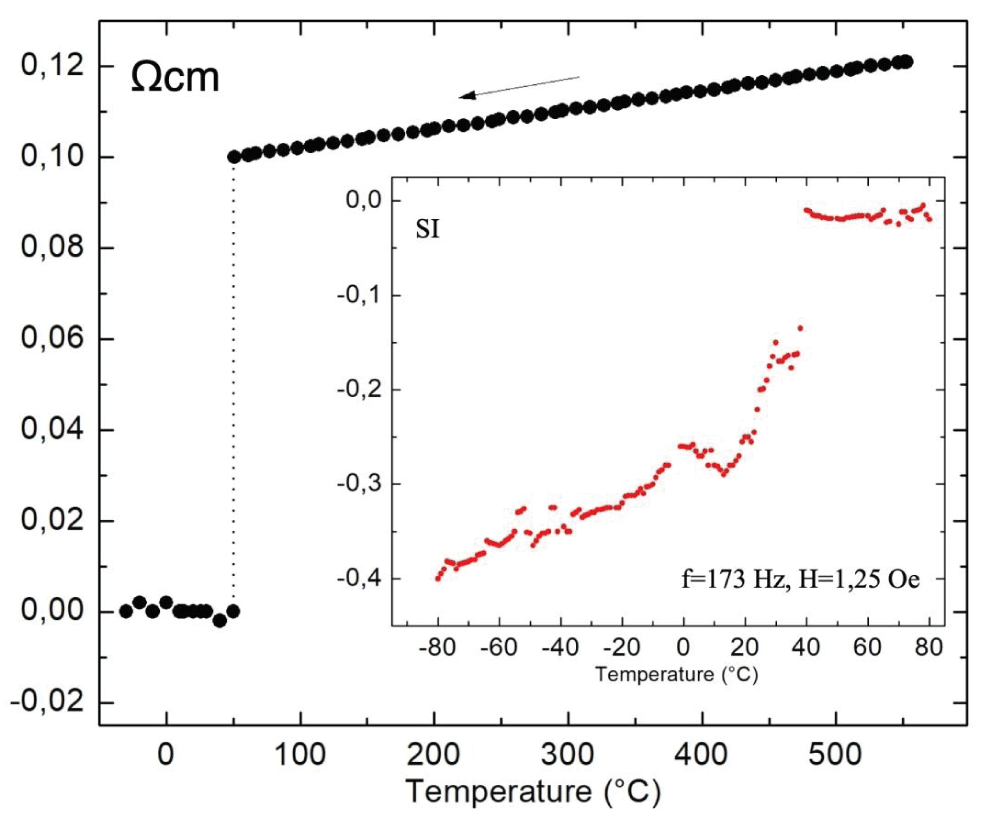
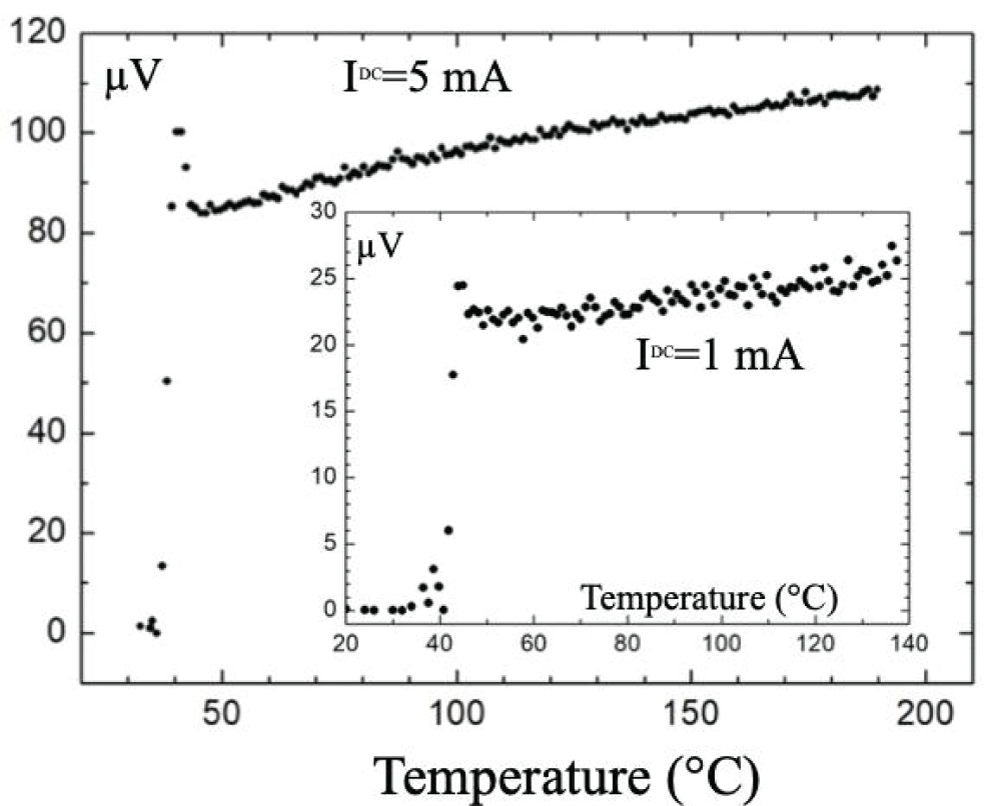
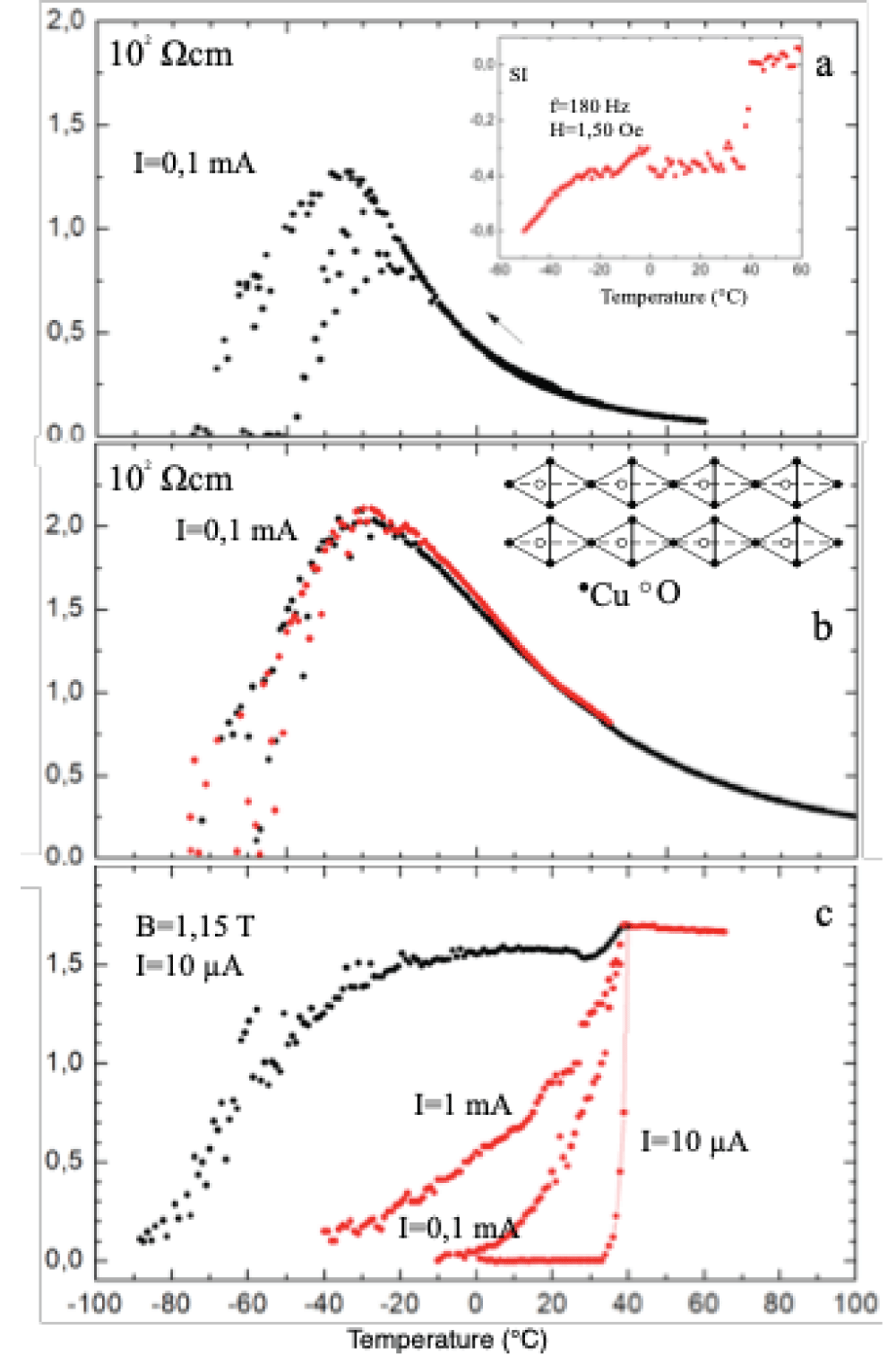
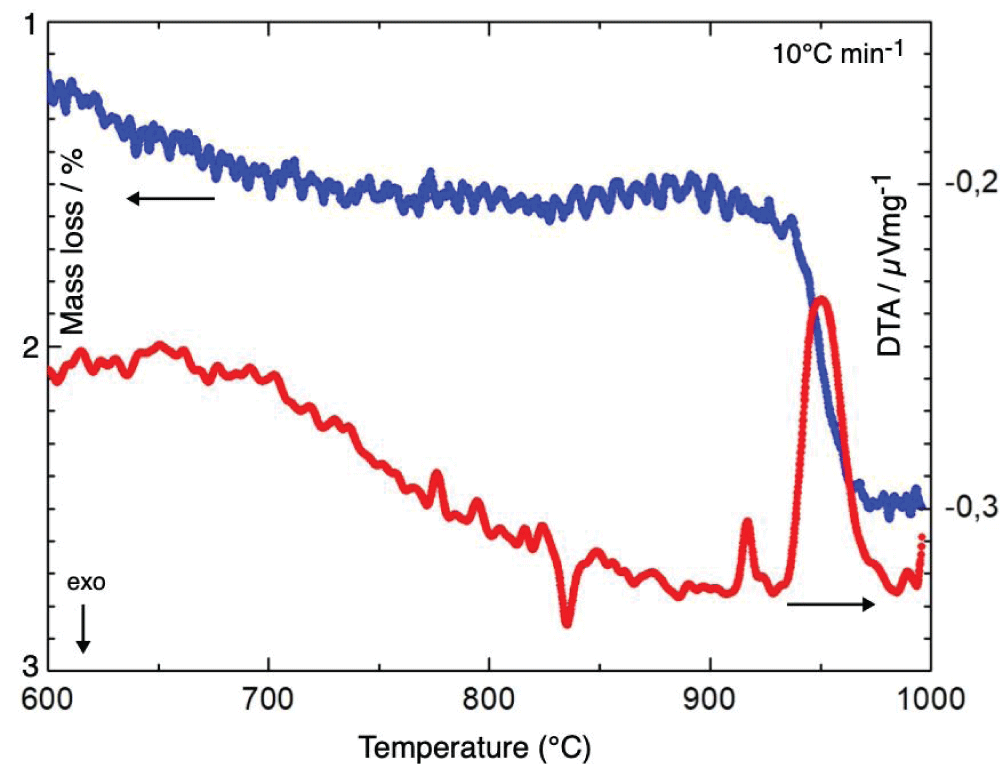
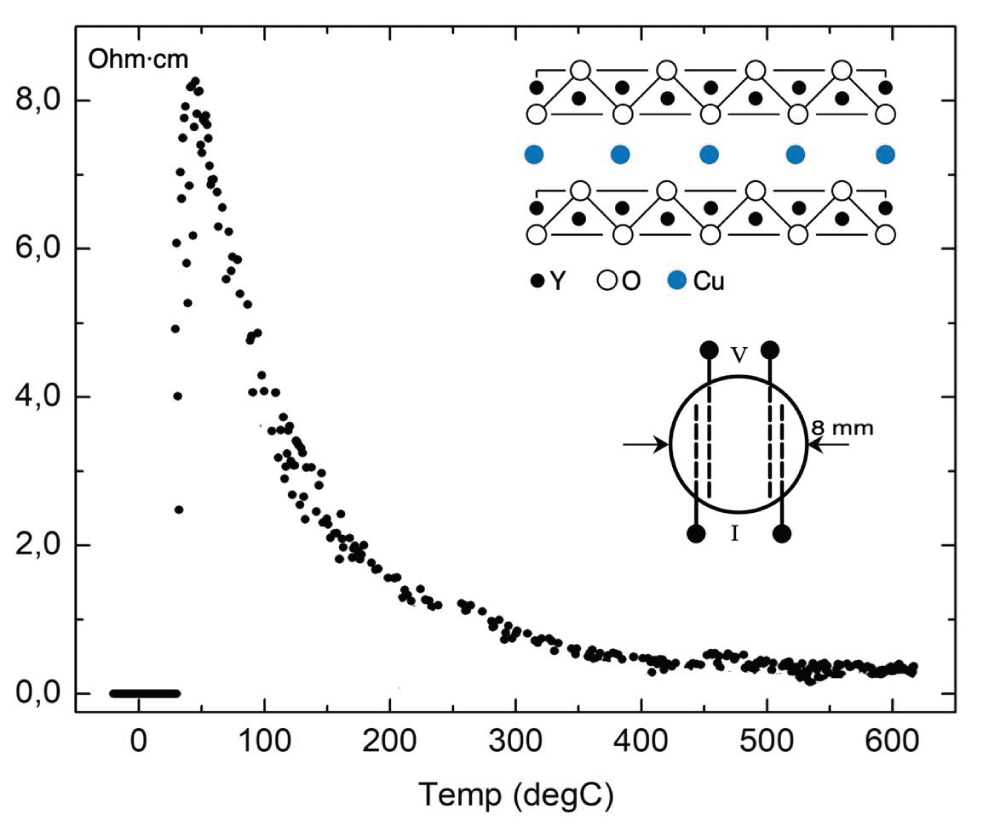
It was shown that delafossite oxide CuY2,33 prepared by solid-state reaction from the pelletized mixture of the nanopowders Y2O3 +2CuO, in air and at firing temperature 809-852 °C, obeys metallic properties. Upon cooling down to +39 °C, the metallic state undergoes a resistive transition, which suggests the first reproducible superconductivity appearing at a temperature higher than that of the ice melting temperature. Klein-Schwinger effect is suggested as a driving mechanism for the creation of electron-hole pairs. Electric properties are interpreted in terms of topological superconductivity.
Figures

References

    1. Bednorz JG, Müller KA. Possible high Tc superconductivity in the Ba‑La‑Cu‑O system. Z Phys B Condens Matter. 1986;64:189‑93.
    2. Er‑Rakho L, Michel C, Provost J, Raveau B. A series of oxygen‑defect perovskites containing CuII and CuIII: The oxides La3‑xLnxBa3[CuII5‑2yCuIII1+2y]O14+y. J Solid State Chem. 1981;37:151‑6.
    3. Wu MK, Ashburn JR, Torng CJ, Hor PH, Meng RL, Gao L, Huang ZJ, Wang YQ, Chu CW. Superconductivity at 93 K in a new mixed‑phase Y‑Ba‑Cu‑O compound system at ambient pressure. Phys Rev Lett. 1987;58:908‑10.
    4. Cava RJ, Battlogg B, van Dover RB, Murphy DW, Sunshine S, Siegrist T, Remeika JP, Rietman EA, Zahurak S, Espinosa GP. Bulk superconductivity at 91 K in single‑phase oxygen‑deficient perovskite Ba2YCu3O9‑δ. Phys Rev Lett. 1987;58:1676‑9.
    5. Chu CV. New York Times. 1987 Mar 10.
    6. Djurek D, Prester M, Knezović S, Drobac Dj, Milat O. Low resistance state up to 210 K in a mixed compound Y‑Ba‑Cu‑O. Phys Lett A. 1987;123:481‑4.
    7. Djurek D, Prester M, Knezović S, Drobac Dj, Milat O, Brničević N, Furić K, Medunić Z, Vukelja T, Babić E. Treatment of Y‑Ba‑Cu‑O superconductors by pulsed electric fields and currents. Physica B. 1987;148:196‑9.
    8. Djurek D. Search for novel phases in Y‑Ba‑Cu‑O family. Condens Matter. doi:10.3390/c.
    9. Ishiguro T, Ishizawa N, Mizutani N, Kato M. A new delafossite‑type compound CuYO2. J Solid State Chem. 1983;49:232‑6.
    10. Cava RJ, Zandbergen HW, Ramirez AP, Takagi H, Chen CT, Krajewski JJ, Peck JV Jr, Waszcak JV, Meigs G, Roth RS, Schneemeyer LF. LaCuO2.5+x and YCuO2.5+x delafossites: Materials with triangular Cu2+δ planes. J Solid State Chem. 1993;104:437‑52.
    11. Van Tendeloo G, Garlea O, Darie C, Bougerol‑Chaillout C, Bordet P. The fine structure of YCuO2+x delafossite determined by synchrotron powder diffraction and electron microscopy. J Solid State Chem. 2001;156:428‑36.
    12. Garlea VO, Darie C, Isnard O, Bordet P. Synthesis and neutron powder diffraction structural analysis of oxidized delafossite YCuO2.5. Solid State Sci. 2006;8:457‑61.
    13. Pauling L. The application of quantum mechanics to the structure of the hydrogen molecule‑ion and related problems. Chem Rev. 1928;5:173‑213.
    14. Bardeen J, Cooper LN, Schrieffer JR. Theory of superconductivity. Phys Rev. 1957;108:1175‑204.
    15. Pyykkö P. Relativistic effects in structural chemistry. Chem Rev. 1988;88:563‑94.
    16. Kim C, Matsuura AY, Shen ZX, Motoyama N, Eisaki H, Uchida S, Tohyama T, Maekawa S. Observation of spin‑charge separation in one‑dimensional SrCuO2. Phys Rev Lett. 1996;77:4054‑7.
    17. Schmitt A, Vallet P, Mole D, Rosticher M, Taniguchi K, Watanabe E, Bocquillon G, Feve JM, Berroir C, Volsin J, Cayssol MO, Goerbig J, Troost E, Baudin E, Plaçais B. Mesoscopic Klein‑Schwinger effect in graphene. Nat Phys. 2023;19:830‑5.
    18. Klein O. Die Reflexion von Elektronen an einem Potentialsprung nach der relativistischen Dynamik von Dirac. Z Phys. 1929;53:157‑65.
    19. Schwinger JS. On gauge invariance and vacuum polarization. Phys Rev. 1951;82:664‑79.
    20. Nimtz G. On virtual phonons, photons and electrons. Found Phys. 2009;39:1346‑55.
    21. Garrison JC, Chiao RY. Quantum optics. Oxford: Oxford University Press; 1974. p.60.
    22. Casimir HBG, Polder D. The influence of retardation on the London‑van der Waals forces. Phys Rev. 1948;713:360‑72.
    23. Casimir HBG. On the attraction between two perfectly conducting plates. Presented at: Colloque sur la théorie de la liaison chimique; 1948 Apr 29; Paris.
    24. Burkov AA, Balents L. Weyl semimetal in a topological multilayer. Phys Rev Lett. 2011;107:127205.
    25. Lieb EH, Wu PY. Absence of Mott transition in an exact solution of the short‑range model in one dimension. Phys Rev Lett. 1968;20:1445‑8.
    26. Anderson PW, Ren Y. The one‑dimensional Hubbard model. In: Anderson PW. The theory of superconductivity in the high‑Tc cuprates. Princeton (NJ): Princeton University Press; 1997. p.132‑60.
    27. Vol'kov VV, Shustin MS, Aksenov SV, Zlotnikov AO, Fedoseev AD, Mitskan VA, Kagan MYu. Topological superconductivity and Majorana states in low‑dimensional systems. Phys Usp. 2022;65:2‑39.
    28. Ziegler K. Topological phases of the Bogoliubov–de Gennes Hamiltonian. arXiv [Preprint]. 2026. Available from: arXiv:2510.26128v2.
    29. Elliott SR, Franz M. Colloquium: Majorana fermions in nuclear, particle, and solid‑state physics. Rev Mod Phys. 2015;87:137.
    30. Sato M, Ando Y. Topological superconductors: a review. Rep Prog Phys. 2017;80:076501.

Why publish with us?

  • Global Visibility – Indexed in major databases

  • Fast Peer Review – Decision within 14–21 days

  • Open Access – Maximize readership and citation

  • Multidisciplinary Scope – Biology, Medicine and Engineering

  • Editorial Board Excellence – Global experts involved

  • University Library Indexing – Via OCLC

  • Permanent Archiving – CrossRef DOI

  • APC – Affordable APCs with discounts

  • Citation – High Citation Potential

Submit Your Article

Advertisement