IGMIN: We're glad you're here. Please click 'create a new query' if you are a new visitor to our website and need further information from us.
If you are already a member of our network and need to keep track of any developments regarding a question you have already submitted, click 'take me to my Query.'
Welcome to IgMin Research – an Open Access journal uniting Biology, Medicine, and Engineering. We’re dedicated to advancing global knowledge and fostering collaboration across scientific fields.
At IgMin Research, we bridge the frontiers of Biology, Medicine, and Engineering to foster interdisciplinary innovation. Our expanded scope now embraces a wide spectrum of scientific disciplines, empowering global researchers to explore, contribute, and collaborate through open access.
Welcome to IgMin, a leading platform dedicated to enhancing knowledge dissemination and professional growth across multiple fields of science, technology, and the humanities. We believe in the power of open access, collaboration, and innovation. Our goal is to provide individuals and organizations with the tools they need to succeed in the global knowledge economy.
IgMin Publications Inc., Suite 102, West Hartford, CT - 06110, USA
Infertility is a primary global health concern, with ovulatory dysfunction being a primary cause. Both estrogen receptor alpha (ERα) and Aromatase are recognized as influential factors in the stimulation of the follicle and, thus, are promising candidates for novel infertility treatment strategies. The application of pharmaceutical approaches like clomiphene citrate, Letrozole, and Anastrozole is of great value but not without challenge, which highlights the need for new, safer approaches. The current study is designed to apply an in-silico technique based on the bioactivity of the compounds found in Smilax anceps to assess the alteration of the ERα and Aromatase modulatory activity.
Molecular docking analyses revealed that Rutin (-15.499 kcal/mol) and Naringin (-12.45 kcal/mol) exhibited superior binding affinities to Aromatase compared to standard drugs. Quercetin (-11.032 kcal/mol) demonstrated strong interaction with ERα, surpassing clomiphene citrate (-10.872 kcal/mol). MM-GBSA calculations further validated the binding efficiency of these compounds. Density Functional Theory (DFT) analysis provided insights into molecular stability and reactivity, while ADMET predictions indicated favorable pharmacokinetic properties for select compounds.
These findings suggest that bioactive compounds from Smilax anceps, particularly Rutin and Quercetin, exhibit strong potential as alternative or adjunct therapies for infertility treatment. However, comprehensive in-vitro and in-vivo investigations are essential to confirm their therapeutic efficacy, safety, and clinical applicability.
Infertility is a primary global reproductive health concern, affecting millions of people. According to the World Health Organization, approximately one in six people experience infertility [11World Health Organization. 1 in 6 people globally are affected by infertility [Internet]. Geneva: WHO; 2023 [cited 2026 Oct 29]. Available from: https://www.who.int/news/item/04-04-2023-1-in-6-people-globally-affected-by-infertility]. Among the various causes, ovulatory abnormalities account for about 25% of infertility cases [22Carson SA, Kallen AN. Diagnosis and management of infertility. JAMA. 2021;326(1):65-76. Available from: https://jamanetwork.com/journals/jama/fullarticle/2781637]. Follicle stimulation is a crucial phase of ovulation, and disruptions in this process can significantly cause infertility [33Tao YX, Segaloff DL. Follicle-stimulating hormone receptor mutations and reproductive disorders. In: Vitamins and Hormones. Vol. 80. San Diego (CA): Elsevier; 2009. p. 115-131. Available from: https://linkinghub.elsevier.com/retrieve/pii/S1877117309890054].
Estrogen receptor alpha (ERα) and Aromatase are essential in follicle stimulation. ERα is crucial in female reproductive development, including uterine and ovarian function. In human ovarian follicles, ERα works with FSH receptors to help follicles grow and survive, while Aromatase helps produce estrogen, a hormone needed for follicle development [44Zhao D, Lv C, Liu G, Mi Y, Zhang C. Effect of estrogen on chick primordial follicle development and activation. Cell Biol Int. 2017;41(6):630-638. Available from: https://onlinelibrary.wiley.com/doi/10.1002/cbin.10766,55Kim DH, Park HJ, Park HS, Lee JU, Ko C, Gye MC. Estrogen receptor α in T cells suppresses follicular helper T cell responses and prevents autoimmunity. Exp Mol Med. 2019;51(4):1-9. Available from: https://www.nature.com/articles/s12276-019-0237-z]. Research has demonstrated that two mechanisms that regulate aromatase activity are cAMP and PI3K, which are influenced by follicle-stimulating hormone (FSH). Disruptions in these pathways can lead to imbalances in estrogen production, affecting follicle development [66Liu T, Huang Y, Lin H. Estrogen disorders: interpreting the abnormal regulation of aromatase in granulosa cells. Int J Mol Med. 2021;47(5):73. Available from: http://www.spandidos-publications.com/10.3892/ijmm.2021.4906].
Current pharmacological treatments for infertility, such as clomiphene citrate, Letrozole, and Anastrozole, have shown efficacy by modulating estrogen activity. Clomiphene citrate acts by attaching to ERα; the drug works as a selective estrogen receptor modulator, inducing ovulation in anovulatory women [77Mbi Feh MK, Patel P, Wadhwa R. Clomiphene. In: StatPearls [Internet]. Treasure Island (FL): StatPearls Publishing; 2025. Available from: http://www.ncbi.nlm.nih.gov/pubmed/25681838]. On the other hand, Letrozole and anastrozole act as aromatase inhibitors by lowering estrogen production, hence enhancing follicular response and ovulation rates [88Requena A, Herrero J, Landeras J, Navarro E, Neyro JL, Salvador C. Use of letrozole in assisted reproduction: a systematic review and meta-analysis. Hum Reprod Update. 2008;14(6):571-582. Available from: https://academic.oup.com/humupd/article-lookup/doi/10.1093/humupd/dmn033]. Although these treatments are effective, they have side effects [99Del Pup L, Peccatori FA, Levi-Setti PE, Codacci-Pisanelli G, Patrizio P. Risk of cancer after assisted reproduction: a review of the available evidence and guidance to fertility counselors. Eur Rev Med Pharmacol Sci. 2018;22(22):8042-8059. Available from: http://www.ncbi.nlm.nih.gov/pubmed/30536354] and vary in success rates, highlighting the need for safer and more effective alternatives.
Plants with medicinal properties have long been explored as potential sources of novel therapeutic agents [1010Krishnaprabu DS. Therapeutic potential of medicinal plants: a review. J Pharmacogn Phytochem. 2020;9(2):2228-2233. Available from: https://www.phytojournal.com/archives/2020.v9.i2.AK.11184/therapeutic-potential-of-medicinal-plants-a-review]. Smilax anceps is a plant species known for its diverse medicinal applications, particularly in traditional medicine. It has gained attention for its bioactive compounds, which may possess estrogenic and aromatase-modulating activities. Although current research has concentrated chiefly on Smilax species' general pharmacological characteristics [1111Osuagwu GGE, Osuagwu AN, Udogu FO, Ukoji NA. Anti-inflammatory and diuretic activities of ethanolic extracts of Smilax anceps Wild. Pharm Biosci J. 2018;6(1):11-16. Available from: http://pharmabiosciencejournal.com/index.php/pbj/article/view/1922], little is known about their unique effects on estrogen receptor modulation and aromatase inhibition, especially in the follicular stimulation and infertility treatment framework.
This study aims to fill this research gap by employing an in silico approach to analyze the potential of bioactive compounds from Smilax anceps in targeting estrogen receptor alpha and Aromatase. By doing so, we seek to identify novel compounds that could serve as alternatives or adjuncts to current infertility treatments.
The crystallographic structures of Aromatase (PDB ID: 3EQM) and Estrogen Receptor Alpha (PDB ID: 1A52) were retrieved from the Protein Data Bank (https://www.rcsb.org). The co-crystallized proteins were prepared using the Protein Preparation Wizard in Schrödinger Maestro 11.2. Bond orders were assigned, missing hydrogens were added, and disulfide bonds were corrected. Water molecules beyond 5.00 Å from heteroatoms were removed. The HET state was generated using Epik to predict probable ionization and tautomeric states. Optimization was performed at a physiological pH of 7.0 using PROPKA to refine hydrogen bonding networks. The final structure was energy-minimized and fine-tuned using the OPLS3 force field to ensure structural stability for subsequent computational analyses.
Ligand preparation
The bioactive compounds from Smilax aceps (Rutin, Naringin, Caffeic acid, Quercetin, Ferulic acid, Salicylic acid, Maleic acid, Apigenin, and Obovatal) were sourced from HPLC analysis while the reference compounds were from published literature. Their 2D structures were retrieved from the NCBI PubChem database. Ligand preparation was carried out using the LigPrep module of the Schrödinger suite, employing the OPLS3 force field. The Epik module was used to generate probable ionization states at a physiological pH of 7.0 ± 2.0 to ensure accurate protonation and tautomeric forms for molecular docking studies.
Receptor grid generation
Receptor grid generation is a critical step preceding ligand docking, as it defines the active site region and determines the scoring coordinates for accurate docking. The Aromatase and Estrogen Receptor Alpha grid was generated using the Receptor Grid Generation module in Schrödinger Maestro 11.5. This process involved identifying the binding pocket and setting the appropriate grid box dimensions to ensure precise docking simulations.
Molecular docking procedure
The prepared 3D bioactive compounds and the reference standard were docked against Aromatase and Estrogen Receptor Alpha using the Schrödinger Maestro 11.11 Grid-Based Ligand Docking with Energetics (GLIDE) software. A two-step docking approach was employed: Standard Precision (SP) docking was performed initially to identify high-scoring ligand poses, followed by Extra Precision (XP) docking to refine and obtain the best possible binding conformations.
MM/GBSA
Binding and strain energies for each ligand-receptor complex were computed using the Prime Molecular Mechanics-Generalized Born Surface Area (MM-GBSA) method. The following equation, as described by Bathini, et al. [1212Bathini R, Sivan SK, Fatima S, Manga V. Molecular docking, MM/GBSA and 3D-QSAR studies on EGFR inhibitors. J Chem Sci. 2016;128:1163-1173.], was utilized:
∆G_bind = E_complex − (E_ligand + E_receptor)
Where:
∆G_bind is the calculated relative free energy, accounting for ligand and receptor strain energies.
E_complex represents the MM/GBSA energy of the minimized ligand-receptor complex.
E_ligand is the MM/GBSA energy of the ligand after it has been extracted from the complex and relaxed.
E_receptor corresponds to the MM/GBSA energy of the receptor after separation from the ligand.
A more negative ∆G_bind value indicates a more outstanding free energy release during complex formation, reflecting a stronger interaction profile and enhanced complex stability.
Frontal molecular orbital analysis
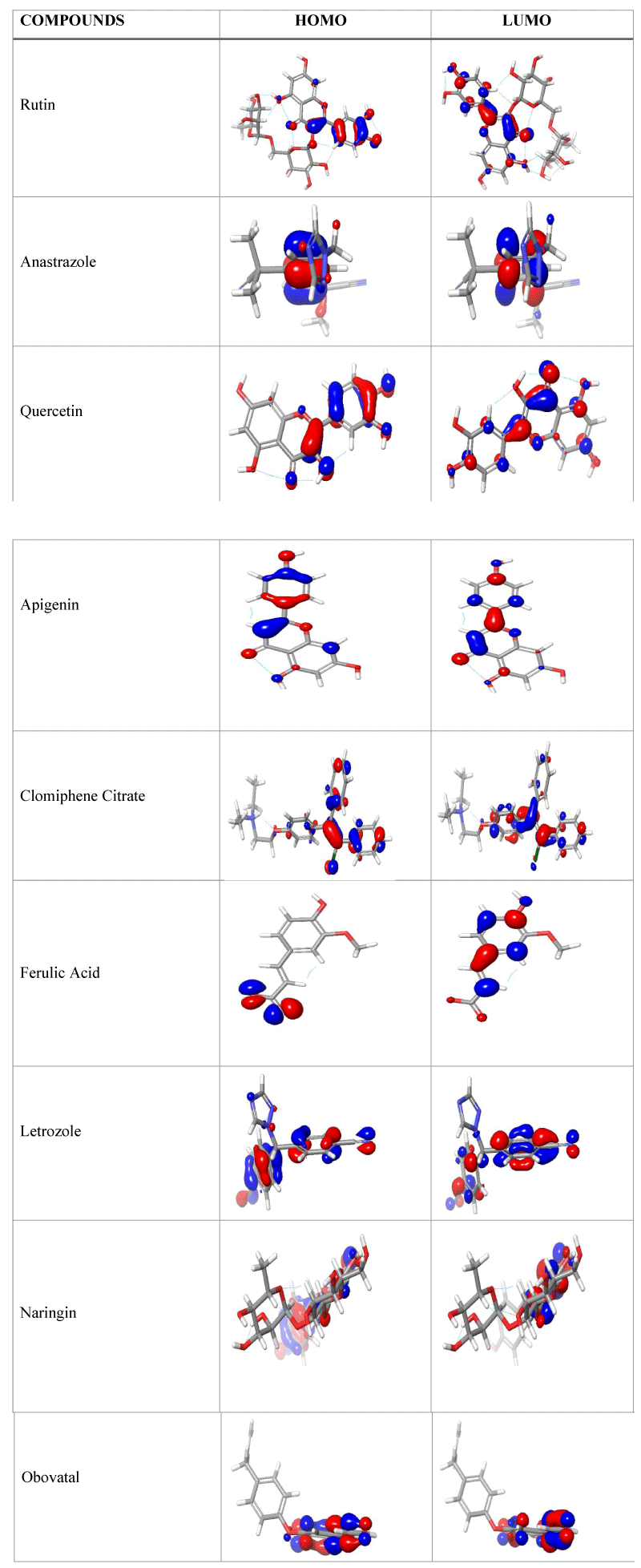
The highest occupied molecular orbital (HOMO) and the lowest unoccupied molecular orbital (LUMO) are pivotal in assessing the electronic properties of compounds, serving as indicators of both stability and reactivity. These orbitals underpin the calculation of various chemical reactivity descriptors. In this study, Maestro Schrödinger computational tools were employed to analyze the lead compounds by determining several key parameters: the band energy gap (Eg), ionization potential (I), electron affinity (A), electronegativity (χ), electrophilicity (δ), global hardness (η), and dipole moment (ω). This comprehensive evaluation provides critical insights into the compounds' potential chemical behavior and interaction capabilities.
Pharmacophore modelling
Pharmacophore modeling was performed using the Schrödinger Maestro 11.11 suite to identify key molecular features essential for ligand binding. The process began by selecting the Phase tool and navigating to the Pharmacophore Modeling section. A pharmacophore hypothesis was then generated by selecting the Develop Pharmacophore Hypothesis option. The receptor-ligand complex was used as the basis for the hypothesis, ensuring that critical interaction points were accurately mapped. This approach serves as a template for screening and optimizing potential lead compounds in subsequent studies.
Pharmacokinetic profiling
Web-based tools, including SwissADME (http://www.swissadme.ch) and ProTox-II (http://tox.charite.de/protox_II), were employed to evaluate the physicochemical properties, toxicity endpoints, drug-likeness, and overall ADMET profile of the lead compounds, as these platforms have proven effective for such analyses [1313Banerjee P, Eckert AO, Schrey AK, Preissner R. ProTox-II: a webserver for the prediction of toxicity of chemicals. Nucleic Acids Res. 2018;46(W1):W257-W263.,1414Daina A, Michielin O, Zoete V. SwissADME: a free web tool to evaluate pharmacokinetics, drug-likeness and medicinal chemistry friendliness of small molecules. Sci Rep. 2017;7:42717.]. These tools facilitated the determination of key physicochemical parameters such as molecular weight, water solubility, lipophilicity, topological surface area, and bioavailability score, all of which are critical for assessing a compound's pharmacokinetic properties.
In addition, comprehensive ADMET assessments were carried out to evaluate gastrointestinal absorption, blood-brain barrier permeability, cytochrome P450 enzyme inhibition potential, and P-glycoprotein substrate candidacy, providing insights into the compounds' absorption, distribution, metabolism, and excretion characteristics. Toxicity predictions, including LD50, hepatotoxicity, carcinogenicity, and cytotoxicity, were also performed to investigate the dose-dependent toxicity of the top-scoring compounds. Collectively, these analyses offered a robust profile of the drug-likeness and safety of the lead compounds, thereby supporting the selection of viable candidates for further drug development studies.
Infertility remains a significant health concern, often linked to hormonal imbalances and disruptions in estrogen biosynthesis. One of the key therapeutic targets in addressing these issues is the modulation of estrogen receptor alpha (ERα) and Aromatase, the enzyme responsible for estrogen synthesis. In this study, we explored the potential of bioactive compounds from Smilax anceps as viable alternatives for infertility treatment by evaluating their interactions with ERα and Aromatase. We assessed their binding affinities, stability, and pharmacokinetic properties through computational modeling and molecular docking analyses to determine their potential efficacy in regulating estrogenic activity.
Molecular docking studies provide critical insights into the mechanisms of ligand-protein interactions within cellular pathways and facilitate the evaluation of ligand binding affinity to target proteins [1515Azad I, Khan T, Ahmad N, Khan AR, Akhter Y. Updates on drug designing approach through computational strategies: a review. Future Sci OA. 2023;9(5). Available from: https://www.tandfonline.com/doi/full/10.2144/fsoa-2022-0085]. The present study identifies multiple test compounds that exhibit superior binding characteristics compared to standard therapeutic agents, highlighting their potential pharmacological relevance.
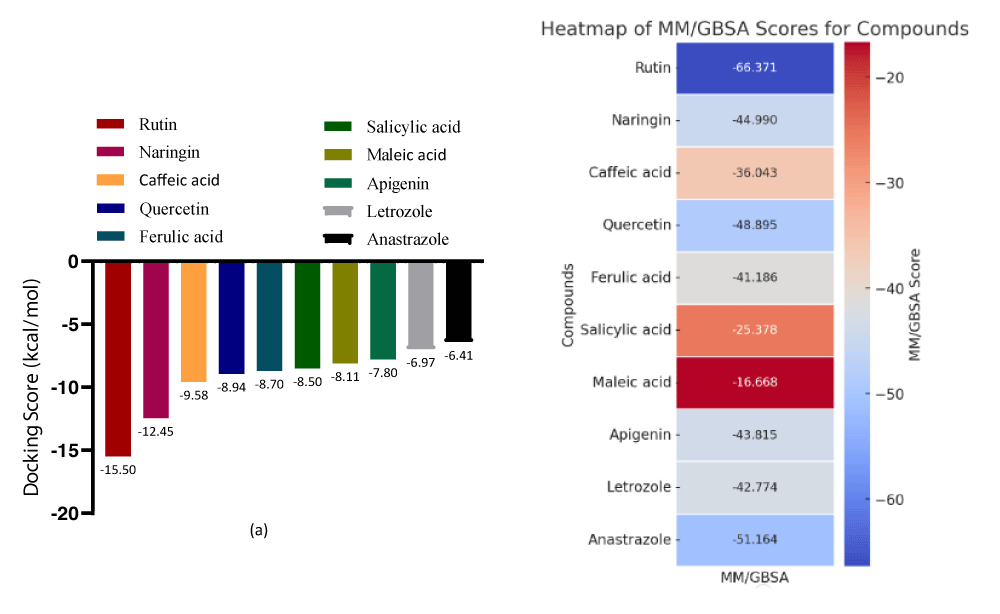
Among the screened ligands targeting Aromatase, Rutin demonstrated the highest binding affinity, with a binding energy of -15.499 kcal/mol, followed closely by Naringin (-12.45 kcal/mol). Notably, these values significantly exceed the binding energies observed for the standard drugs Letrozole (-6.970 kcal/mol) and Anastrozole (-6.410 kcal/mol), suggesting a stronger molecular interaction with the active site of Aromatase. Additional lead compounds displayed binding energy values ranging from -9.577 kcal/mol to -7.798 kcal/mol, exceeding the binding affinities recorded for the reference drugs.
The compounds that exhibited favorable docking scores were subjected to further analysis using Prime Molecular Mechanics-Generalized Born Surface Area (MM-GBSA) calculations to estimate their binding free energies with respect to the target proteins. The MM-GBSA approach is reliable for quantifying ligand binding efficiency and identifying compounds with strong receptor interactions [1616Ahinko M, Niinivehmas S, Jokinen E, Pentikäinen OT. Suitability of MMGBSA for the selection of correct ligand binding modes from docking results. Chem Biol Drug Des. 2019;93(4):522-538. Available from: https://onlinelibrary.wiley.com/doi/10.1111/cbdd.13446].
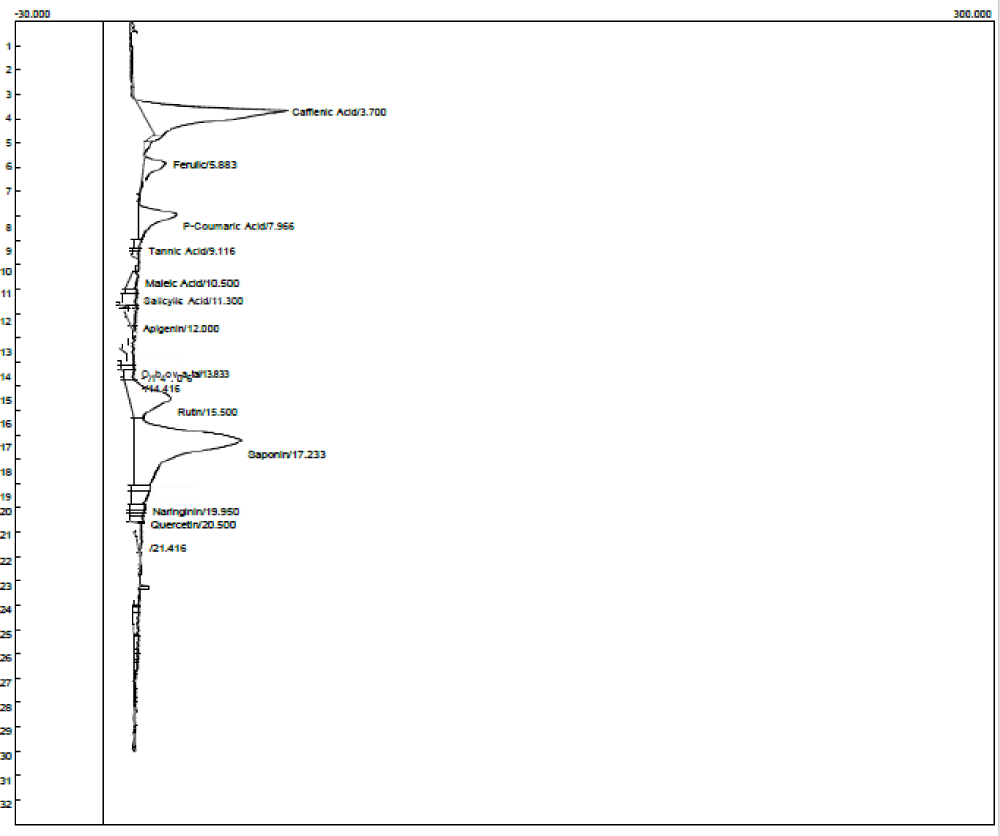
The HPLC chromatogram revealed the presence of key bioactive compounds, with Saponin, Caffeic Acid, Rutin, P-Coumaric Acid, Ferulic Acid, Naringin, and Quercetin ranking highest in abundance. These compounds exhibited distinct retention times, indicating variations in polarity and interaction with the mobile phase. Their significant peak areas suggest a high concentration, making them strong candidates for further biological evaluation.
Figure 1: High-performance liquid Chromatography (HPLC) chromatogram of Smilax anceps extract, showing identified bioactive compounds' retention times (RT).
Among these, Rutin (RT 15.500 min, Area 863.8795) demonstrated a strong peak, indicating a significant presence. This aligns with its potential as a bioactive flavonoid, known for antioxidant and enzyme inhibitory properties. Quercetin (RT 19.950 min, Area 84.0050), a flavonoid, exhibited moderate intensity. Apigenin (RT 12.000 min, Area 59.3410) appeared in lower but significant concentrations, reinforcing its pharmacological relevance in docking studies. Ferulic Acid (RT 5.883 min, Area 308.7870), a phenolic acid, displayed a prominent peak, indicating its potential role in antioxidant and enzyme-modulating activities. Naringin (RT 19.166 min, Area 105.4600) was detected with a moderate peak area, marking its presence in the sample. As a flavanone glycoside, its structural and biochemical properties make it a promising candidate for further bioactivity studies.
Among the studied compounds, Rutin demonstrated the most favorable binding affinity towards Aromatase, with a binding free energy of -66.371 kcal/mol. This was followed by Anastrozole (-51.164 kcal/mol), while Quercetin (-48.895 kcal/mol), Naringin (-44.990 kcal/mol), and Apigenin (-43.815 kcal/mol) also exhibited strong binding interactions. Notably, these compounds outperformed Letrozole (-42.774 kcal/mol) in binding affinity.
Despite having slightly lower binding energy than the standard inhibitors, ferulic acid (-41.186 kcal/mol) was selected for further investigation due to its comparable binding efficiency. However, caffeic acid (-36.043 kcal/mol), salicylic acid (-25.378 kcal/mol), and maleic acid (-16.668 kcal/mol) displayed significantly weaker binding affinities and were therefore excluded from subsequent studies.
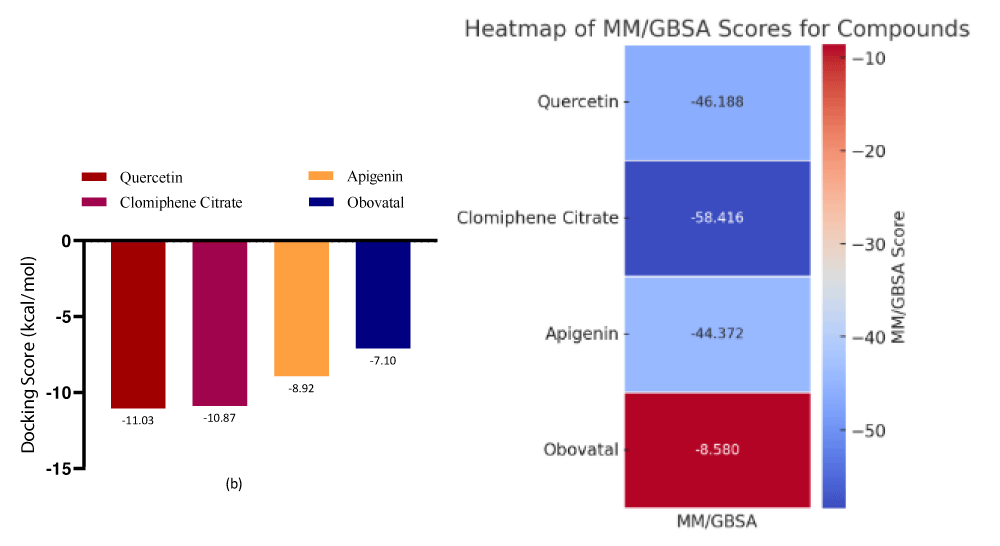
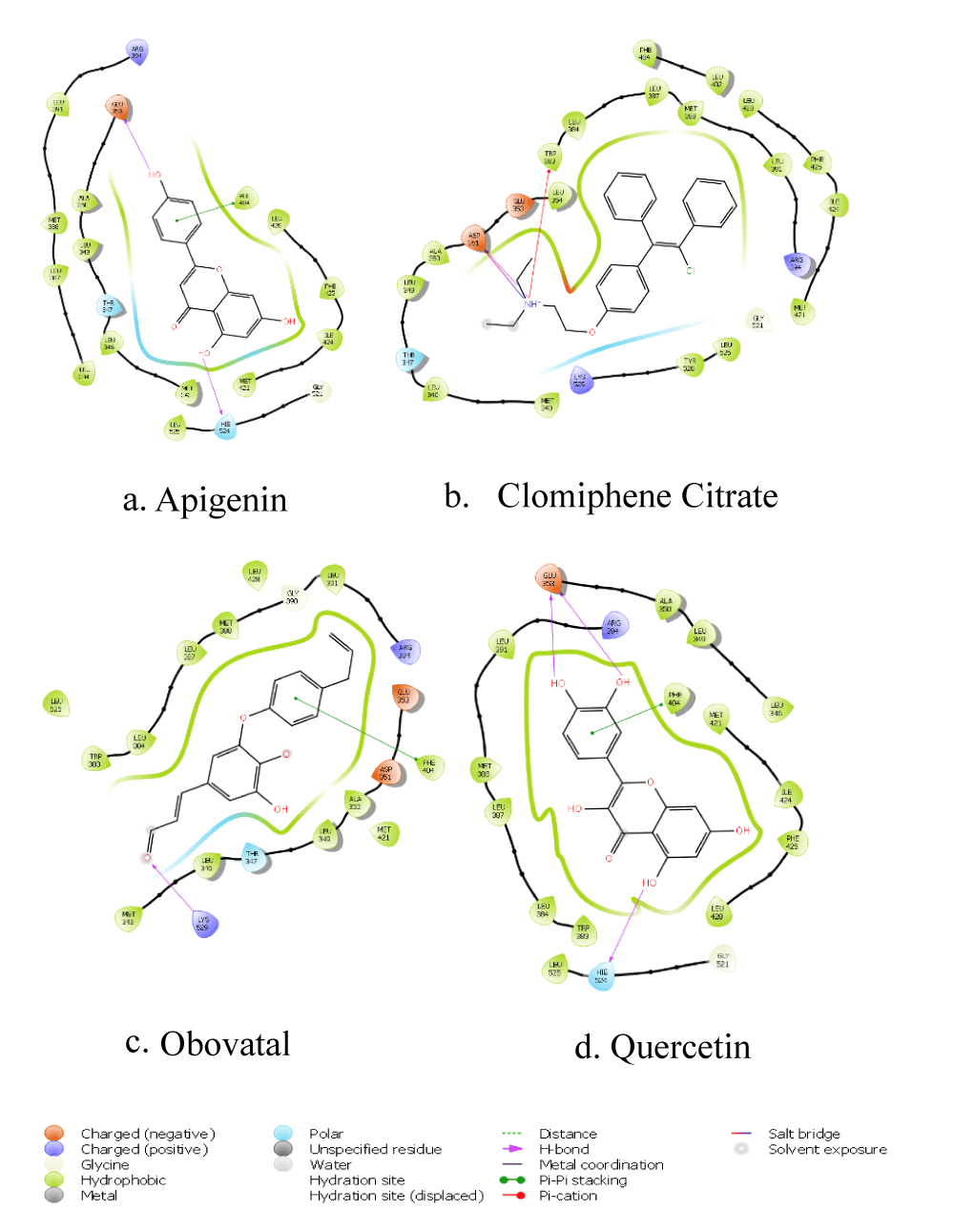
The MM-GBSA calculations for compounds docked against estrogen receptor alpha revealed that clomiphene citrate exhibited the strongest binding affinity, with a binding free energy of -58.416 kcal/mol. Additionally, Quercetin (-46.188 kcal/mol) and Apigenin (-44.372 kcal/mol) demonstrated substantial receptor interactions, indicating their potential as promising candidates for further evaluation.
The results of this computational study highlight the strong binding affinities of bioactive compounds derived from Smilax anceps, suggesting their potential application in infertility treatment, particularly in the context of follicle stimulation. The high binding efficiency of these compounds with key targets, such as Aromatase and estrogen receptor alpha, supports their potential therapeutic role in reproductive health.
For Estrogen Receptor Alpha (ERα), Quercetin (-11.032 kcal/mol) exhibited the highest binding affinity among the tested ligands, surpassing the reference drug, Clomiphene Citrate (-10.872 kcal/mol). While Apigenin (-8.922 kcal/mol) and Obovatal (-7.099 kcal/mol) demonstrated comparatively lower binding affinities, they were nonetheless considered for further analysis due to their moderate docking scores.
Figure 2: (a) Molecular docking scores (kcal/mol) of screened ligands from Smilax anceps and standard inhibitors against Aromatase. (b) Heatmap visualization of MM/GBSA scores, highlighting the binding affinity range of the analyzed compounds against Aromatase.
Figure 3: (a) Molecular docking scores (kcal/mol) of screened ligands from Smilax anceps and standard inhibitors against Estrogen receptor alpha. (b) Heatmap visualization of MM/GBSA scores, highlighting the binding affinity range of the analyzed compounds against Estrogen receptor alpha.
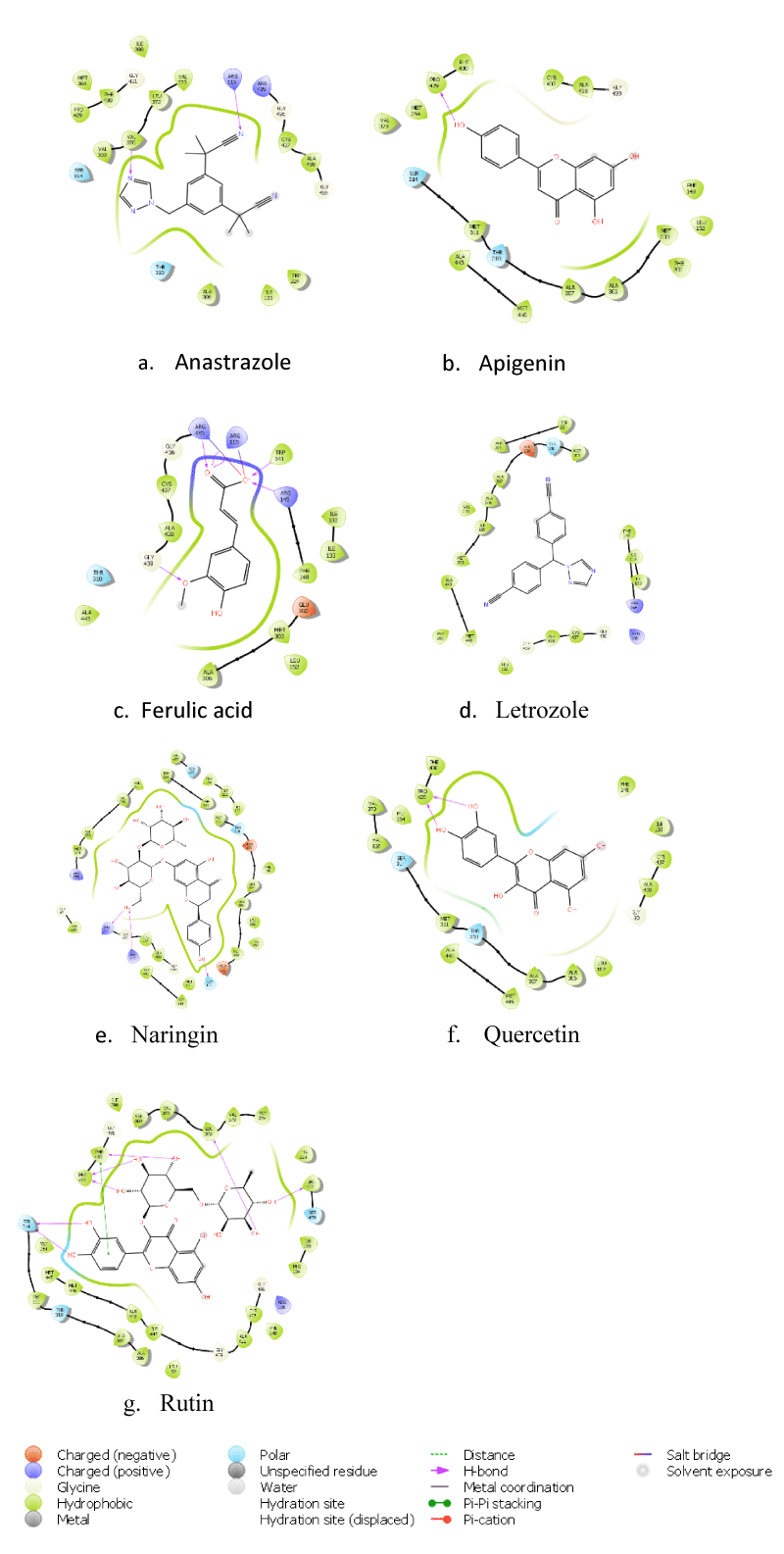
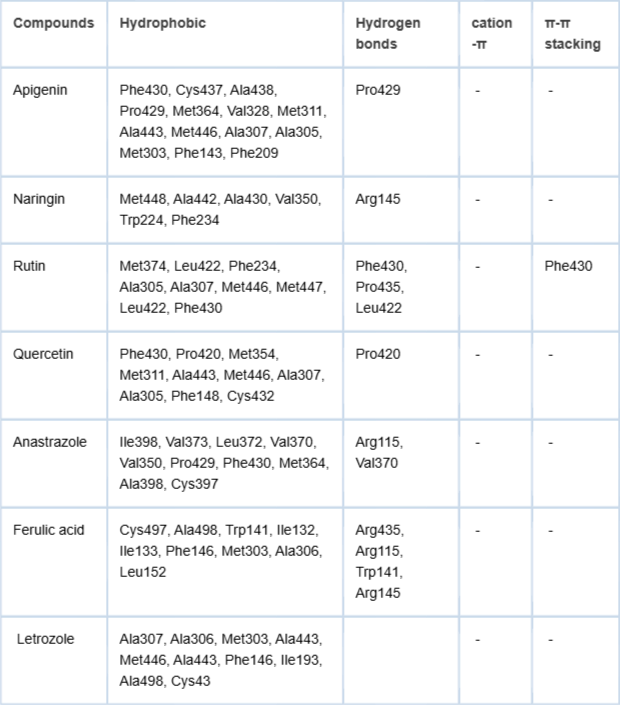
Figure 4: 2D interaction map of lead compounds with key amino acid residues at the active site of Aromatase, illustrating binding interactions such as hydrogen bonding, hydrophobic contacts, and π-π stacking.
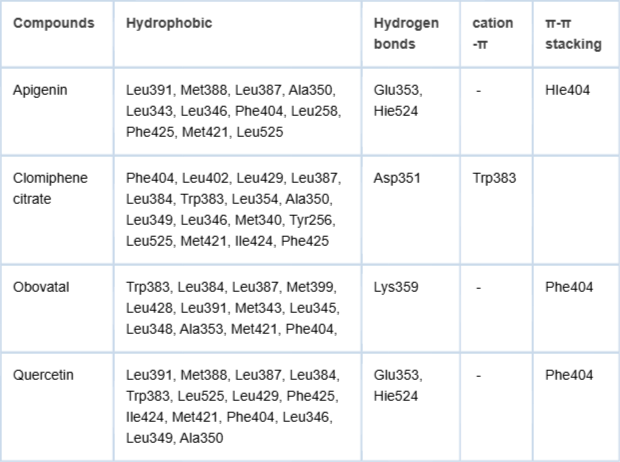
Figure 5: 2D interaction map of lead compounds with key amino acid residues at the active site of Estrogen receptor alpha, illustrating binding interactions such as hydrogen bonding, hydrophobic contacts, and π-π stacking.
These findings suggest that the identified lead compounds, particularly Rutin, Naringin, and Quercetin, may exert more potent inhibitory effects on Aromatase and Estrogen Receptor Alpha, potentially enhancing therapeutic efficacy in infertility treatment through improved follicle stimulation modulation.
Table 1: Hydrophobic, hydrogen, cation-π, and π-π stacking interactions for screened molecules in Aromatase active site.
Table 2: Hydrophobic, hydrogen, cation-π, and π-π stacking interactions for screened molecules in Estrogen receptor alpha active site.
Density Functional Theory (DFT) analysis of molecular electronic properties
Density Functional Theory (DFT) is a powerful computational technique for investigating the relationship between molecular geometry and electronic properties of chemical compounds []. In this study, we performed DFT calculations using the B3LYP/6-31G basis set to optimize molecular geometries and analyze electronic structure parameters.
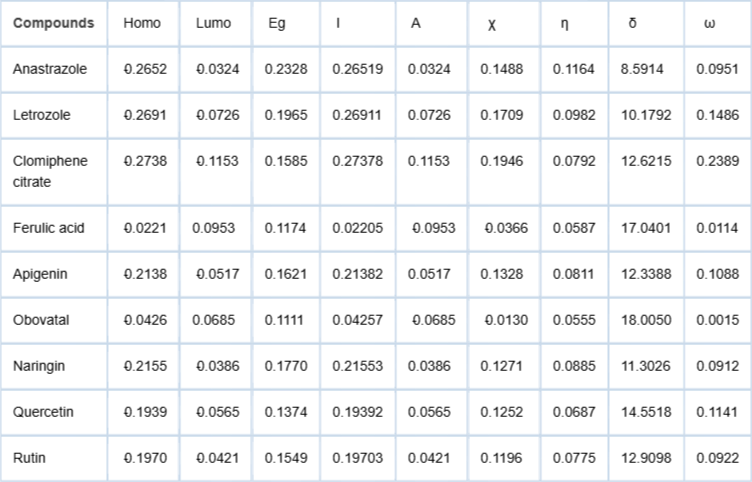
The Frontier Molecular Orbitals (FMOs), which include the Highest Occupied Molecular Orbital (HOMO) and the Lowest Unoccupied Molecular Orbital (LUMO), are fundamental in determining a molecule's chemical stability and reactivity [1818Agwupuye JA, Louis H, Unimuke TO, David P, Ubana EI, Moshood YL. Electronic structure investigation of the stability, reactivity, NBO analysis, thermodynamics, and nature of interactions in methyl-substituted imidazolium-based ionic liquids. J Mol Liq. 2021;337:116458. Available from: https://linkinghub.elsevier.com/retrieve/pii/S016773222101182X,1919Agwupuye JA, Neji PA, Louis H, Odey JO, Unimuke TO, Bisiong EA. Investigation on electronic structure, vibrational spectra, NBO analysis, and molecular docking studies of aflatoxins and selected emerging mycotoxins against wild-type androgen receptor. Heliyon. 2021;7(7):e07544. Available from: https://linkinghub.elsevier.com/retrieve/pii/S2405844021016479]. These orbital energies allow for the calculation of key global reactivity descriptors, including the energy gap (eg), ionization potential (I = -EHOMO), electron affinity (A = -ELUMO), electronegativity (χ), global hardness (η), electrophilicity (δ), and dipole moment (μ).
The HOMO and LUMO energies provide insight into the electron-donating and electron-accepting capabilities of a molecule. Ferulic acid exhibited the highest HOMO energy, suggesting a strong tendency to donate electrons. In contrast, Anastrozole, Letrozole, and clomiphene citrate displayed the lowest HOMO values, closely followed by Naringin and Apigenin. This indicates that the standard compounds studied have the highest ionization energy, implying low electron-donating ability and reduced reactivity toward electrophiles.
Conversely, clomiphene citrate and Letrozole exhibited the lowest LUMO energies, signifying their strong electrophilic character and increased likelihood of accepting electrons. Consequently, these molecules demonstrate higher reactivity toward nucleophiles.
The energy gap, defined as the difference between the HOMO and LUMO energies, is a critical parameter for assessing molecular reactivity and stability [2020Izuchukwu UD, Asogwa FC, Louis H, Uchenna EF, Gber TE, Chinasa UM. Synthesis, vibrational analysis, molecular property investigation, and molecular docking of new benzenesulphonamide-based carboxamide derivatives against Plasmodium falciparum. J Mol Struct. 2022;1269:133796. Available from: https://linkinghub.elsevier.com/retrieve/pii/S0022286022014508]. Among the analyzed compounds, Anastrazole exhibited the highest energy gap (0.23279 eV), indicating low chemical reactivity, reduced polarizability, and enhanced kinetic stability. In contrast, Obovatal had the smallest energy gap (0.11108 eV), suggesting higher chemical reactivity and increased polarizability [2121Udoikono AD, Louis H, Eno EA, Agwamba EC, Unimuke TO, Igbalagh AT. Reactive azo compounds as potential chemotherapy drugs in the treatment of malignant glioblastoma: experimental and theoretical studies. J Photochem Photobiol A. 2022;10:100116. Available from: https://linkinghub.elsevier.com/retrieve/pii/S2666469022000094]. The remaining compounds, including the standard drugs, exhibited intermediate energy gaps between 0.11737 eV and 0.19648 eV, indicating relatively comparable stability and reactivity.
Furthermore, all compounds except ferulic acid and Obovatal (-0.03664eV and -0.01297eV, respectively) had electronegativity values between 0.0324 eV and 0.11532 eV. The notably low electronegativity of ferulic acid and Obovatal suggests an increased tendency to undergo oxidation reactions, potentially enhancing their biological activity.
As previously established, global hardness (η) is directly proportional to the energy gap [2222Praise SA, Kolawole AT, Olusanya MM, Bakare OS, Ezeuchenne IC. Investigation of Musa paradisiaca compounds as dipeptidyl peptidase-4, alpha-amylase and protein tyrosine phosphatase 1B inhibitors in diabetes via an in silico approach. Next Res. 2025;2(1):100108. Available from: https://linkinghub.elsevier.com/retrieve/pii/S3050475924001076]. The calculated results align with this principle: Anastrazole, possessing the highest energy gap, also exhibited the most outstanding hardness value, whereas Obovatal, with the smallest energy gap, had the lowest hardness level. The hardness values across all analyzed compounds ranged from 0.05554 to 0.1164 eV, indicating a propensity for strong interactions with biological targets, particularly electrophilic sites.
The dipole moment (μ) provides insight into a molecule's charge distribution and polarity. Clomiphene citrate exhibited the highest dipole moment among the studied compounds, indicating significant charge separation and high polarity. Consequently, it is expected to show strong solubility in polar solvents. In contrast, Obovatal displayed the lowest dipole moment, suggesting weak polarity or non-polarity, which implies greater solubility in nonpolar solvents.
Pharmacophore model
Pharmacophore modeling is a powerful computational technique in drug discovery, enabling the identification of key molecular features essential for biological activity. This process involves constructing a three-dimensional functional group arrangement that interacts with a target biomolecule, facilitating virtual screening and lead optimization. In this study, we utilized Maestro, a molecular modeling suite, to develop pharmacophore models for both lead and reference compounds, aiming to elucidate critical interactions and refine drug design strategies.
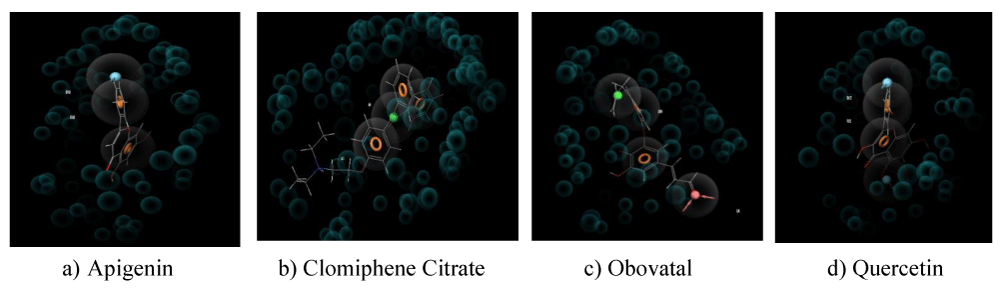
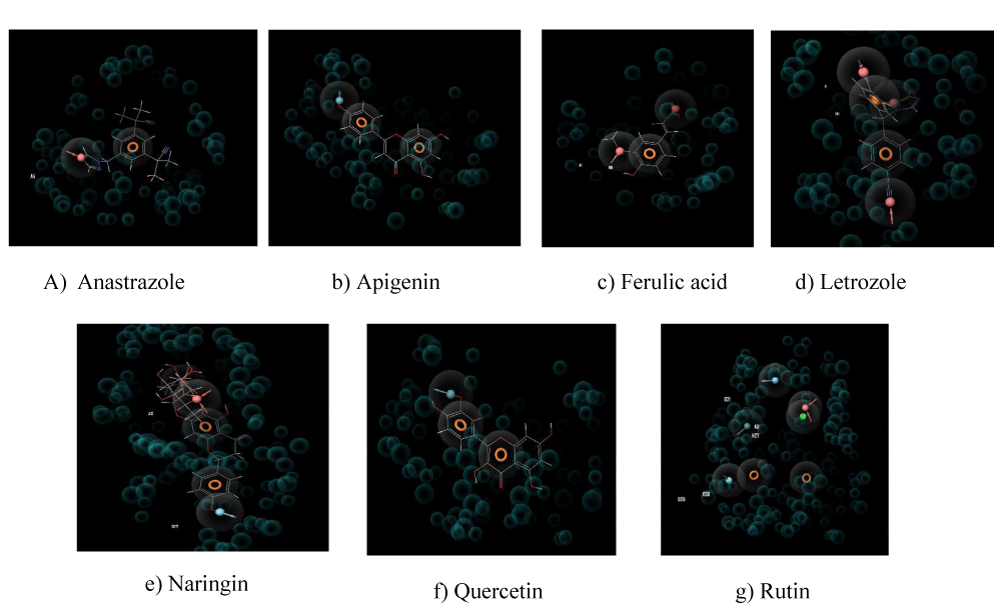
The pharmacophore interaction analysis provides insights into the binding mechanisms of Apigenin, Obovatal, and Quercetin with estrogen receptor alpha. Apigenin exhibits strong hydrogen bond interactions, which are marked by hydrogen bond donor and acceptor regions. This interaction stabilizes the ligand within the binding pocket, enhancing its potential bioactivity. Similarly, Obovatal demonstrates hydrogen bonding and notable hydrophobic interactions, reinforcing receptor complementarity and binding stability.
Quercetin, like Apigenin, establishes hydrogen bonds with key receptor residues, reinforcing its binding affinity and inhibitory potential. Also, its hydrophobic interactions contribute to strong receptor anchoring, like Obovatal. The spatial arrangement of these pharmacophoric features suggests their ability to modulate receptor activity effectively. More importantly, their inhibitory potential may suppress excessive estrogen signaling while maintaining a balanced hormonal environment for follicle stimulation.
Figure 6: Pharmacophore representation between ligands and estrogen receptor alpha.
Figure 7: Pharmacophore Mapping of Ligand-Aromatase Interactions.
Table 3: Illustration of the Molecular Orbitals of Lead Compounds and the Standard Compounds.
Apigenin, Ferulic Acid, Naringin, Quercetin, and Rutin demonstrated strong interactions with Aromatase, exhibiting key binding features essential for enzyme inhibition. Quercetin and Rutin formed multiple hydrogen bonds and hydrophobic interactions, closely mimicking the binding mechanisms of the reference inhibitors, Letrozole and Anastrozole. Apigenin and Naringin also displayed strong receptor interactions, with Naringin establishing extensive hydrogen bonding, potentially enhancing its stability within the active site. Despite its smaller molecular framework, Ferulic Acid effectively engaged critical residues, reinforcing its potential as an aromatase modulator.
ADMET investigation of selected compounds in Smilax anceps Study
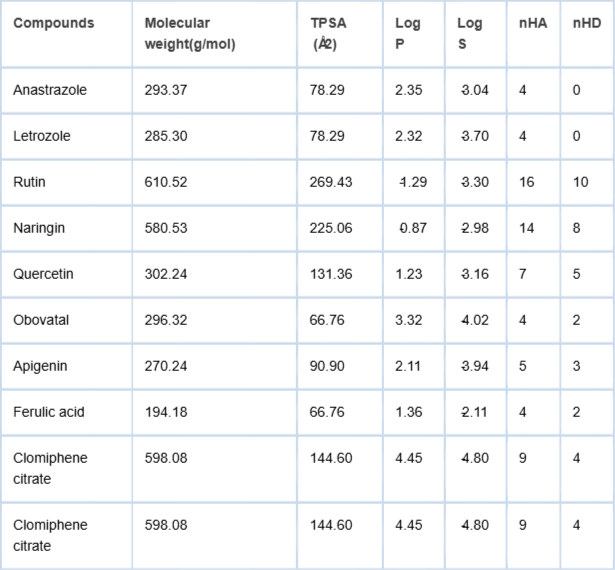
The ADMET investigation of compounds derived from Smilax anceps evaluates their physicochemical properties, absorption, distribution, metabolism, excretion, and toxicity, providing crucial insights into their pharmacological viability. As outlined in Table 5, the physicochemical attributes indicate that most compounds possess molecular weights within the acceptable range (<500 Da), except for Rutin, Naringin, and clomiphene citrate, which exceed this limit. These higher molecular weights, combined with elevated topological polar surface area (TPSA) values, predict low permeability and absorption, particularly in gastrointestinal (GI) environments. Conversely, compounds like Anastrazole and Letrozole demonstrated favorable lipophilicity (Log P values) and TPSA within optimal ranges, enhancing their potential for membrane permeability and cellular uptake [2323Lipinski CA, Lombardo F, Dominy BW, Feeney PJ. Experimental and computational approaches to estimate solubility and permeability in drug discovery and development settings. Adv Drug Deliv Rev. 2001;46(1-3):3-26. Available from: https://linkinghub.elsevier.com/retrieve/pii/S0169409X00001290,2424Veber DF, Johnson SR, Cheng HY, Smith BR, Ward KW, Kopple KD. Molecular properties that influence the oral bioavailability of drug candidates. J Med Chem. 2002;45(12):2615-2623. Available from: https://pubs.acs.org/doi/10.1021/jm020017n].
Table 4: Quantum Chemical Calculations of Lead Compound and the Standard Compound.
Table 5: Physicochemical properties of top-scoring compounds
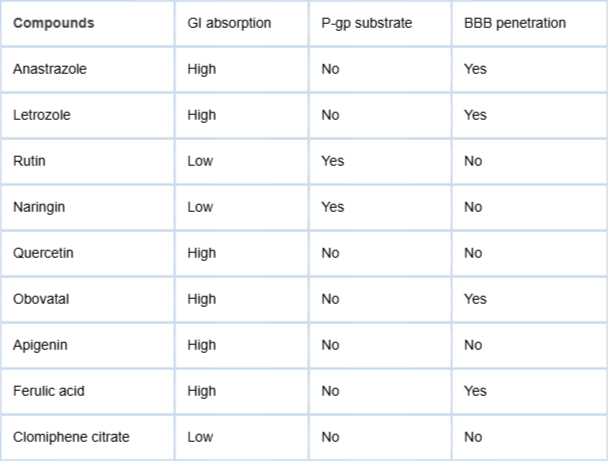
The absorption and distribution profiles, detailed in Table 6, reveal high GI absorption for compounds such as Anastrazole, Letrozole, Quercetin, Apigenin, and Ferulic acid, making them promising candidates for oral administration. However, Rutin and Naringin exhibited low GI absorption due to their unfavorable physicochemical properties. Blood-brain barrier (BBB) penetration was notable in compounds like Anastrazole, Letrozole, and Obovatal, which indicates potential activity within the central nervous system. P-glycoprotein (P-gp) substrate status was identified for Rutin and Naringin, potentially leading to efflux issues and reduced bioavailability, emphasizing the need for delivery system modifications to enhance therapeutic efficacy [2525van de Waterbeemd H, Gifford E. ADMET in silico modelling: towards prediction paradise? Nat Rev Drug Discov. 2003;2(3):192-204. Available from: https://www.nature.com/articles/nrd1032].
Table 6: Descriptors of Absorption and Distribution.
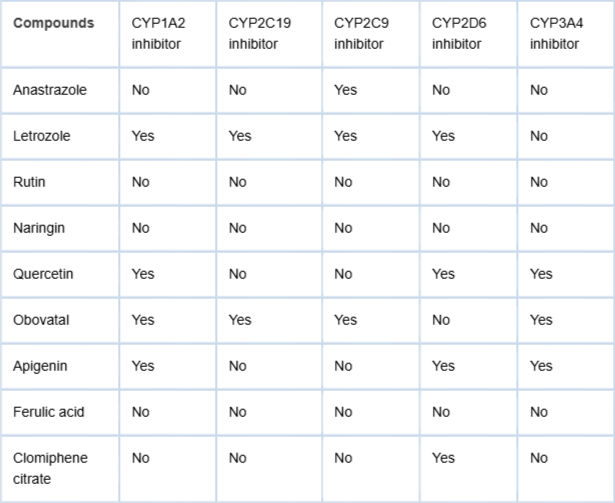
Metabolism analysis, presented in Table 7, highlights interactions with cytochrome P450 (CYP) enzymes. While most compounds minimally inhibited CYP450 isoenzymes, Letrozole and Obovatal displayed significant inhibition, raising concerns over potential drug-drug interactions [2626Testa B, Krämer SD. The biochemistry of drug metabolism: an introduction. Chem Biodivers. 2006;3(10):1053-1101. Available from: https://onlinelibrary.wiley.com/doi/10.1002/cbdv.200690111]. This underscores the importance of metabolic profiling for clinical applications to avoid adverse effects during combination therapy [27–2927–29Clarke CJ, Haselden JN. Metabolic profiling as a tool for understanding mechanisms of toxicity. Toxicol Pathol. 2008;36(1):140-147. Available from: https://journals.sagepub.com/doi/10.1177/0192623307310947].
Table 7: Descriptors for Pharmacokinetics.
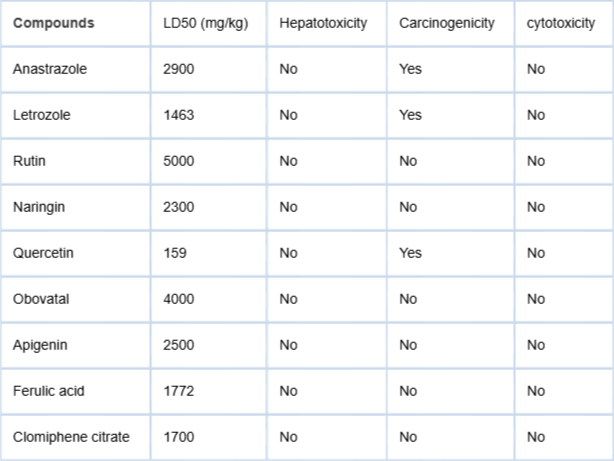
The excretion and toxicity profiles (Table 8) emphasize that compounds like Anastrazole, Rutin, Naringin, Obovatal, and Apigenin possess high LD50 values, reflecting low acute toxicity. Furthermore, hepatotoxicity assessments showed no adverse effects, while carcinogenicity was observed in compounds like Anastrazole, Letrozole, and Quercetin, limiting their scope for long-term therapeutic use.
Table 8: Excretion and Toxicity Parameters.
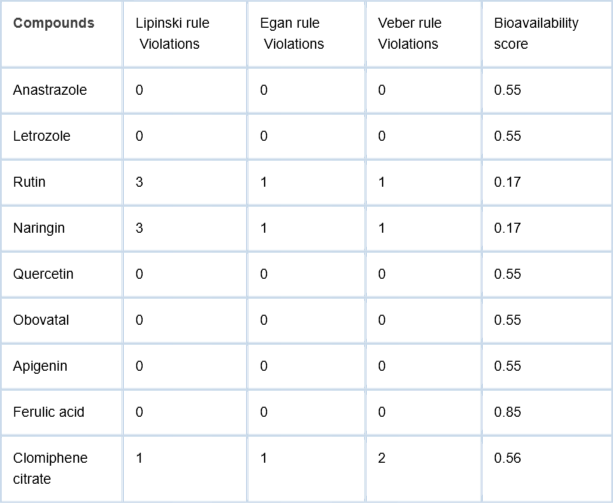
Drug-likeness and bioavailability assessments in Table 9 reveal that most compounds comply with Lipinski's, Veber's, and Egan's rules, except for Rutin and Naringin, which violated multiple parameters. The low bioavailability scores of these compounds (0.17) further restrict their application as viable drug candidates. Conversely, Ferulic acid exhibited an impressive bioavailability score of 0.85, making it a promising candidate for further pharmacokinetic studies [2323Lipinski CA, Lombardo F, Dominy BW, Feeney PJ. Experimental and computational approaches to estimate solubility and permeability in drug discovery and development settings. Adv Drug Deliv Rev. 2001;46(1-3):3-26. Available from: https://linkinghub.elsevier.com/retrieve/pii/S0169409X00001290].
Table 9: Drug likeness and bioavailability score.
Docking studies evaluated the binding affinities of compounds with target proteins, demonstrating strong interaction for Rutin and Naringin with Aromatase, as indicated by their high docking scores. However, standard drugs such as Letrozole and Anastrazole exhibited comparatively lower docking scores, suggesting that certain natural compounds could offer competitive efficacy. These findings emphasize the potential of Smilax anceps as a source of bioactive molecules with diverse pharmacological properties (Table 6). Furthermore, advanced delivery systems or prodrug approaches could mitigate limitations in poorly absorbed compounds such as Rutin and Naringin [3030Bowes J, Brown AJ, Hamon J, Jarolimek W, Sridhar A, Waldron G. Reducing safety-related drug attrition: the use of in vitro pharmacological profiling. Nat Rev Drug Discov. 2012;11(12):909-922. Available from: https://www.nature.com/articles/nrd3845,3131Butler P, Riley RJ. In vitro ADME assays and in vivo extrapolations. In: The ADME Encyclopedia. Cham: Springer International Publishing; 2022. p. 537-547. Available from: https://link.springer.com/10.1007/978-3-030-84860-6_141].
Additional insights from ADMET data include the potential use of these compounds in combination therapies due to their minimal impact on metabolic enzymes, except for select cases like Obovatal. The ability of compounds to cross the BBB presents opportunities for neurological applications, particularly for neurodegenerative or neuroinflammatory conditions. However, the identified carcinogenicity in some compounds necessitates caution during therapeutic development, highlighting the importance of structural modifications or advanced formulations to reduce toxicity [2828Atanasov AG, Zotchev SB, Dirsch VM, Orhan IE, Banach M, Rollinger JM. Natural products in drug discovery: advances and opportunities. Nat Rev Drug Discov. 2021;20(3):200-216. Available from: https://www.nature.com/articles/s41573-020-00114-z,2929Simoben CV, Babiaka SB, Moumbock AFA, Namba-Nzanguim CT, Eni DB, Medina-Franco JL. Challenges in natural product-based drug discovery assisted with in silico methods. RSC Adv. 2023;13(45):31578-31594. Available from: https://xlink.rsc.org/?DOI=D3RA06831E]. These findings collectively provide a comprehensive understanding of the pharmacological potential of Smilax anceps while identifying critical limitations for future research.
This study highlights the potential of bioactive compounds from Smilax anceps as modulators of estrogen receptor alpha (ERα) and Aromatase, two critical targets in infertility treatment. Molecular docking analyses revealed that Rutin and Quercetin exhibited stronger binding affinities than conventional drugs, suggesting their potential to enhance follicle stimulation. MM-GBSA calculations confirmed their stability, while Density Functional Theory (DFT) analysis provided insights into their electronic properties and reactivity. Additionally, ADMET predictions indicated favorable pharmacokinetic profiles, supporting their drug-like potential.
These findings suggest that Smilax anceps compounds could serve as viable alternatives or adjuncts in infertility therapy. However, in-vitro and in-vivo studies are necessary to validate their efficacy and safety before clinical application. Future research should investigate their precise molecular mechanisms and optimize their therapeutic potential for reproductive health.
The authors wish to acknowledge the contributions and support of all laboratory technologists in the Department of Biochemistry and Botany who helped during the course of this research work. We also appreciate the resilience of all the authors involved in this research work and the Universities for providing a conducive environment for this research progress.
Clinical trial number: This work was conducted in accordance with the global research standards as stipulated by the Faculty of Science Central Research Committee. The research did not have any clinical trial number as no human subjects or animal models were involved in the research work; it is purely computational and an in silico research model
Declaration section
Authors’ consent to publish declaration: Not applicable as no human study is involved.
Consent to participate declaration: All the authors and participants in this work were informed of the study’s aims, methods, potential risks, and benefits before enrollment, and written consent was obtained from each participant. Participation was entirely voluntary, and participants retained the right to withdraw from the study at any stage without prejudice.
Ethics declaration: The study was conducted in accordance with the ethical principles outlined in the Declaration of the Ministry of Health, which was approved by the Faculty Central Research Committee.
Data availability statement: The dataset generated, analyzed, and supporting the findings of this study are available from the corresponding author upon reasonable request.
Authors’ contributions: This work was carried out in collaboration with all the authors from different Departments and Universities. Author OSB carried out the Conceptualization, supervision, methodology, writing of the original draft, review, and editing of the work, while author ATK performed the data curation, pharmacophore modeling, and molecular docking. Author MMO also did the draft writing, review, and editing, as well as the literature search of the work, while author SAP did the HPLC data analysis and data interpretation; author SAP also performed the writing, review, and editing, as well as the literature search, and author ABA was involved in the resources, investigation, and project administration of the research. All the authors were involved in results collation, article writing, and proofreading and agreed on its submission to this journal for publication.
Conflicts of Interest: We declared that there are no conflicts of interest and that there is no funding sponsor in executing this research work and in the publication of the results of the study.
Funding declaration: This research was supported by the commitment of all the authors involved in the work, there was no funding agency and no funding available for the research work; neither was there any funding body role in the study design, data collection and analysis, decision to publish, or preparation of the manuscript. Everything was solely done by the participation of all the authors as follows:
World Health Organization. 1 in 6 people globally are affected by infertility [Internet]. Geneva: WHO; 2023 [cited 2026 Oct 29]. Available from: https://www.who.int/news/item/04-04-2023-1-in-6-people-globally-affected-by-infertility
Carson SA, Kallen AN. Diagnosis and management of infertility. JAMA. 2021;326(1):65-76. Available from: https://jamanetwork.com/journals/jama/fullarticle/2781637
Tao YX, Segaloff DL. Follicle-stimulating hormone receptor mutations and reproductive disorders. In: Vitamins and Hormones. Vol. 80. San Diego (CA): Elsevier; 2009. p. 115-131. Available from: https://linkinghub.elsevier.com/retrieve/pii/S1877117309890054
Zhao D, Lv C, Liu G, Mi Y, Zhang C. Effect of estrogen on chick primordial follicle development and activation. Cell Biol Int. 2017;41(6):630-638. Available from: https://onlinelibrary.wiley.com/doi/10.1002/cbin.10766
Kim DH, Park HJ, Park HS, Lee JU, Ko C, Gye MC. Estrogen receptor α in T cells suppresses follicular helper T cell responses and prevents autoimmunity. Exp Mol Med. 2019;51(4):1-9. Available from: https://www.nature.com/articles/s12276-019-0237-z
Liu T, Huang Y, Lin H. Estrogen disorders: interpreting the abnormal regulation of aromatase in granulosa cells. Int J Mol Med. 2021;47(5):73. Available from: http://www.spandidos-publications.com/10.3892/ijmm.2021.4906
Mbi Feh MK, Patel P, Wadhwa R. Clomiphene. In: StatPearls [Internet]. Treasure Island (FL): StatPearls Publishing; 2025. Available from: http://www.ncbi.nlm.nih.gov/pubmed/25681838
Requena A, Herrero J, Landeras J, Navarro E, Neyro JL, Salvador C. Use of letrozole in assisted reproduction: a systematic review and meta-analysis. Hum Reprod Update. 2008;14(6):571-582. Available from: https://academic.oup.com/humupd/article-lookup/doi/10.1093/humupd/dmn033
Del Pup L, Peccatori FA, Levi-Setti PE, Codacci-Pisanelli G, Patrizio P. Risk of cancer after assisted reproduction: a review of the available evidence and guidance to fertility counselors. Eur Rev Med Pharmacol Sci. 2018;22(22):8042-8059. Available from: http://www.ncbi.nlm.nih.gov/pubmed/30536354
Krishnaprabu DS. Therapeutic potential of medicinal plants: a review. J Pharmacogn Phytochem. 2020;9(2):2228-2233. Available from: https://www.phytojournal.com/archives/2020.v9.i2.AK.11184/therapeutic-potential-of-medicinal-plants-a-review
Osuagwu GGE, Osuagwu AN, Udogu FO, Ukoji NA. Anti-inflammatory and diuretic activities of ethanolic extracts of Smilax anceps Wild. Pharm Biosci J. 2018;6(1):11-16. Available from: http://pharmabiosciencejournal.com/index.php/pbj/article/view/1922
Bathini R, Sivan SK, Fatima S, Manga V. Molecular docking, MM/GBSA and 3D-QSAR studies on EGFR inhibitors. J Chem Sci. 2016;128:1163-1173.
Banerjee P, Eckert AO, Schrey AK, Preissner R. ProTox-II: a webserver for the prediction of toxicity of chemicals. Nucleic Acids Res. 2018;46(W1):W257-W263.
Daina A, Michielin O, Zoete V. SwissADME: a free web tool to evaluate pharmacokinetics, drug-likeness and medicinal chemistry friendliness of small molecules. Sci Rep. 2017;7:42717.
Azad I, Khan T, Ahmad N, Khan AR, Akhter Y. Updates on drug designing approach through computational strategies: a review. Future Sci OA. 2023;9(5). Available from: https://www.tandfonline.com/doi/full/10.2144/fsoa-2022-0085
Ahinko M, Niinivehmas S, Jokinen E, Pentikäinen OT. Suitability of MMGBSA for the selection of correct ligand binding modes from docking results. Chem Biol Drug Des. 2019;93(4):522-538. Available from: https://onlinelibrary.wiley.com/doi/10.1111/cbdd.13446
Mumit MA, Pal TK, Alam MA, Islam MA, Paul S, Sheikh MC. DFT studies on vibrational and electronic spectra, HOMO-LUMO, MEP, HOMA, NBO, and molecular docking analysis of benzyl-3-N-(2,4,5-trimethoxyphenylmethylene)hydrazinecarbodithioate. J Mol Struct. 2020;128:715. Available from: https://linkinghub.elsevier.com/retrieve/pii/S0022286020310401
Agwupuye JA, Louis H, Unimuke TO, David P, Ubana EI, Moshood YL. Electronic structure investigation of the stability, reactivity, NBO analysis, thermodynamics, and nature of interactions in methyl-substituted imidazolium-based ionic liquids. J Mol Liq. 2021;337:116458. Available from: https://linkinghub.elsevier.com/retrieve/pii/S016773222101182X
Agwupuye JA, Neji PA, Louis H, Odey JO, Unimuke TO, Bisiong EA. Investigation on electronic structure, vibrational spectra, NBO analysis, and molecular docking studies of aflatoxins and selected emerging mycotoxins against wild-type androgen receptor. Heliyon. 2021;7(7):e07544. Available from: https://linkinghub.elsevier.com/retrieve/pii/S2405844021016479
Izuchukwu UD, Asogwa FC, Louis H, Uchenna EF, Gber TE, Chinasa UM. Synthesis, vibrational analysis, molecular property investigation, and molecular docking of new benzenesulphonamide-based carboxamide derivatives against Plasmodium falciparum. J Mol Struct. 2022;1269:133796. Available from: https://linkinghub.elsevier.com/retrieve/pii/S0022286022014508
Udoikono AD, Louis H, Eno EA, Agwamba EC, Unimuke TO, Igbalagh AT. Reactive azo compounds as potential chemotherapy drugs in the treatment of malignant glioblastoma: experimental and theoretical studies. J Photochem Photobiol A. 2022;10:100116. Available from: https://linkinghub.elsevier.com/retrieve/pii/S2666469022000094
Praise SA, Kolawole AT, Olusanya MM, Bakare OS, Ezeuchenne IC. Investigation of Musa paradisiaca compounds as dipeptidyl peptidase-4, alpha-amylase and protein tyrosine phosphatase 1B inhibitors in diabetes via an in silico approach. Next Res. 2025;2(1):100108. Available from: https://linkinghub.elsevier.com/retrieve/pii/S3050475924001076
Lipinski CA, Lombardo F, Dominy BW, Feeney PJ. Experimental and computational approaches to estimate solubility and permeability in drug discovery and development settings. Adv Drug Deliv Rev. 2001;46(1-3):3-26. Available from: https://linkinghub.elsevier.com/retrieve/pii/S0169409X00001290
Veber DF, Johnson SR, Cheng HY, Smith BR, Ward KW, Kopple KD. Molecular properties that influence the oral bioavailability of drug candidates. J Med Chem. 2002;45(12):2615-2623. Available from: https://pubs.acs.org/doi/10.1021/jm020017n
van de Waterbeemd H, Gifford E. ADMET in silico modelling: towards prediction paradise? Nat Rev Drug Discov. 2003;2(3):192-204. Available from: https://www.nature.com/articles/nrd1032
Testa B, Krämer SD. The biochemistry of drug metabolism: an introduction. Chem Biodivers. 2006;3(10):1053-1101. Available from: https://onlinelibrary.wiley.com/doi/10.1002/cbdv.200690111
Clarke CJ, Haselden JN. Metabolic profiling as a tool for understanding mechanisms of toxicity. Toxicol Pathol. 2008;36(1):140-147. Available from: https://journals.sagepub.com/doi/10.1177/0192623307310947
Atanasov AG, Zotchev SB, Dirsch VM, Orhan IE, Banach M, Rollinger JM. Natural products in drug discovery: advances and opportunities. Nat Rev Drug Discov. 2021;20(3):200-216. Available from: https://www.nature.com/articles/s41573-020-00114-z
Simoben CV, Babiaka SB, Moumbock AFA, Namba-Nzanguim CT, Eni DB, Medina-Franco JL. Challenges in natural product-based drug discovery assisted with in silico methods. RSC Adv. 2023;13(45):31578-31594. Available from: https://xlink.rsc.org/?DOI=D3RA06831E
Bowes J, Brown AJ, Hamon J, Jarolimek W, Sridhar A, Waldron G. Reducing safety-related drug attrition: the use of in vitro pharmacological profiling. Nat Rev Drug Discov. 2012;11(12):909-922. Available from: https://www.nature.com/articles/nrd3845
Butler P, Riley RJ. In vitro ADME assays and in vivo extrapolations. In: The ADME Encyclopedia. Cham: Springer International Publishing; 2022. p. 537-547. Available from: https://link.springer.com/10.1007/978-3-030-84860-6_141
Bakare OS, Kolawole AT, Olusanya MM, Praise SA , Awolesi AB . In-silico analysis of Smilax anceps Compounds Targeting Estrogen Receptor Alpha and Aromatase for Follicle Stimulation in Infertility Therapy. IgMin Res. October 30, 2026; 4(10): 420-430. IgMin ID: igmin366; DOI:10.61927/igmin366; Available at: igmin.link/p366
1Department of Biochemistry, Faculty of Science, Adekunle Ajasin University, Akungba Akoko, Ondo State, Nigeria
2Department of Biochemistry, College of Biosciences, Federal University of Agriculture, Abeokuta, Ogun State, Nigeria
Address Correspondence: Oluwafemi Shittu Bakare, Department of Biochemistry, Faculty of Science, Adekunle Ajasin University, Akungba Akoko, Ondo State, Nigeria, Email: [email protected] | SA Praise, Department of Biochemistry, Department of Biochemistry, College of Biosciences, Federal University of Agriculture, Abeokuta, Ogun State, Nigeria, Email: [email protected]
How to cite this article: Bakare OS, Kolawole AT, Olusanya MM, Praise SA , Awolesi AB . In-silico analysis of Smilax anceps Compounds Targeting Estrogen Receptor Alpha and Aromatase for Follicle Stimulation in Infertility Therapy. IgMin Res. October 30, 2026; 4(10): 420-430. IgMin ID: igmin366; DOI:10.61927/igmin366; Available at: igmin.link/p366
Figure 2: (a) Molecular docking scores (kcal/mol) of screene...
Figure 3: (a) Molecular docking scores (kcal/mol) of screene...
Figure 4: 2D interaction map of lead compounds with key amin...
Figure 5: 2D interaction map of lead compounds with key amin...
Figure 6: Pharmacophore representation between ligands and e...
Figure 7: Pharmacophore Mapping of Ligand-Aromatase Interact...
Table 3: Illustration of the Molecular Orbitals of Lead Com...
Table 1: Hydrophobic, hydrogen, cation-π, and π-π ...
Table 2: Hydrophobic, hydrogen, cation-π, and π-π ...
Table 4: Quantum Chemical Calculations of Lead Compound and...
Table 5: Physicochemical properties of top-scoring compound...
Table 6: Descriptors of Absorption and Distribution....
Table 7: Descriptors for Pharmacokinetics....
Table 8: Excretion and Toxicity Parameters....
Table 9: Drug likeness and bioavailability score....
World Health Organization. 1 in 6 people globally are affected by infertility [Internet]. Geneva: WHO; 2023 [cited 2026 Oct 29]. Available from: https://www.who.int/news/item/04-04-2023-1-in-6-people-globally-affected-by-infertility
Carson SA, Kallen AN. Diagnosis and management of infertility. JAMA. 2021;326(1):65-76. Available from: https://jamanetwork.com/journals/jama/fullarticle/2781637
Tao YX, Segaloff DL. Follicle-stimulating hormone receptor mutations and reproductive disorders. In: Vitamins and Hormones. Vol. 80. San Diego (CA): Elsevier; 2009. p. 115-131. Available from: https://linkinghub.elsevier.com/retrieve/pii/S1877117309890054
Zhao D, Lv C, Liu G, Mi Y, Zhang C. Effect of estrogen on chick primordial follicle development and activation. Cell Biol Int. 2017;41(6):630-638. Available from: https://onlinelibrary.wiley.com/doi/10.1002/cbin.10766
Kim DH, Park HJ, Park HS, Lee JU, Ko C, Gye MC. Estrogen receptor α in T cells suppresses follicular helper T cell responses and prevents autoimmunity. Exp Mol Med. 2019;51(4):1-9. Available from: https://www.nature.com/articles/s12276-019-0237-z
Liu T, Huang Y, Lin H. Estrogen disorders: interpreting the abnormal regulation of aromatase in granulosa cells. Int J Mol Med. 2021;47(5):73. Available from: http://www.spandidos-publications.com/10.3892/ijmm.2021.4906
Mbi Feh MK, Patel P, Wadhwa R. Clomiphene. In: StatPearls [Internet]. Treasure Island (FL): StatPearls Publishing; 2025. Available from: http://www.ncbi.nlm.nih.gov/pubmed/25681838
Requena A, Herrero J, Landeras J, Navarro E, Neyro JL, Salvador C. Use of letrozole in assisted reproduction: a systematic review and meta-analysis. Hum Reprod Update. 2008;14(6):571-582. Available from: https://academic.oup.com/humupd/article-lookup/doi/10.1093/humupd/dmn033
Del Pup L, Peccatori FA, Levi-Setti PE, Codacci-Pisanelli G, Patrizio P. Risk of cancer after assisted reproduction: a review of the available evidence and guidance to fertility counselors. Eur Rev Med Pharmacol Sci. 2018;22(22):8042-8059. Available from: http://www.ncbi.nlm.nih.gov/pubmed/30536354
Krishnaprabu DS. Therapeutic potential of medicinal plants: a review. J Pharmacogn Phytochem. 2020;9(2):2228-2233. Available from: https://www.phytojournal.com/archives/2020.v9.i2.AK.11184/therapeutic-potential-of-medicinal-plants-a-review
Osuagwu GGE, Osuagwu AN, Udogu FO, Ukoji NA. Anti-inflammatory and diuretic activities of ethanolic extracts of Smilax anceps Wild. Pharm Biosci J. 2018;6(1):11-16. Available from: http://pharmabiosciencejournal.com/index.php/pbj/article/view/1922
Bathini R, Sivan SK, Fatima S, Manga V. Molecular docking, MM/GBSA and 3D-QSAR studies on EGFR inhibitors. J Chem Sci. 2016;128:1163-1173.
Banerjee P, Eckert AO, Schrey AK, Preissner R. ProTox-II: a webserver for the prediction of toxicity of chemicals. Nucleic Acids Res. 2018;46(W1):W257-W263.
Daina A, Michielin O, Zoete V. SwissADME: a free web tool to evaluate pharmacokinetics, drug-likeness and medicinal chemistry friendliness of small molecules. Sci Rep. 2017;7:42717.
Azad I, Khan T, Ahmad N, Khan AR, Akhter Y. Updates on drug designing approach through computational strategies: a review. Future Sci OA. 2023;9(5). Available from: https://www.tandfonline.com/doi/full/10.2144/fsoa-2022-0085
Ahinko M, Niinivehmas S, Jokinen E, Pentikäinen OT. Suitability of MMGBSA for the selection of correct ligand binding modes from docking results. Chem Biol Drug Des. 2019;93(4):522-538. Available from: https://onlinelibrary.wiley.com/doi/10.1111/cbdd.13446
Mumit MA, Pal TK, Alam MA, Islam MA, Paul S, Sheikh MC. DFT studies on vibrational and electronic spectra, HOMO-LUMO, MEP, HOMA, NBO, and molecular docking analysis of benzyl-3-N-(2,4,5-trimethoxyphenylmethylene)hydrazinecarbodithioate. J Mol Struct. 2020;128:715. Available from: https://linkinghub.elsevier.com/retrieve/pii/S0022286020310401
Agwupuye JA, Louis H, Unimuke TO, David P, Ubana EI, Moshood YL. Electronic structure investigation of the stability, reactivity, NBO analysis, thermodynamics, and nature of interactions in methyl-substituted imidazolium-based ionic liquids. J Mol Liq. 2021;337:116458. Available from: https://linkinghub.elsevier.com/retrieve/pii/S016773222101182X
Agwupuye JA, Neji PA, Louis H, Odey JO, Unimuke TO, Bisiong EA. Investigation on electronic structure, vibrational spectra, NBO analysis, and molecular docking studies of aflatoxins and selected emerging mycotoxins against wild-type androgen receptor. Heliyon. 2021;7(7):e07544. Available from: https://linkinghub.elsevier.com/retrieve/pii/S2405844021016479
Izuchukwu UD, Asogwa FC, Louis H, Uchenna EF, Gber TE, Chinasa UM. Synthesis, vibrational analysis, molecular property investigation, and molecular docking of new benzenesulphonamide-based carboxamide derivatives against Plasmodium falciparum. J Mol Struct. 2022;1269:133796. Available from: https://linkinghub.elsevier.com/retrieve/pii/S0022286022014508
Udoikono AD, Louis H, Eno EA, Agwamba EC, Unimuke TO, Igbalagh AT. Reactive azo compounds as potential chemotherapy drugs in the treatment of malignant glioblastoma: experimental and theoretical studies. J Photochem Photobiol A. 2022;10:100116. Available from: https://linkinghub.elsevier.com/retrieve/pii/S2666469022000094
Praise SA, Kolawole AT, Olusanya MM, Bakare OS, Ezeuchenne IC. Investigation of Musa paradisiaca compounds as dipeptidyl peptidase-4, alpha-amylase and protein tyrosine phosphatase 1B inhibitors in diabetes via an in silico approach. Next Res. 2025;2(1):100108. Available from: https://linkinghub.elsevier.com/retrieve/pii/S3050475924001076
Lipinski CA, Lombardo F, Dominy BW, Feeney PJ. Experimental and computational approaches to estimate solubility and permeability in drug discovery and development settings. Adv Drug Deliv Rev. 2001;46(1-3):3-26. Available from: https://linkinghub.elsevier.com/retrieve/pii/S0169409X00001290
Veber DF, Johnson SR, Cheng HY, Smith BR, Ward KW, Kopple KD. Molecular properties that influence the oral bioavailability of drug candidates. J Med Chem. 2002;45(12):2615-2623. Available from: https://pubs.acs.org/doi/10.1021/jm020017n
van de Waterbeemd H, Gifford E. ADMET in silico modelling: towards prediction paradise? Nat Rev Drug Discov. 2003;2(3):192-204. Available from: https://www.nature.com/articles/nrd1032
Testa B, Krämer SD. The biochemistry of drug metabolism: an introduction. Chem Biodivers. 2006;3(10):1053-1101. Available from: https://onlinelibrary.wiley.com/doi/10.1002/cbdv.200690111
Clarke CJ, Haselden JN. Metabolic profiling as a tool for understanding mechanisms of toxicity. Toxicol Pathol. 2008;36(1):140-147. Available from: https://journals.sagepub.com/doi/10.1177/0192623307310947
Atanasov AG, Zotchev SB, Dirsch VM, Orhan IE, Banach M, Rollinger JM. Natural products in drug discovery: advances and opportunities. Nat Rev Drug Discov. 2021;20(3):200-216. Available from: https://www.nature.com/articles/s41573-020-00114-z
Simoben CV, Babiaka SB, Moumbock AFA, Namba-Nzanguim CT, Eni DB, Medina-Franco JL. Challenges in natural product-based drug discovery assisted with in silico methods. RSC Adv. 2023;13(45):31578-31594. Available from: https://xlink.rsc.org/?DOI=D3RA06831E
Bowes J, Brown AJ, Hamon J, Jarolimek W, Sridhar A, Waldron G. Reducing safety-related drug attrition: the use of in vitro pharmacological profiling. Nat Rev Drug Discov. 2012;11(12):909-922. Available from: https://www.nature.com/articles/nrd3845
Butler P, Riley RJ. In vitro ADME assays and in vivo extrapolations. In: The ADME Encyclopedia. Cham: Springer International Publishing; 2022. p. 537-547. Available from: https://link.springer.com/10.1007/978-3-030-84860-6_141





 Scan and get link