IGMIN: We're glad you're here. Please click 'create a new query' if you are a new visitor to our website and need further information from us.
If you are already a member of our network and need to keep track of any developments regarding a question you have already submitted, click 'take me to my Query.'
Welcome to IgMin Research – an Open Access journal uniting Biology, Medicine, and Engineering. We’re dedicated to advancing global knowledge and fostering collaboration across scientific fields.
At IgMin Research, we bridge the frontiers of Biology, Medicine, and Engineering to foster interdisciplinary innovation. Our expanded scope now embraces a wide spectrum of scientific disciplines, empowering global researchers to explore, contribute, and collaborate through open access.
Welcome to IgMin, a leading platform dedicated to enhancing knowledge dissemination and professional growth across multiple fields of science, technology, and the humanities. We believe in the power of open access, collaboration, and innovation. Our goal is to provide individuals and organizations with the tools they need to succeed in the global knowledge economy.
IgMin Publications Inc., Suite 102, West Hartford, CT - 06110, USA
This paper proposes a novel deep learning-based framework for the multi-class prediction analysis of 3-D objects through the application of phase-only digital holographic data obtained via the phase-shifting approach. The dataset utilised in this study comprises seven distinct 3-D object pairings: M-L, D-L, C-N, A-I, D-S, C-S, and H-R, all represented by phase-only holographic images that maintain crucial spatial and depth information. The digital holograms were formed using programmatically generated synthetic 3-D objects and further numerically processed to create 2-D phase images that served as inputs to the prediction task. A custom convolutional neural network (CNN) architecture, along with a modified AlexNet architecture, was employed to simultaneously predict multiple continuous attributes associated with the 3-D objects from their respective phase-only inputs. Regression (Prediction) task model performance was evaluated using mean squared error (MSE), mean absolute error (MAE), and R2 score metrics, demonstrating the ability to perform multi-class prediction with high accuracy and robustness, while also being computationally efficient. The CNN has achieved better regression performance compared to AlexNet in terms of MSE, MAE, and R2 score values. The use of deep learning in this manner thus provides a scalable method of analysing 3-D objects using holographic imaging techniques, moving away from previous binary regression techniques and the limitations of traditional machine learning approaches towards richer predictions of multiple associated attributes.
Digital holography provides a means to capture and reconstruct three-dimensional (3-D) object information using electronic imaging devices such as charge-coupled device (CCD) and complementary metal oxide semiconductor (CMOS) sensors. In this approach, the scene is encoded as an interference fringe pattern produced by the superposition of an object wave and a reference wave, which is later numerically reconstructed into a complex-valued image containing both intensity and phase components. While the intensity distribution conveys the structural appearance of the 3-D object, the phase distribution encodes its depth variations, making digital holography highly suitable for precise 3-D object reconstruction and classification tasks [1,2].
Conventional 3-D vision pipelines typically rely either on RGB imagery, stereo camera arrangements, or active depth sensors like LiDAR and Kinect [3]. These systems involve multiple stages of implementation-image acquisition, preprocessing, handcrafted or learned feature extraction, and depth calculation-which further increase the complexity and cost of hardware while continuing to be sensitive to noise and changes in illumination. In cluttered, low‑contrast, or highly reflective scenes, their performance degrades, while, crucially, they do not provide optical phase measurements. In general, this means that they miss fine structural and spatial variations encoded by phase and, hence, are unsuitable for high-precision microscopic or holographic 3-D analysis.
To predict continuous values about 3-D object attributes, the present paper uses two different deep learning architectures: a custom CNN and a modified version of AlexNet. Unlike discrete classification, which produces a class label, these networks provide fine-grained estimations of continuous values, such as depth and geometric parameter values. As per standard practice, both networks are trained and evaluated against the following common regression metrics: MAE, MSE, and R2 score. This allows quantification of prediction accuracy and generalisation performance.
In order to overcome the above limitations, this research contributes an automated, synthesised, and noise-controlled solution involving multi-class prediction in 3-D objects via deep learning. The proposed method eliminates the need for any external sensor, data acquisition in the real world, and manual processing by synthetically generating the holographic data of 3-D objects created using alphabet combinations M–L, D–L, C–N, A–I, D–S, C–S, and H–R. Computer-simulated holograms are numerically processed to get 2-D phase-only images, which retain the necessary scope pertinent to regression, and further act as an input feature for CNN and AlexNet models that are capable of identifying multiple continuous variables in 3-D objects.
The importance of this research is its deep learning framework that is sensor-independent and computationally efficient for 3-D object multi-class prediction using phase-only holographic data. Essentially, by using phase-only images, the system is able to detect subtle depth changes which are very hard to find by standard amplitude-based or RGB methods. Moreover, the use of optimised CNN and AlexNet architectures allows the model to be trained from input to output with the complex spatial depth relationships while still having reasonable times for the training and inference times; hence, the method can be used for scalable holographic 3-D analysis in real-time applications.
This research opens up new possibilities for holography-based AI, a rapidly expanding area, by demonstrating that deep learning models like CNN and AlexNet can effectively carry out multi-class prediction of 3-D objects from 2-D phase-only holographic images. The findings show that the presented system architecture can be a starting point for mobile, inexpensive, and time-efficient 3-D object analysis applications such as object recognition, biomedical imaging, and industrial inspection, which require accurate depth and shape extraction from holographic data.
Zhang, et al. (2022) compared CNN and Vision Transformers (ViT) with conventional Fourier-based methods for holographic image classification, showing that ViT’s self‑attention captures global phase patterns and spatial correlations more effectively and reaches 94.5% accuracy on complex 3‑D holographic features. However, their work is restricted to discrete classification and does not address continuous regression of spatial attributes such as depth, dimensions, and orientation, which are essential for robotics and AR applications [4].
Nelleri, et al. (2023) performed classification and regression of 3-D objects on 2,268 holographic images using deep learning and traditional machine‑learning models for 3‑D object holographic data. Nevertheless, the study neither specifies AlexNet-style architectures nor scales to larger phase‑only datasets, and it does not report high accuracy on more than 5,000 images as targeted in the present work [5].
Kim, et al. (2022) surveyed digital holography for 3‑D imaging, detailing phase‑retrieval algorithms (Fourier and iterative methods), noise‑reduction techniques (wavelet and median filtering), and reconstruction schemes (angular spectrum and Fresnel propagation). They highlighted major limitations such as O (n3) computational complexity and phase‑unwrapping errors, and suggested AI‑based solutions for scalability, but did not propose any regression framework for simultaneous prediction of depth, dimensions, and pose from phase‑only data [6].
Chen and Wang, et al. (2022) introduced GAN and autoencoder-based denoising for digital holography, achieving higher PSNR and SSIM than wavelet methods while preserving phase information and enabling real‑time processing (< 50 ms per frame on GPU). Their contribution, however, remains purely as a preprocessing stage and is not integrated into an end‑to‑end system that predicts 3‑D object attributes such as dimensions, depth, and orientation from the denoised holograms [7].
Shi, et al. (2022) developed a two‑stage supervised–unsupervised framework to generate 3‑D phase‑only holograms directly from RGB‑D data using deep learning and double‑phase encoding, significantly reducing speckle and improving photorealism over Gerchberg–Saxton algorithms. Their focus, however, is the forward problem of hologram synthesis for display, rather than inferring 3‑D object attributes from captured phase‑only holograms as in the present regression framework [8].
Shimobaba, et al. used a CNN to estimate object depth directly from single holograms, enabling real‑time defocus removal without explicit reconstruction. The method is limited to single‑output depth prediction and does not provide simultaneous estimation of multiple attributes such as object size and orientation across several classes, which motivates the multi‑output regression approach with CNN/AlexNet on a larger phase‑only image dataset [9].
Ade, et al. (2024) evaluated multiple architectures (CNN, ResNet, U‑Net) for estimating droplet size distributions from digital inline holography, showing that ResNet offers superior accuracy and noise robustness compared with traditional autocorrelation‑based techniques. Their work is tailored to microfluidic droplet analysis and focuses on discrete or domain‑specific sizing, rather than generalised continuous multi‑attribute regression of macroscopic 3‑D objects from phase‑only holograms [10].
Rymov, et al. (2025) proposed a dual‑branch CNN for customizable 3‑D computer‑generated hologram synthesis across up to 16 object planes, embedding physical propagation constraints such as wavelength, SLM pixel size, and focal distance, and outperforming Gerchberg–Saxton in both quality and speed for 1024×1024 holograms. Their approach again addresses CGH generation rather than analysis of captured holograms, and it does not perform multi‑class prediction of real object attributes like dimensions, depth, and orientation from phase‑only measurements [11].
The present paper demonstrates multi-class prediction of three-dimensional (3-D) objects for phase-only digital holographic information by means of deep neural networks such as deep CNN and AlexNet. The 3-D objects considered for the regression task are M-L, D-L, C-N, A-I, D-S, C-S, and H-R. The digital holograms of three-dimensional (3-D) objects have been formed using the phase-shifting digital holographic (PSDH) technique and further computationally post-processed to obtain a phase-only image dataset. This phase-only image dataset was passed through deep CNN and Alex neural network models to perform a multi-class prediction task. The results, such as MSE, MAE, and R2 score, are shown for the confirmation of the work. The major difference between the proposed work and the previous works is that the novelty lies in the dataset of 3-D objects using the phase-shifting digital holographic technique.
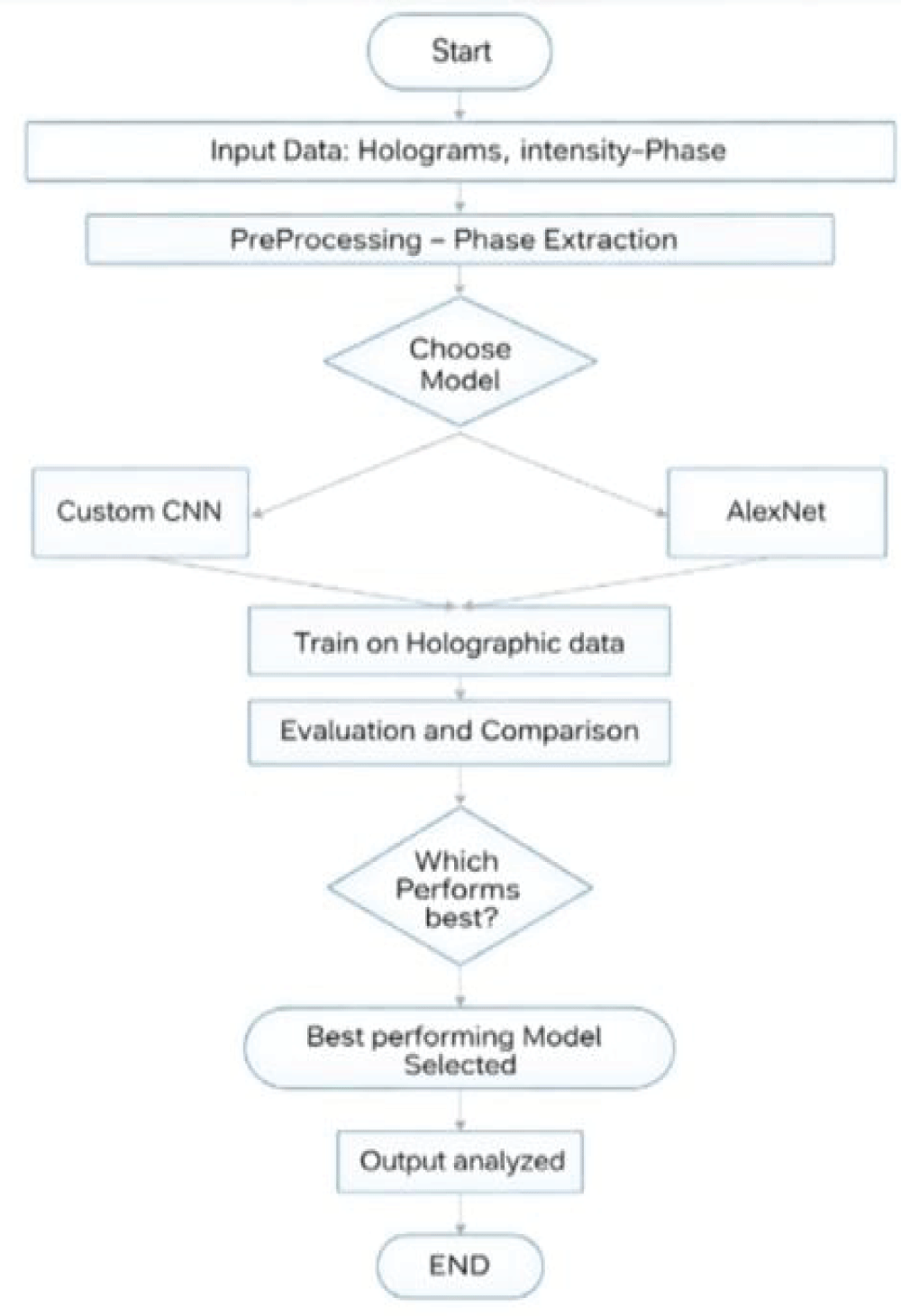
The proposed methodology for multi-class prediction of three-dimensional (3-D) objects on phase-only digital holographic images using a deep CNN and AlexNet is shown in Figure 1.
Figure 1: Methodology.
The proposed methodology begins by programmatically generating seven alphabet-based 3‑D object pairs (M–L, D–L, C–N, A–I, D–S, C–S, H–R) and simulating using the phase-shifting digital holography technique to obtain noise-controlled holograms. In order to create a consistent multi-class prediction dataset, these holograms are numerically reconstructed to extract phase-only images, which are subsequently preprocessed using resizing, normalisation, and augmentation. This phase-only image dataset was used to train a custom CNN and a modified AlexNet to simultaneously predict several continuous 3-D attributes, including dimensions, depth, and orientation. Mean Squared Error (MSE), Mean Absolute Error (MAE), and R² Score are used to measure model performance, and the top-performing architecture is chosen for deployment and additional study.
3-D Object creation
The alphabet-based 3-D shapes were created for hologram generation and further post-processed to obtain 2-D phase images that serve as inputs to perform a multi-class prediction task using deep CNN and AlexNet neural network models. Using computer-aided design tools, 2-D letter outlines are extruded into volumetric forms to create seven different 3-D objects from the alphabet pairs M–L, D–L, C–N, A–I, D–S, C–S, and H–R. In order for the models to span various depth ranges and surface configurations, geometric transformations are applied by varying height, thickness, and inter-letter spacing. This allows the networks to learn subtle differences in dimensions, depth, and orientation across object pairs.
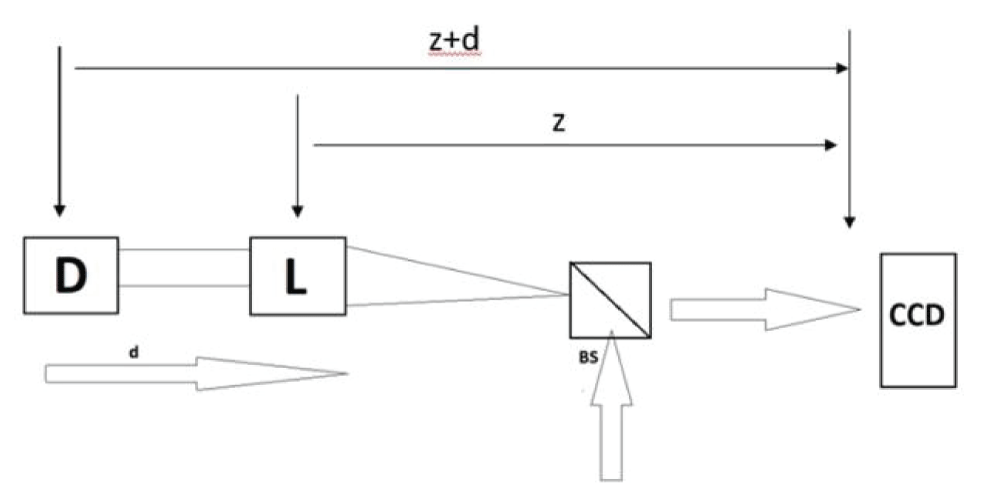
A CCD sensor records the resulting holograms after these 3-D objects are put in a digital holography recording setup where the object beam and reference beam interfere. To ensure that the depth and structural characteristics of each object pair are accurately encoded in the holograms, the recording geometry employs a separation of z = 5 cm between planes and d = 1.5 cm between planes and optical components. The input dataset for multi-class prediction is created by numerically reconstructing the recorded holograms into 2-D phase-only images that retain the crucial depth and shape information.
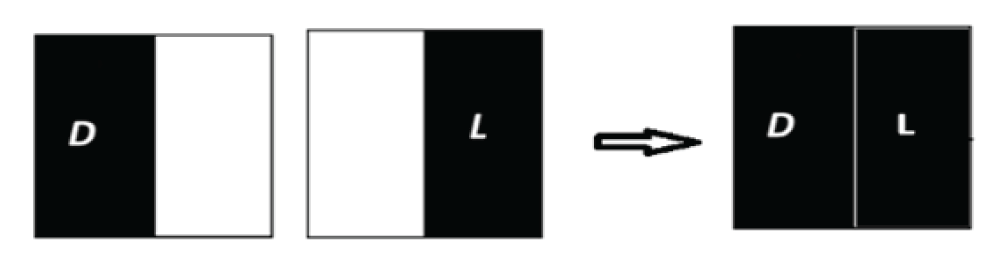
Once created, these 3-D objects act as digital input subjects for synthetic hologram generation. Their spatial arrangement and depth information become essential in forming interference patterns in digital holography, which are later reconstructed into 2-D phase images for multi-class prediction. In Figure 2, the feature ‘D’ is considered in the first plane and the feature ‘L’ is considered in the second plane. Both the first plane and second plane are separated by a distance ‘d’. The first plane feature is propagated at a distance z, and the second plane feature is propagated at a distance z+d. Four plane reference waves formed at different phase shifts 0o, 90o, 180o, and 270o interfere with the 3-D object volume to form four phase-shifted holograms using phase-shifting digital holography (PSDH) technique. These holograms are numerically reconstructed to obtain a 2-D digital complex-valued image containing intensity and phase information. The absolute part of the 2-D digital complex-valued image gives intensity information, and the arctan part of the 2-D digital complex-valued image gives phase information. Similarly, the phase images of the remaining 3-D objects ‘M-L’, ‘H-R’, ‘C-N’, ‘A-I’,‘D-S’, and ‘C-S’ were also created using the PSDH technique. This phase-only image is used for a multi-class prediction task using deep CNN and AlexNet neural networks (Figure 3).
Figure 2: The schematic representation of the geometry for the recording of the digital hologram of a 3-D object volume with different features in the first and second planes and separating distances z = 5 cm and d = 1.5 cm. (a) 3-D object ‘D-L’. BS: beam splitter; CCD: charge-coupled device.
Figure 3: 3-D Object constructed.
2-D Digital hologram generation
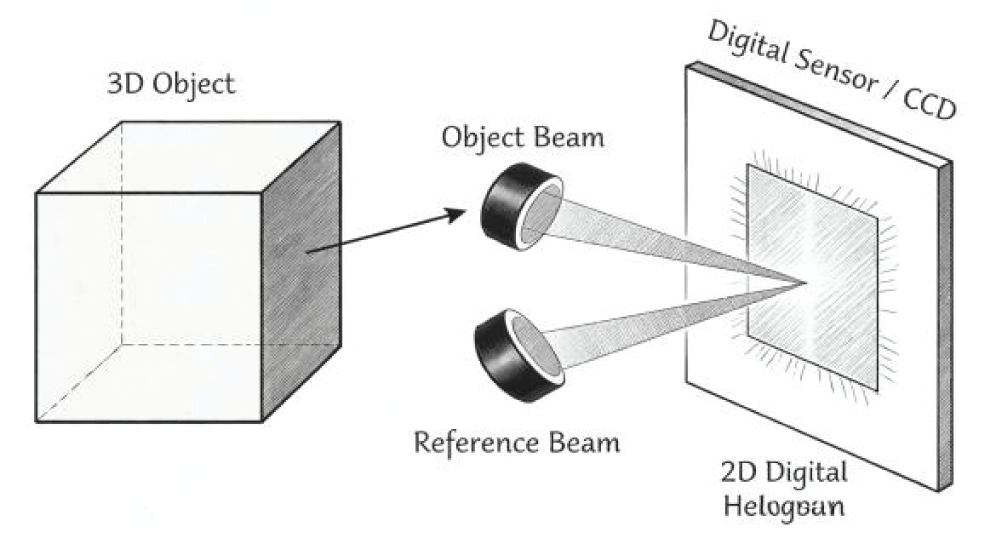
The generation of 2-D digital holograms is a key step in the methodology, as it captures the complete 3-D information of the designed objects in a 2-D format. In this research work, holograms are generated synthetically using a simulated digital holography setup rather than physical hardware, ensuring clean and noise-free data. In the hologram formation process, each 3-D object is illuminated by two coherent light beams:
1. Object Beam – interacts with the 3-D object and carries depth, shape, and surface information.
2. Reference Beam – directly reaches the recording plane without interacting with the object (Figure 4).
Figure 4: The schematic representation of the geometry for the recording of the digital hologram of a 3-D object volume with a reference wave.
Consider a three–dimensional object,
, where O is amplitude information, and ɸ is phase (3-D) information. In Conventional photography, only intensity information of the object is obtained, whereas all the information about the phase is lost.
When these two beams meet at the recording plane (the virtual CCD sensor), they interfere and form an interference pattern. This pattern encodes both intensity and phase variations of the 3-D object into a single 2-D hologram. The hologram effectively stores the 3-D structural information in a compressed 2-D form. Mathematically, the recorded hologram H (x, y) is the squared magnitude of the sum of object and reference waves:
(1)
This digitally generated hologram then becomes the input for numerical reconstruction, where phase images are retrieved. The use of synthetic hologram generation ensures consistency, eliminates optical noise, and allows precise control over object position and illumination conditions.
Phase image reconstruction
Phase image reconstruction uses the synthetic holograms of the seven alphabet pairs (M–L, D–L, C–N, A–I, D–S, C–S, H–R) to extract depth-preserving wavefront information. The complex field must be recovered by numerical back-propagation to the object plane using Fresnel diffraction or angular spectrum techniques since the recorded interference pattern encodes both object and reference waves in a single intensity distribution. After this procedure, a complex-valued reconstruction with amplitude and wrapped phase components is produced. The phase is then isolated using spatial filtering to eliminate twin-image and zero-order artefacts. The resulting 2-D phase-only maps are ideal inputs for CNN/AlexNet neural network models for a multi-class prediction task.
Synthetic dataset preparation
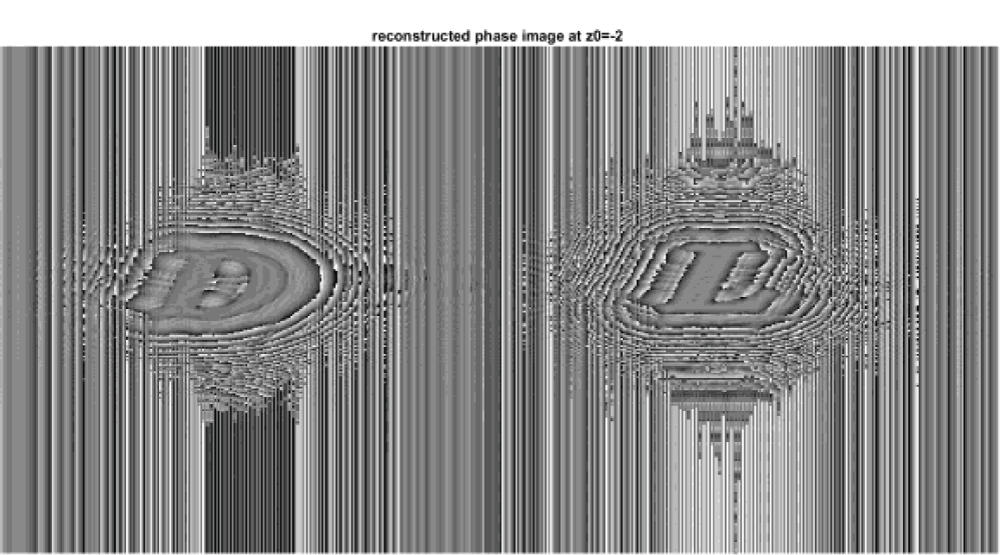
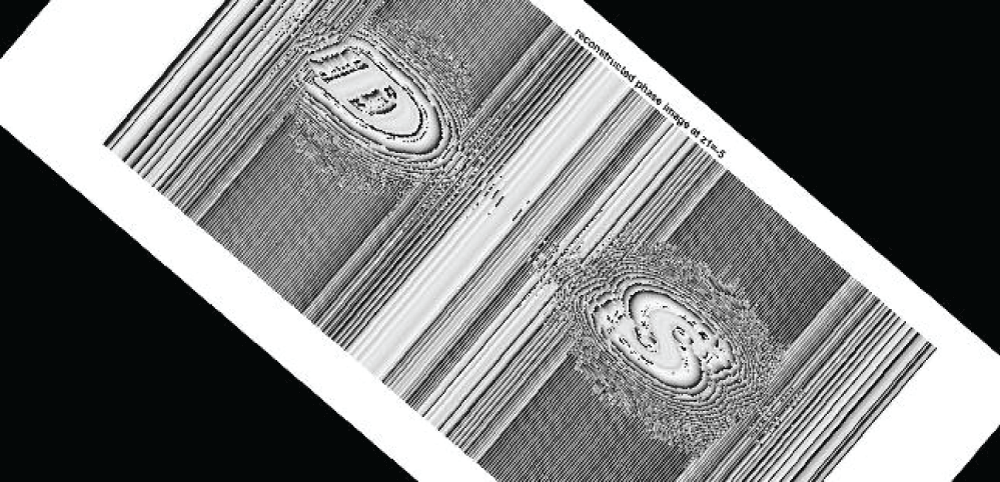
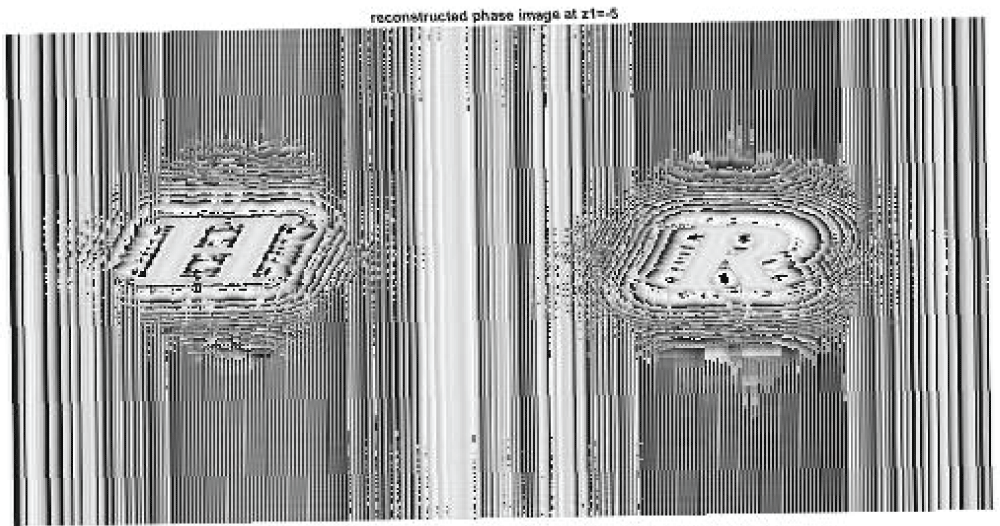
The synthetic dataset is created from phase-only reconstructions of holograms generated for the seven alphabet-based 3-D object pairs (M–L, D–L, C–N, A–I, D–S, C–S, H–R), ensuring full control over image quality, object pose, and illumination without physical sensor noise or distortions. Each 2-D phase image undergoes controlled augmentation through rotations (0.5° increments) and positional variations to generate diverse samples within each of the seven classes, producing a comprehensive dataset of 5,054 phase images. This simulation-based approach eliminates shadows, lighting inconsistencies, and hardware artefacts, yielding uniform data ideal for deep learning multi-class prediction (Table 1).
Table 1: Synthetic dataset split into training, validation, and testing
SL.NO
%
SET1(AI)
SET2(ML)
SET3(DL)
SET4(DS)
SET5(CN)
SET6(CS)
SET7(HR)
TOTAL
TRAINING SET
75
542
542
542
542
542
542
542
3794
VALIDATION SET
15
108
108
108
108
108
108
108
756
TEST SET
10
72
72
72
72
72
72
72
504
The SET1 comprises 3-D objects ‘A-I’, the SET2 comprises 3-D objects ‘M-L’, the SET3 comprises 3-D objects ‘D-L’, the SET4 comprises 3-D objects ‘D-S’, the SET5 comprises 3-D objects ‘C-N’, the SET6 comprises 3-D objects ‘C-S’, and the SET7 comprises 3-D objects ‘H-R’. The phase images of these 7 sets act as a balanced distribution, ensuring that the model does not become biased toward any particular class and learns meaningful patterns from the samples. The dataset follows a 75:15:10 split totalling 5,054 images (adjusted for even distribution): 3,794 training images for CNN/Alex Net optimization, 756 validation images for hyperparameter tuning, and 504 test images for final MSE/MAE/R² evaluation.
Dataset split
• Training set – 75% (3794 images) (Figure 5)
o 542 images from each class
Figure 5: Phase image of training set.
The training set consists of 3794 images, with 542 images from each of the 7 classes.
• Validation set – 15% (756 images) (Figure 6)
o 108 images from each class
Figure 6: Phase image of validation set.
The validation set consists of 756 images, with 108 images from each of the 7 classes. This set plays a crucial role during the training phase by allowing fine-tuning of hyperparameters and monitoring model behaviour to prevent overfitting. By evaluating model performance on unseen validation samples during training, the system ensures that the learned features generalise well rather than memorising the training data.
• Test Set – 10% (504 images) (Figure 7)
o 72 images for one class
Figure 7: Phase image of test set.
Finally, the test set includes 504 images (72 images from each of the 7 classes). This set is kept completely separate and is used only after all training and tuning is completed. The test set provides an unbiased evaluation of the final model's ability to perform classification on entirely unseen samples across all classes. Using this structured splitting strategy ensures that the model's performance metrics are reliable, consistent, and free from data leakage. Every image is clean, balanced, and methodically arranged across seven classes. For the multi-class classification task, this multi-step preparation offers a strong basis for training and assessing deep learning models like CNN and AlexNet.
Deep learning model training
The first step in the training process is to transform each reconstructed phase image into a deep learning-compatible numerical feature format. The 75% training set (3,794 images) of the synthetic dataset is then used to train two sophisticated neural network models, CNN and AlexNet, across seven classes. In order to represent the multi-class classification labels, each model learns to map the visual patterns found in the phase images to class predictions. Convolutional filters and model parameters are modified during training to reduce classification error. To ensure that the models generalise well beyond the training samples, the validation set (756 images) is used concurrently to prevent overfitting and fine-tune hyperparameters. Each neural network can successfully learn the connection between phase image features and their corresponding class outcome thanks to this methodical training procedure.
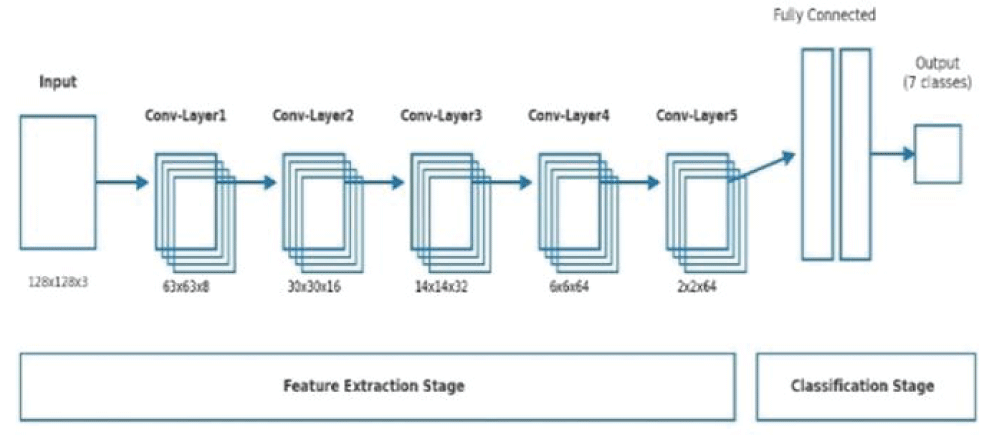
Convolutional Neural Network (CNN): The architecture of deep CNN for multi-class prediction task of phase-only digital holographic images of 3-D objects is shown in Figure 8. The proposed CNN [12] model in this research work is designed as a sequential deep architecture that performs hierarchical feature extraction on phase-only images for seven‑class 3-D object classification (M–L, D–L, C–N, A–I, D–S, C–S, H–R). The network operates on input phase images resized to 128 × 128 × 3 and normalised, so that all pixels lie within a fixed numeric range while preserving the underlying phase structure of the holographic reconstructions. Convolution, ReLU non‑linearity, batch normalisation, and max-pooling are used repeatedly to transform raw pixels into compact, high‑level feature representations that are discriminative for the seven classes.
Figure 8: CNN Architecture for multi-class prediction.
The feature-extraction stage begins with a first convolutional block which accepts a phase image of size 128 × 128 × 3 consisting of 8 filters of size 3 × 3, followed by a ReLU activation function, batch normalisation, and 2 × 2 max-pooling, which produces 36 × 36 × 8 feature maps and captures basic edges and local phase transitions. The batch normalisation layer is used in each of the convolutional blocks to avoid overfitting. A second block with 16 filters of size 3 × 3, ReLU, and 2 × 2 max-pooling further compresses the representation to 30 × 30 × 16, aggregating low‑level features into more complex local patterns. A third block with 32 filters of size 3 × 3, ReLU, and 2 × 2 max-pooling outputs 14 × 14 × 32 maps, encoding increasingly abstract phase textures and shape cues that distinguish the different 3-D object pairs. A fourth block with 64 filters of size 3 × 3, ReLU, and 2 × 2 max-pooling outputs 6 × 6 × 64 maps. Finally, the fifth block has 64 filters of size 3 × 3, ReLU, and 2 × 2 max-pooling, which outputs 2 × 2 × 64 maps.
In the classification stage, the final pooled feature maps of size 2 × 2 × 64 are flattened into a one‑dimensional vector and passed to a fully connected layer with 256 neurons, which learns global combinations of convolutional features associated with each object class. ReLU activation function is used in this dense layer, introducing additional non‑linearity, while a dropout rate of 0.5 randomly deactivates half of the neurons during training, reducing overfitting on the available holographic dataset. The network terminates in a 7‑neuron output layer with a softmax activation function, which converts the final feature representation into posterior probabilities over the seven classes, enabling robust multi‑class classification of phase-only holographic images in the proposed system.
The core operation in CNN is 2-D convolution, defined as
(2)
Where I is the input phase image, K is the kernel/filter, and (x’y) are both input and output coordinates. Next, max-pooling2-D is used as a technique in each convolutional block of the CNN. The expression for max-pooling2-D is given by
(3)
Where P represents the output, and F represents the input. Next, the rectified linear unit (ReLU) activation function is used in each of the convolutional blocks and fully connected layers. The expression for the rectified linear unit (ReLU) activation function is given by
(4)
The Final layer computes class probabilities for 7 classes, enabling multi-class predictions on phase images. The softmax activation function is used in the output layer to produce the output. The expression for the softmax activation function is given by
(5)
Training occurs on the 3,794-image training set (75% split) using the Adam optimiser with a learning rate of 0.001 and categorical cross-entropy loss, and a batch size of 32 images was used over 50 epochs with early stopping. The 756-image validation set monitors accuracy to prevent overfitting, ensuring robust generalisation for phase image patterns across all classes. The model summary of the deep CNN is shown in Table 2.
Table 2: Model Summary of Deep CNN
Layer (Type)
Input Shape
Output Shape
Param #
Conv2-D_1
128 × 128 × 8
126 × 126 × 8
224
Batch Normalization_1
126 × 126 × 8
126 × 126 × 8
32
MaxPooling2-D_1
126 × 126 × 8
63 × 63 × 8
0
Conv2-D_2
63 × 63 × 8
61 × 61 × 16
1,168
Batch Normalization_2
61 × 61 × 16
61 × 61 × 16
64
MaxPooling2-D_2
61 × 61 × 16
30 × 30 × 16
0
Conv2-D_3
30 × 30 × 16
28 × 28 × 32
4,640
Batch Normalization_3
28 × 28 × 32
28 × 28 × 32
128
MaxPooling2-D_3
28 × 28 × 32
14 × 14 × 32
0
Conv2-D_4
14 × 14 × 32
12 × 12 × 64
18,496
Batch Normalization_5
12 × 12 × 64
12 × 12 × 64
256
MaxPooling2-D_5
12 × 12 × 64
6 × 6 × 64
0
Conv2-D_5
6 × 6 × 64
4 × 4 × 64
36,928
Batch Normalization_5
4 × 4 × 64
4 × 4 × 64
256
MaxPooling2-D_5
4 × 4 × 64
2 × 2 × 64
0
Flatten
2 × 2 × 64
256
0
Dropout
256
256
0
Dense
256
32
8,224
Dense
32
7
231
Total number of Parameters: 70,647
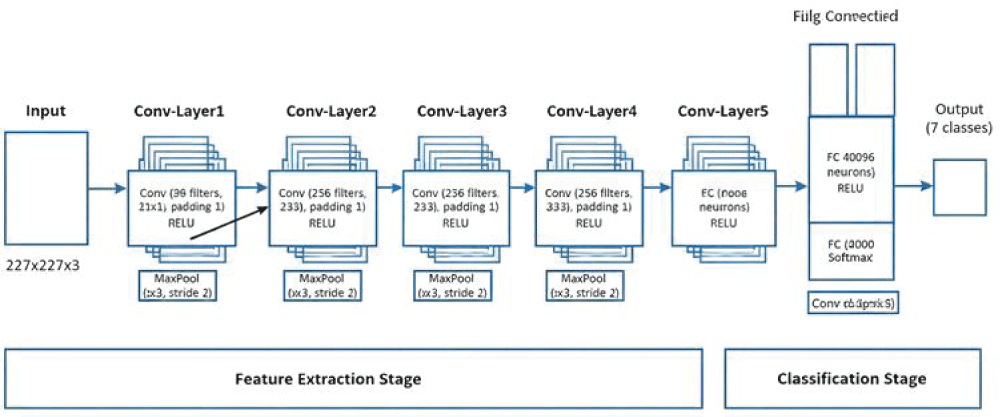
AlexNet model: The architecture of AlexNet for multi-class prediction of 3-D objects using phase-only digital holographic images is shown in Figure 9. In this research, the AlexNet architecture by Alex Krizhevsky, et al. [13] is adapted and implemented stepwise for multi-class classification of phase-only images corresponding to seven 3-D object classes (M–L, D–L, C–N, A–I, D–S, C–S, H–R). The network accepts 227 × 227 × 3 phase inputs, where each phase image is normalised to a common intensity range, thereby replacing the original RGB image input while preserving spatial resolution and phase structure.
Figure 9: AlexNet Architecture for multi-class prediction.
In the first stage, the input is processed by a convolutional block consisting of 96 filters of size 11 × 11 with stride 4, followed by ReLU activation, local response normalisation, and overlapping max pooling, which together extract coarse edges and low-frequency phase patterns from the holographic images to produce 55 × 55 × 96 feature maps. The second block uses 256 filters of size 5 × 5, again combined with ReLU, normalisation, and pooling, to aggregate these primitive edges into more complex local structures that begin to encode object contours and depth-related phase variations.
The intermediate representation is then refined by three deeper convolutional layers with 384, 384, and 256 filters of size 3 × 3, each followed by ReLU, with the final block concluded by max-pooling. These layers progressively transform mid-level features into highly abstract, class-discriminative phase patterns, capturing subtle differences in the synthetic holographic images of the seven object classes. After the final pooling operation, the feature maps are flattened and passed to two fully connected layers of 4096 neurons each, where ReLU activations and dropout with probability 0.5 are employed to learn high-level combinations of features while mitigating overfitting on the 3,794-image training set. The final classification stage is implemented through a fully connected output layer with 7 neurons, replacing AlexNet’s original 1000-way ImageNet head and employing softmax activation to generate posterior probabilities for each class label. Training of this adapted AlexNet is carried out using the Adam optimiser with a learning rate of 0.001, categorical cross-entropy loss, a mini-batch size of 32, and 50 epochs, while early stopping and validation on 756 images are used to monitor generalisation and prevent overfitting. This adaptation preserves the deep hierarchical structure and GPU-efficient filter bank design of the original AlexNet, but its reconfigured input and output layers allow effective learning from grayscale phase-only images, resulting in high generalisation capability on the 504-image test set for reliable seven-class classification. The model summary of the Alex network for multi-class prediction is shown in Table 3.
Table 3: Model Summary of Alex Network
Layer (Type)
Input Shape
Output Shape
Param #
Conv2-D_1
227 × 227 × 96
55 × 55 × 96
34,944
Batch Normalization_1
55 × 55 × 96
55 × 55 × 96
384
MaxPooling2-D_1
55 × 55 × 96
27 × 27 × 96
0
Conv2-D_2
27 × 27 × 96
27 × 27 × 256
614,656
Batch Normalization_2
27 × 27 × 256
27 × 27 × 256
1,024
MaxPooling2-D_2
27 × 27 × 256
13 × 13 × 256
0
Conv2-D_3
13 × 13 × 256
13 × 13 × 384
885,120
Batch Normalization_3
13 × 13 × 384
13 × 13 × 384
1,536
Conv2-D_4
13 × 13 × 384
13 × 13 × 384
1,327,488
Batch Normalization_4
13 × 13 × 384
13 × 13 × 384
1,536
Conv2-D_5
13 × 13 × 384
13 × 13 × 256
884,992
Batch Normalization_5
13 × 13 × 256
13 × 13 × 256
1,024
MaxPooling2-D_3
13 × 13 × 256
6 × 6 × 256
0
Flatten
6 × 6 × 256
9216
0
Dense_1
9216
4096
37,752,832
Batch Normalization_6
4096
4096
16,384
Dropout
4096
4096
0
Dense_2
4096
4096
16,781,312
Batch Normalization_7
4096
4096
16,384
Performance evaluation
The performance metrics considered for the multi-class prediction task of 3-D objects on phase-only digital holographic images are mean squared error (MSE), mean absolute error (MAE), and R2 score.
Mean Squared Error (MSE): MSE measures the average of the squares of the errors between predicted and actual values. Lower MSE indicates better model performance. The expression for MSE is given by Eqn. (6).
(6)
Where yi = Actual value,
= Predicted value, n = Number of data points.
Mean Absolute Error (MAE): MAE calculates the average absolute difference between predicted and actual values. It gives a linear measure of error. The expression for MAE is given by Eqn. (7).
(7)
R² Score
R² score indicates how well the model explains the variance in the data. Values range from 0 to 1, with 1 being a perfect prediction and 0 being a poor prediction. The expression for R2 score is given by Eqn. (8)
(8)
where
(mean of actual values)
The performance of the deep learning models is analysed using the conventional prediction metrics for classifying the phase images of seven classes (M-L, D-L, C-N, A-I, D-S, C-S, H-R). After being trained and validated using the 3,794 and 756 images, the models were tested on 504 images in the test set, consisting of 72 images per batch.
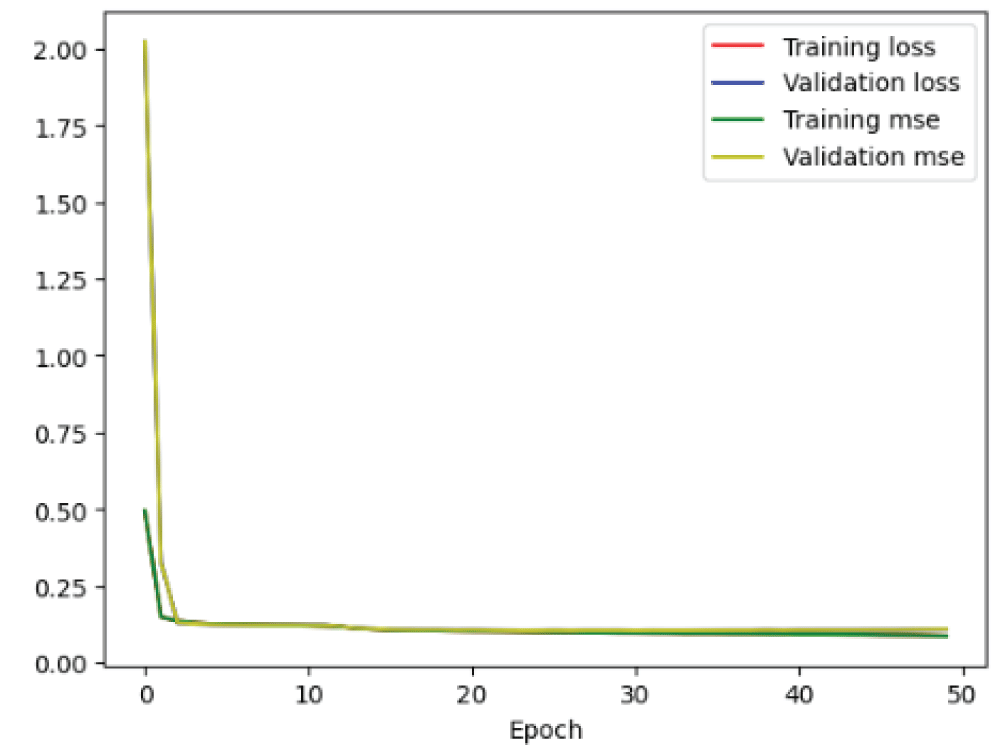
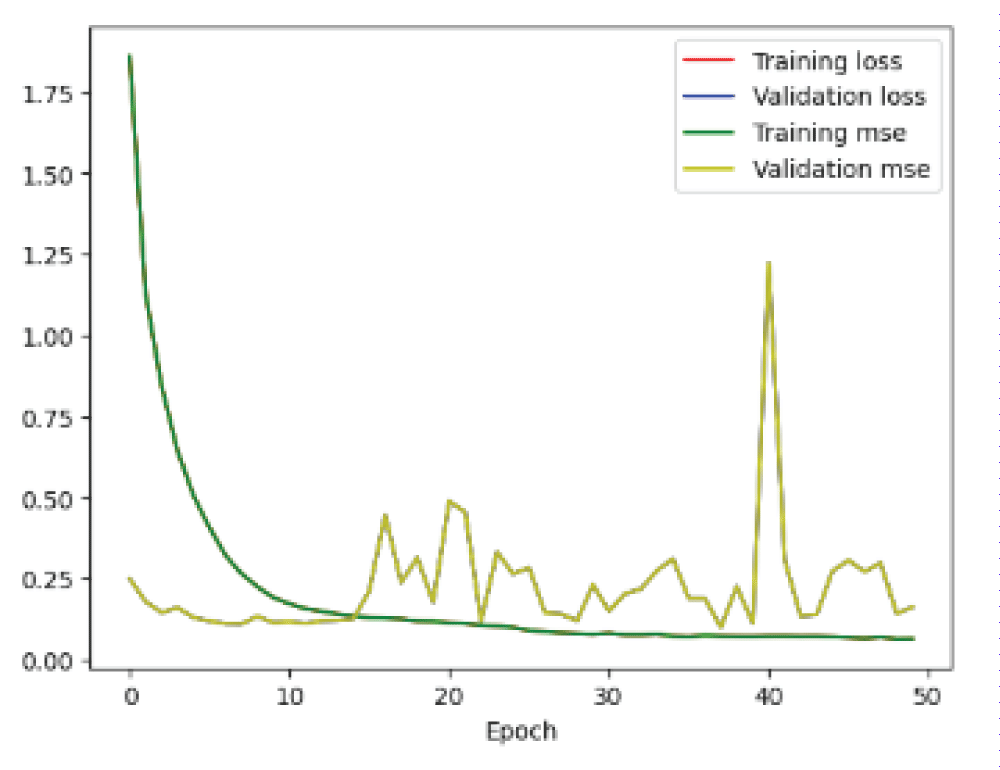
The deep CNN and AlexNet neural network models were trained on a batch of 32 images from the training/validation sets over 50 epochs. The results, such as loss/MSE curves on both sets obtained from deep CNN/Alex net neural network models, are shown in Figure 10 and Figure 11 [14-17].
Figure 10: Loss and MSE curves from deep CNN.
Figure 11: Loss and MSE curves from Alex network.
From Figures 10 and 11, it can be said that the margin between the training MSE and validation MSE is less. Therefore, it can be said that the deep CNN and AlexNet neural network models are converging well on the phase-only image dataset of 3-D objects for the multi-class prediction task [14-17]. The performance metrics obtained from deep CNN and Alex network models on validation/testing sets for the multi-class prediction task are shown in Table 4 and Table 5 [14-17].
Table 4: Performance metrics from deep CNN
Validation
Test
MSE
0.1082
0.0863
MAE
0.2107
0.1836
R2 Score
-0.1590
-0.2452
Table 5: Performance metrics from Alex Network
Validation
Test
MSE
0.1613
0.0642
MAE
0.2574
0.1691
R2 Score
-1.2936
-1.5298
From Table 4, it can be said that the deep CNN has lower MSE on the test set compared to the validation set. The CNN has lower MAE for the test set compared to the validation set. The CNN has achieved the lowest R2 score on the test set compared to the validation set. Therefore, it can be said that the deep CNN has poor performance for the multi-class prediction task of 3-D objects on a phase-only digital holographic image dataset [14-17].
From Table 5, it can be said that the Alex network has lower MSE on the test set compared to the validation set. The Alex network has lower MAE for the test set compared to the validation set [14-17]. The Alex network has achieved the lowest R2 score on the test set compared to the validation set. Therefore, it can be said that the Alex network has poor performance for the multi-class prediction task of 3-D objects on a phase-only digital holographic image dataset. From Table 4 and Table 5, it can be further concluded that the deep CNN has better values of R2 score on the test and validation sets compared to the Alex network [14-17].
For this research, deep learning models were used to carry out multi-class classification on the holographic images of seven pairs of three-dimensional objects. By reducing the three-dimensional objects to two-dimensional phase images, the key depth and spatial information was maintained, allowing successful learning and prediction to be conducted accurately for M-L, D-L, C-N, A-I, D-S, C-S, and H-R categories. For the purpose of thoroughly understanding the performance and accuracy of predictive modelling, two different models, namely CNN and AlexNet, were tested for regression-based performance criteria: Mean Absolute Error, Mean Squared Error, and R² score on the test image dataset consisting of 504 images.
In both models, CNN portrayed the most consistent and robust results, where it attained the smallest MSE, MAE, as well as the R² Score on the test set compared to the validation set. Hence, CNN successfully identified the relation among the holographic phase details and the outputs for the 7 classes, proving it as the best suited one on this structured synthetic image set comprising 5,054 instances. The second-best results were attained by the deeper AlexNet architecture, where it attained an MSE of 0.1613, MAE of 0.2574, and R² Score of -1.29 on the validation set.
Overall, the evaluation metrics clearly indicate that deep learning convolutional models are highly capable of understanding and classifying from holographic phase data, with CNN emerging as the best-performing architecture in terms of error minimisation and variance capture. This study establishes a strong foundation for extending holographic object analysis using advanced architectures, multi-scale feature fusion, real-time phase processing, and integration with experimental holographic datasets.
Qi CR, Yi L, Su H, Guibas LJ. Pointnet++: Deep hierarchical feature learning on point sets in a metric space. Adv Neural Inf Process Syst. 2017;30:5099‑5108.
RN UM, KB. Three‑dimensional (3‑D) objects classification by means of phase‑only digital holographic information using Alex Network. 2024 International Conference on Signal Processing, Computation, Electronics, Power and Telecommunication (IConSCEPT); 2024; Karaikal, India. p.1‑5. doi:10.1109/IConSCEPT61884.2024.10627906.
Liu Y. Regression‑based three‑dimensional pose estimation for texture‑less objects. IEEE Trans Multimedia. 2019 Nov;21(11):2776‑2789. doi:10.1109/TMM.2019.2913321.
Li Z, Zhang L, Zhang Z, Xu R, Zhang D. Speckle classification of a multimode fibre based on Inception V3. Appl Opt. 2022;61(29):8850‑8858. doi:10.1364/AO.463764 .
RN UM, Nelleri A. Multi‑class classification and multi‑output regression of three‑dimensional objects using artificial intelligence applied to digital holographic information. Sensors. 2023 Jan;23(3):1‑16. Available from: https://pmc.ncbi.nlm.nih.gov/articles/PMC9920031/
Kim MK. Phase microscopy and surface profilometry by digital holography. Light Adv Manuf. 2022;3:19. doi:10.37188/lam.2022.019.
Chen X, Wang H, Razi A, Kozicki M, Mann C. DH‑GAN: A physics‑driven untrained generative adversarial network for 3D microscopic imaging using digital holography. arXiv [Preprint]. 2022. Available from: arXiv:2205.12920.
Shi L, Li B, Matusik W. End‑to‑end learning of 3D phase‑only holograms for holographic display. Light Sci Appl. 2022;11:247. doi:10.1038/s41377‑022‑00894‑6.
Shimobaba T, Kakue T, Ito T. Convolutional neural network‑based regression for depth prediction in digital holography. 2018 IEEE 27th International Symposium on Industrial Electronics (ISIE); 2018; Cairns, QLD, Australia. p.1323‑1326. doi:10.1109/ISIE.2018.8433651.
Ade SS, Gupta D, Chandrala LD, Sahu KC. Application of deep learning and inline holography to estimate the droplet size distribution. Int J Multiph Flow. 2024;177:104853. doi:10.1016/j.ijmultiphaseflow.2024.104853.
Rymov DA, Svistunov AS, Starikov RS, Shifrina AV, Rodin VG, Evtikhiev NN, Cheremkhin PA. 3D‑CGH‑Net: customizable 3D‑hologram generation via deep learning. Opt Lasers Eng. 2025;184:108645. doi:10.1016/j.optlaseng.2024.108645.
LeCun Y, Bottou L, Bengio Y, et al. Gradient‑based learning applied to document recognition. Proc IEEE. 1998;86(11):2278‑2324.
Krizhevsky A, Sutskever I, Hinton GE. ImageNet classification with deep convolutional neural networks. Adv Neural Inf Process Syst. 2012;25:1097‑1105.
RN UM, Basavaraju L. Deep learning‑based multi‑class three‑dimensional (3‑D) object classification using phase‑only digital holographic information. IgMin Res. 2024 Jul;2(7):550‑557. doi:10.61927/igmin216.
Uma Mahesh RN, Nelleri A. Three‑dimensional (3‑D) objects classification and regression using deep learning and machine learning algorithms applied to complex object wave information retrieved from digital holograms. Asian J Phys. 2019;31(11‑12):1085‑1094.
Mahesh RNU, Nelleri A. Deep convolutional neural network for binary regression of three‑dimensional objects using information retrieved from digital Fresnel holograms. Appl Phys B. 2022;128:157. doi:10.1007/s00340‑022‑07877‑w.
Mahesh RNU, Nelleri A. Machine learning‑based binary regression task of 3D objects in digital holography. In: Subhashini N, Ezra MAG, Liaw SK, editors. Futuristic Communication and Network Technologies. VICFCNT 2021. Lecture Notes in Electrical Engineering. Vol 995. Singapore: Springer; 2023. p.1‑12. doi:10.1007/978‑981‑19‑9748‑8_34.
Uma Mahesh RN, Shivu M, Shivu R, Vadaga Y. Multi-class Prediction of Three-dimensional Objects by means of Phase-only digital holographic information using Deep Learning. IgMin Res. July 08, 2026; 4(7): 252-260. IgMin ID: igmin350; DOI:10.61927/igmin350; Available at: igmin.link/p350
Department of CSE (AI&ML), ATME College of Engineering, Mysore, Karnataka, India
Address Correspondence: Uma Mahesh RN, Department of CSE (AI&ML), ATME College of Engineering, Mysore, Karnataka, India, Email: [email protected]
How to cite this article: Uma Mahesh RN, Shivu M, Shivu R, Vadaga Y. Multi-class Prediction of Three-dimensional Objects by means of Phase-only digital holographic information using Deep Learning. IgMin Res. July 08, 2026; 4(7): 252-260. IgMin ID: igmin350; DOI:10.61927/igmin350; Available at: igmin.link/p350
Figure 2: The schematic representation of the geometry for t...
Figure 3: 3-D Object constructed....
Figure 4: The schematic representation of the geometry for t...
Figure 5: Phase image of training set....
Figure 6: Phase image of validation set....
Figure 7: Phase image of test set....
Figure 8: CNN Architecture for multi-class prediction....
Figure 9: AlexNet Architecture for multi-class prediction...
Figure 10: Loss and MSE curves from deep CNN...
Figure 11: Loss and MSE curves from Alex network....
Qi CR, Yi L, Su H, Guibas LJ. Pointnet++: Deep hierarchical feature learning on point sets in a metric space. Adv Neural Inf Process Syst. 2017;30:5099‑5108.
RN UM, KB. Three‑dimensional (3‑D) objects classification by means of phase‑only digital holographic information using Alex Network. 2024 International Conference on Signal Processing, Computation, Electronics, Power and Telecommunication (IConSCEPT); 2024; Karaikal, India. p.1‑5. doi:10.1109/IConSCEPT61884.2024.10627906.
Liu Y. Regression‑based three‑dimensional pose estimation for texture‑less objects. IEEE Trans Multimedia. 2019 Nov;21(11):2776‑2789. doi:10.1109/TMM.2019.2913321.
Li Z, Zhang L, Zhang Z, Xu R, Zhang D. Speckle classification of a multimode fibre based on Inception V3. Appl Opt. 2022;61(29):8850‑8858. doi:10.1364/AO.463764 .
RN UM, Nelleri A. Multi‑class classification and multi‑output regression of three‑dimensional objects using artificial intelligence applied to digital holographic information. Sensors. 2023 Jan;23(3):1‑16. Available from: https://pmc.ncbi.nlm.nih.gov/articles/PMC9920031/
Kim MK. Phase microscopy and surface profilometry by digital holography. Light Adv Manuf. 2022;3:19. doi:10.37188/lam.2022.019.
Chen X, Wang H, Razi A, Kozicki M, Mann C. DH‑GAN: A physics‑driven untrained generative adversarial network for 3D microscopic imaging using digital holography. arXiv [Preprint]. 2022. Available from: arXiv:2205.12920.
Shi L, Li B, Matusik W. End‑to‑end learning of 3D phase‑only holograms for holographic display. Light Sci Appl. 2022;11:247. doi:10.1038/s41377‑022‑00894‑6.
Shimobaba T, Kakue T, Ito T. Convolutional neural network‑based regression for depth prediction in digital holography. 2018 IEEE 27th International Symposium on Industrial Electronics (ISIE); 2018; Cairns, QLD, Australia. p.1323‑1326. doi:10.1109/ISIE.2018.8433651.
Ade SS, Gupta D, Chandrala LD, Sahu KC. Application of deep learning and inline holography to estimate the droplet size distribution. Int J Multiph Flow. 2024;177:104853. doi:10.1016/j.ijmultiphaseflow.2024.104853.
Rymov DA, Svistunov AS, Starikov RS, Shifrina AV, Rodin VG, Evtikhiev NN, Cheremkhin PA. 3D‑CGH‑Net: customizable 3D‑hologram generation via deep learning. Opt Lasers Eng. 2025;184:108645. doi:10.1016/j.optlaseng.2024.108645.
LeCun Y, Bottou L, Bengio Y, et al. Gradient‑based learning applied to document recognition. Proc IEEE. 1998;86(11):2278‑2324.
Krizhevsky A, Sutskever I, Hinton GE. ImageNet classification with deep convolutional neural networks. Adv Neural Inf Process Syst. 2012;25:1097‑1105.
RN UM, Basavaraju L. Deep learning‑based multi‑class three‑dimensional (3‑D) object classification using phase‑only digital holographic information. IgMin Res. 2024 Jul;2(7):550‑557. doi:10.61927/igmin216.
Uma Mahesh RN, Nelleri A. Three‑dimensional (3‑D) objects classification and regression using deep learning and machine learning algorithms applied to complex object wave information retrieved from digital holograms. Asian J Phys. 2019;31(11‑12):1085‑1094.
Mahesh RNU, Nelleri A. Deep convolutional neural network for binary regression of three‑dimensional objects using information retrieved from digital Fresnel holograms. Appl Phys B. 2022;128:157. doi:10.1007/s00340‑022‑07877‑w.
Mahesh RNU, Nelleri A. Machine learning‑based binary regression task of 3D objects in digital holography. In: Subhashini N, Ezra MAG, Liaw SK, editors. Futuristic Communication and Network Technologies. VICFCNT 2021. Lecture Notes in Electrical Engineering. Vol 995. Singapore: Springer; 2023. p.1‑12. doi:10.1007/978‑981‑19‑9748‑8_34.






 Scan and get link