IGMIN: We're glad you're here. Please click 'create a new query' if you are a new visitor to our website and need further information from us.
If you are already a member of our network and need to keep track of any developments regarding a question you have already submitted, click 'take me to my Query.'
Welcome to IgMin Research – an Open Access journal uniting Biology, Medicine, and Engineering. We’re dedicated to advancing global knowledge and fostering collaboration across scientific fields.
At IgMin Research, we bridge the frontiers of Biology, Medicine, and Engineering to foster interdisciplinary innovation. Our expanded scope now embraces a wide spectrum of scientific disciplines, empowering global researchers to explore, contribute, and collaborate through open access.
Welcome to IgMin, a leading platform dedicated to enhancing knowledge dissemination and professional growth across multiple fields of science, technology, and the humanities. We believe in the power of open access, collaboration, and innovation. Our goal is to provide individuals and organizations with the tools they need to succeed in the global knowledge economy.
IgMin Publications Inc., Suite 102, West Hartford, CT - 06110, USA
Purpose: Urban areas in hyper-arid regions face a dual threat of water scarcity and urban heat islands, exacerbated by conventional infrastructure and climate change, which reduces groundwater recharge and amplifies energy demands for cooling. This study addresses the research problem of adapting Sponge City principles to hyper-arid climates, where existing models from humid regions fail to account for low rainfall and high evaporation.
Aim: The aim is to evaluate the "Sponge Park" concept—a decentralized, nature-based system of permeable surfaces and subsurface storage—as a replicable model for integrated water management and climate adaptation in arid cities, hypothesizing that it can achieve >90% infiltration and significant microclimate cooling.
Methodology: A novel multi-model computational framework was developed, coupling Computational Fluid Dynamics (CFD) for process-level subsurface hydrology and heat transfer, the EPA HELP model for long-term water balance, and TR-55/HydroCAD for extreme storm event routing. The system, designed for a 13-ha site in Abu Dhabi, integrates high-infiltration silica-sand pavers and breathable aquicludes (APAC). A comprehensive Monte Carlo analysis (n = 1,000) quantified uncertainties in key parameters.
Findings: Simulations under local climatic inputs (80 mm/yr rainfall) project >93.6 ± 3.8% annual rainfall infiltration, < 0.1% runoff for 50 mm/24h storms, and pollutant removal efficiencies of 98.0 ± 2.1% (SS) and 93.9 ± 4.2% (COD). The system harvests 5,240 ± 520 m³/yr of water for reuse. The latent heat flux from evaporation (9.32 ± 0.93 GJ/yr per 1,000 m²) translates to a microclimate cooling of 0.4 °C – 0.6 °C. A life-cycle cost analysis confirms economic viability with a net present value of +$0.42 million.
Conclusion: The results support the hypothesis, demonstrating the Sponge Park's projected viability for hyper-arid urban sustainability, though limited by simulation-only validation. Research Implication: This provides policy-ready metrics for GCC replication, enhancing water security and resilience. Originality/Novelty and Value: This is the first integrated multi-model framework for arid Sponge City applications with a water-energy nexus focus, offering a benchmark for water-stressed regions and advancing SDG 6 and 13.
Hyper-arid urban areas face escalating water scarcity and urban heat islands (UHI), driven by climate change-induced low recharge, intense storms, and high evaporation [1]. In the UAE, per-capita water use exceeds 550 L/day amid < 100 mm annual rainfall, amplifying flash floods and UHI effects [2,3]. Conventional gray infrastructure exacerbates these by promoting runoff and conflicting with circular water economies and Net-Zero goals [4].
The Sponge City paradigm, originating in China [5], promotes permeable, nature-based systems for stormwater absorption, storage, purification, and reuse. However, its application in humid climates focuses on flood mitigation, leaving gaps in arid adaptations for water harvesting and UHI reduction [6]. Recent studies highlight material advances like silica-sand pavers [7] and APAC [8], but integrated assessments in hyper-arid contexts are scarce. Existing arid pilots, e.g., Doha pavements, lack multi-model validation and nexus quantification [6].
This study bridges these gaps with a simulation proof-of-concept for a "Sponge Park" in Abu Dhabi—a 13-ha self-regulating system. Research Gaps: Limited arid-specific models; no integrated nexus focus; overreliance on humid benchmarks. Hypothesis: The Sponge Park can achieve >90% infiltration and 0.4 °C – 0.6 °C cooling via multi-model simulation. Novelty: First arid-focused framework coupling CFD, HELP, and HydroCAD with Monte Carlo uncertainty.
Objectives:
Quantify stormwater infiltration, runoff reduction, and harvestable volumes under arid variability.
Evaluate pollutant removal and water quality.
Assess evaporative cooling and microclimate benefits.
Analyze economic viability and policy alignment.
Results are simulation-derived, with Monte Carlo uncertainty; field validation planned. This advances sustainable urban design for GCC regions.
Materials and methods
Study site and climatic context
The Old Airport Park in Abu Dhabi (24.45 °N, 54.38 °E) was selected as a representative flat, sandy urban green space (13 ha), ideal for arid testing due to its topography and proximity to infrastructure (Abu Dhabi Municipality, 2024). Rationale: Mirrors GCC urban parks with high imperviousness potential; allows nexus integration.
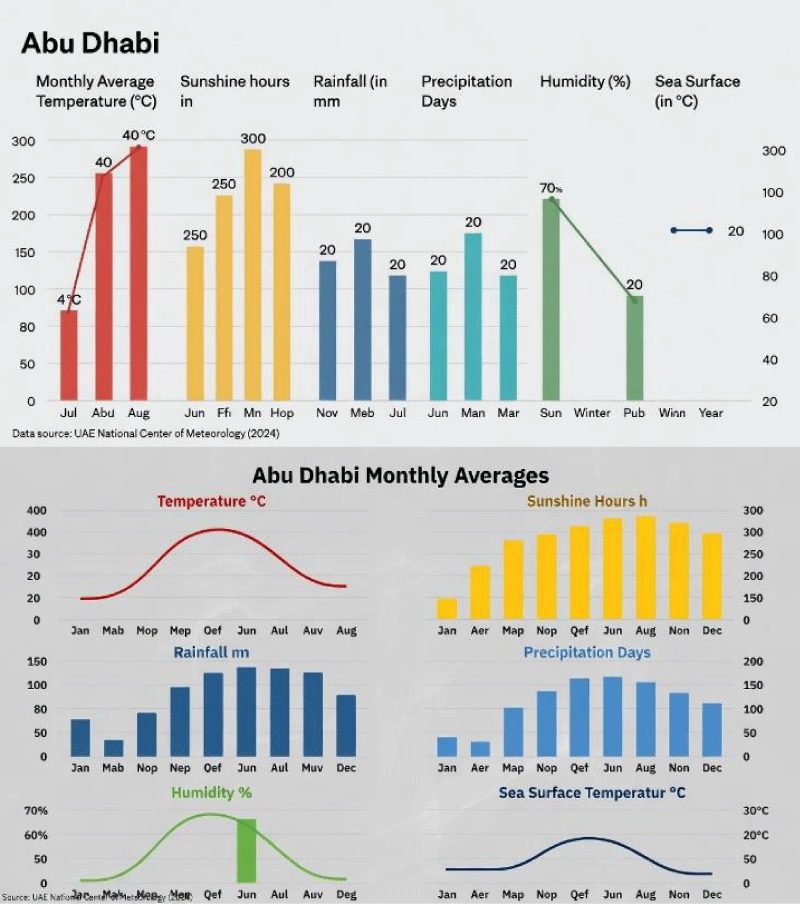
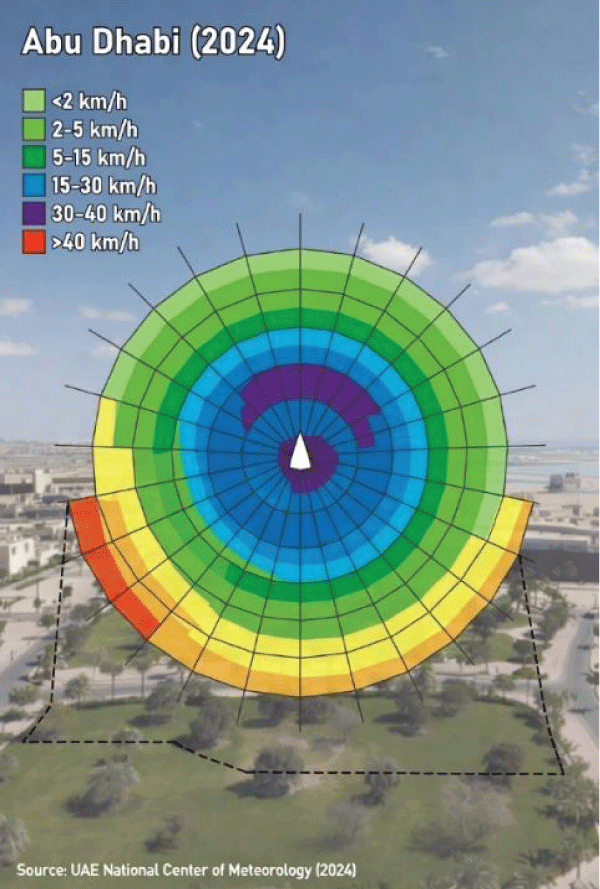
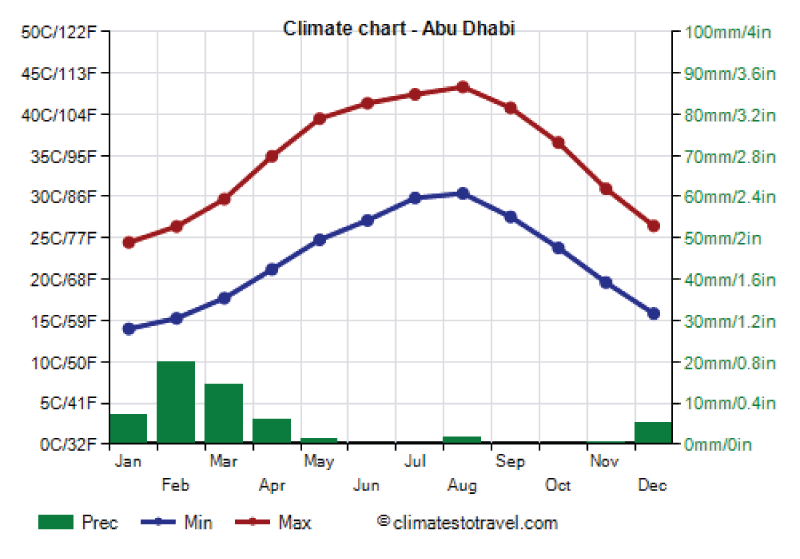
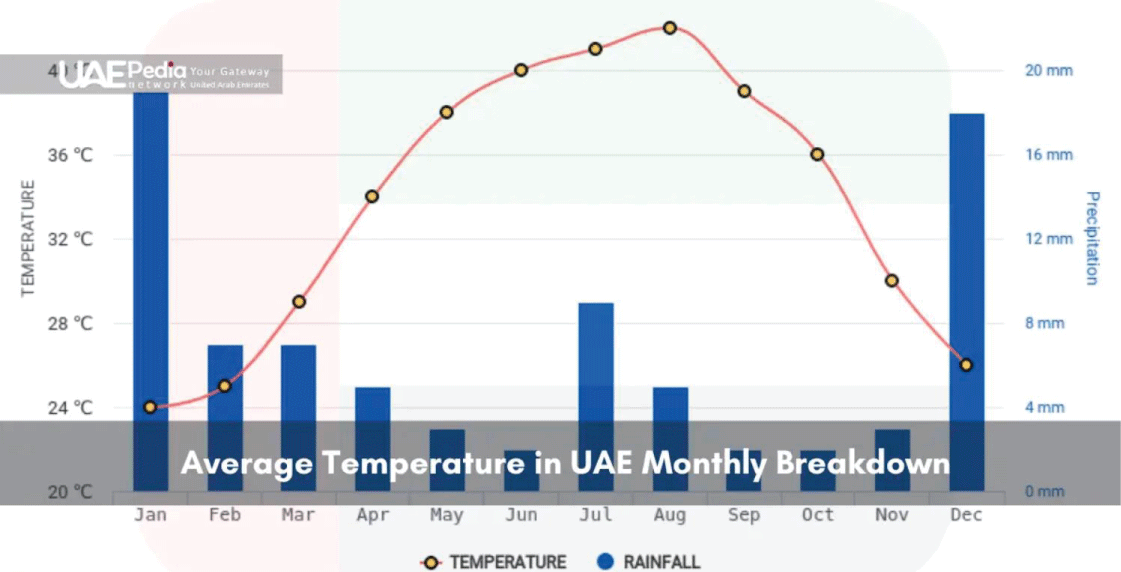
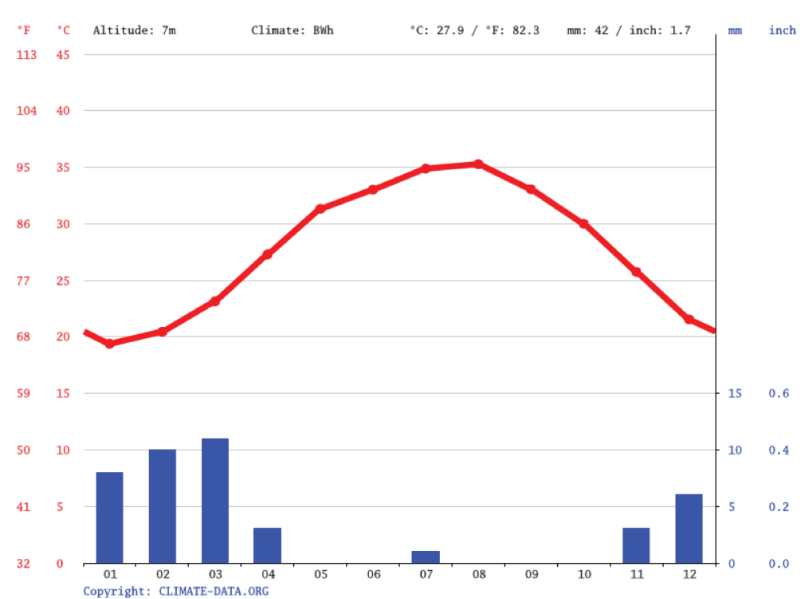
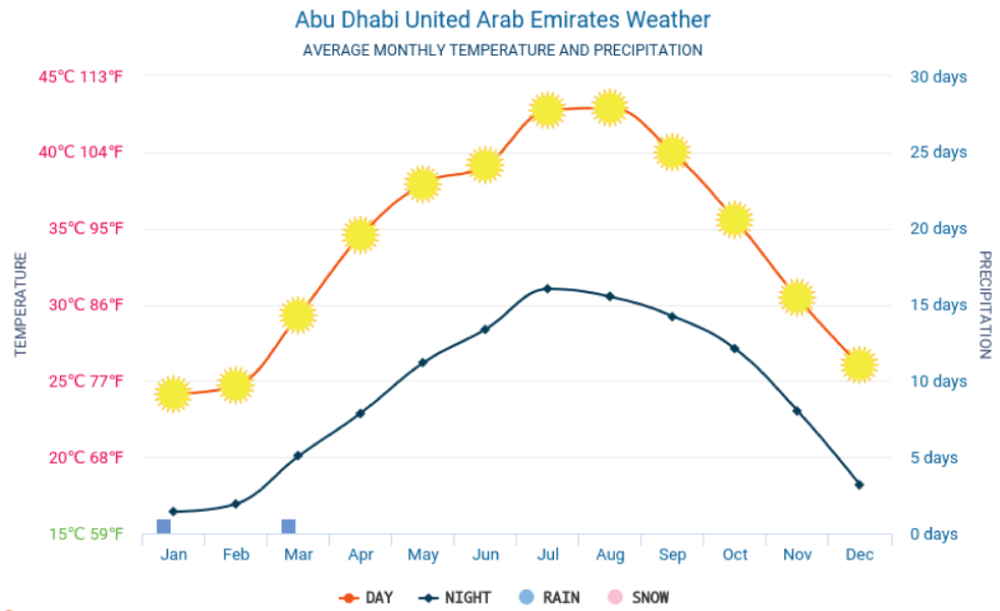
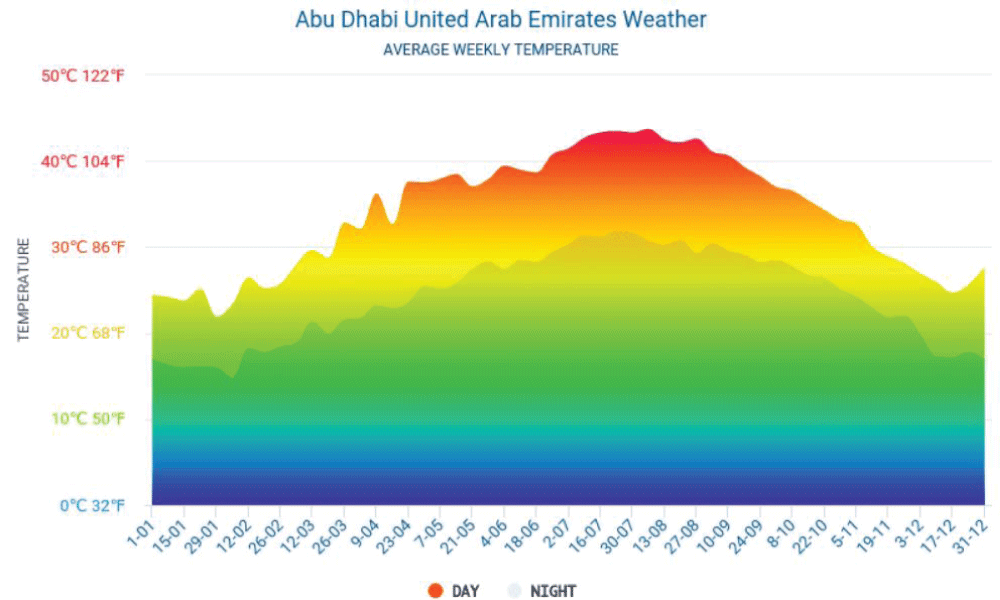
Climatic data from NCM (2024): rainfall 80 ± 25 mm yr-¹ (November–March peaks); intensity 62 mm/6 h (April 2024); temperature 34 °C mean (peaks >45 °C); humidity 60%; wind 3.2 m s-¹; ET 2,000–2,400 mm yr-¹. Data quality: Certified NCM series, cross-checked with satellite (no missing values; complete 2024 dataset). Ethical: Not applicable (no human data) (Figures 1-7).
Figure 1: Climate Overview of Abu Dhabi.
Figure 2: Wind Analysis Rose Diagram (2024 Data).
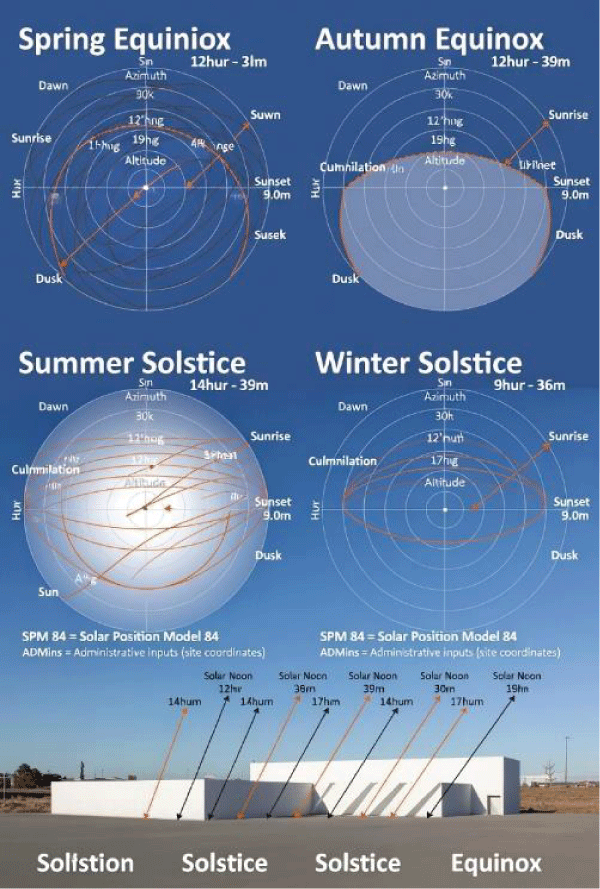
Figure 3: Sunpath Analysis for Key Dates. Four polar diagrams for spring equinox, autumn equinox, summer solstice, and winter solstice.
Figure 4: Eigenvalues of the system of differential equations.
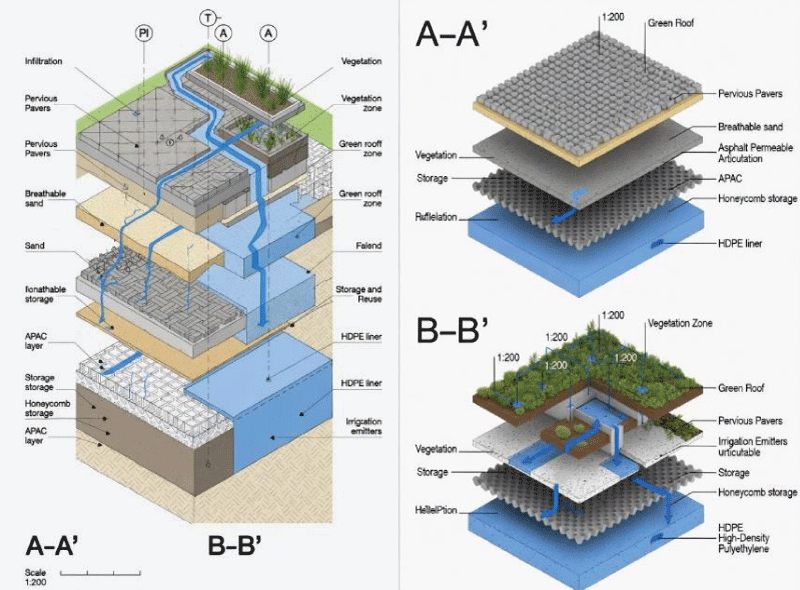
Figure 5: Longitudinal and Cross-Sectional Profiles showing layered construction.
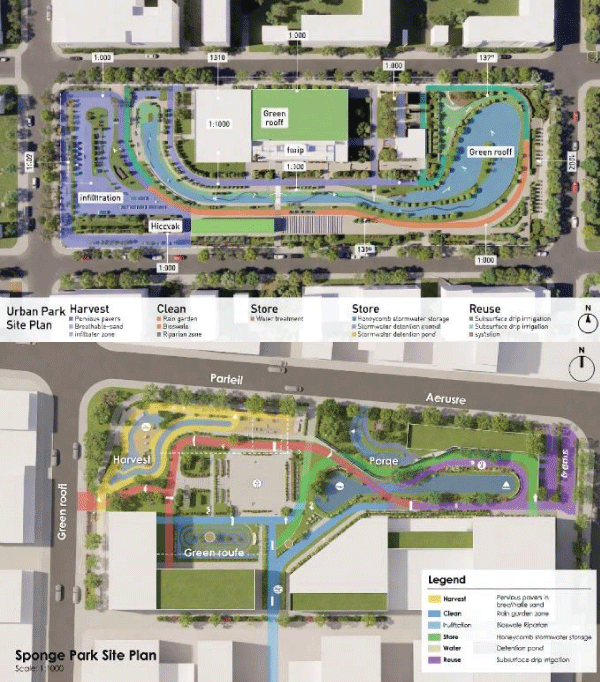
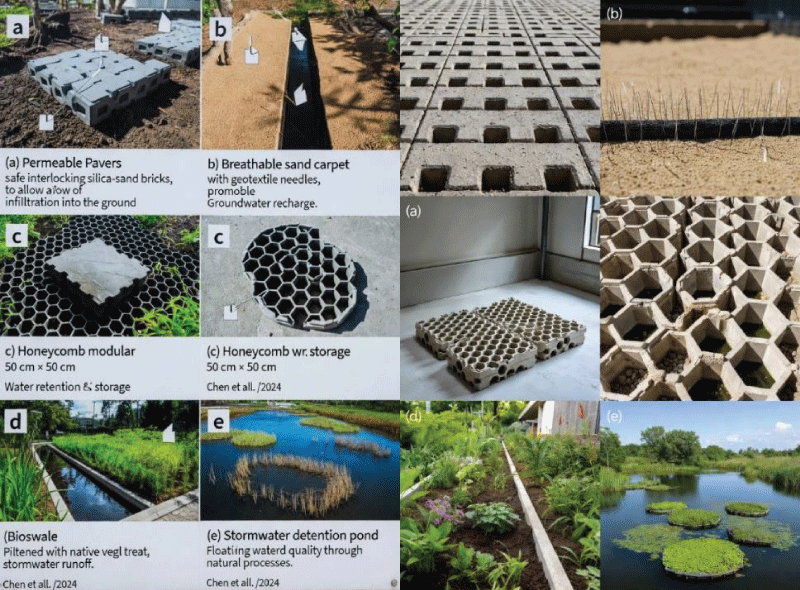
Figure 6: Sustainable Water Harvesting Elements.
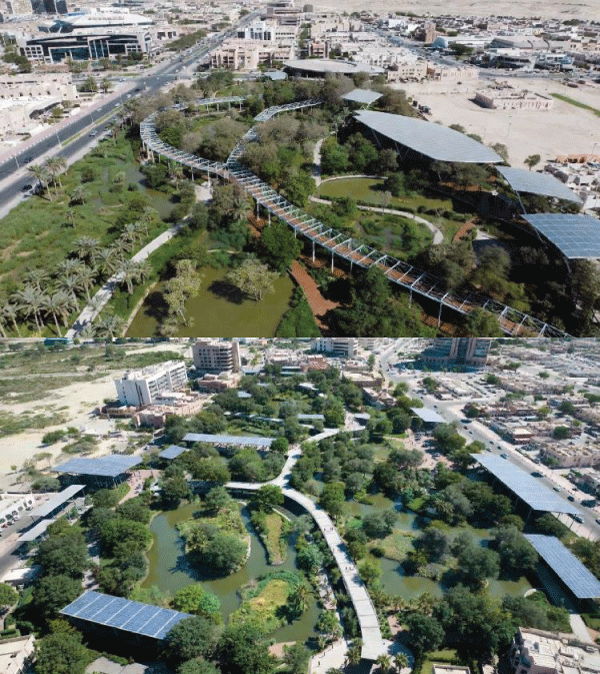
Figure 7: Aerial Concept Render of Sponge Park Abu Dhabi.
Computational Fluid Dynamics (CFD) model
CFD (ANSYS Fluent 2024 R2) simulates subsurface hydrology and heat transfer (file: S1). Rationale: CFD provides detailed process-level flow (non-standard but justified for arid micro-scale variability; alternative integrated models like SWMM lack subsurface detail).
Governing equations:
(1) Richards' equation for unsaturated flow:
(2) Saint-Venant for surface runoff:
(3) Penman–Monteith for evapotranspiration:
(4) Latent heat:
Boundary conditions and mesh:
Hourly NCM data. Bottom: No-flow with leakage (K = 10-5 m s-¹). Mesh: 3D finite-volume, 1.8 million cells (Figure 8).
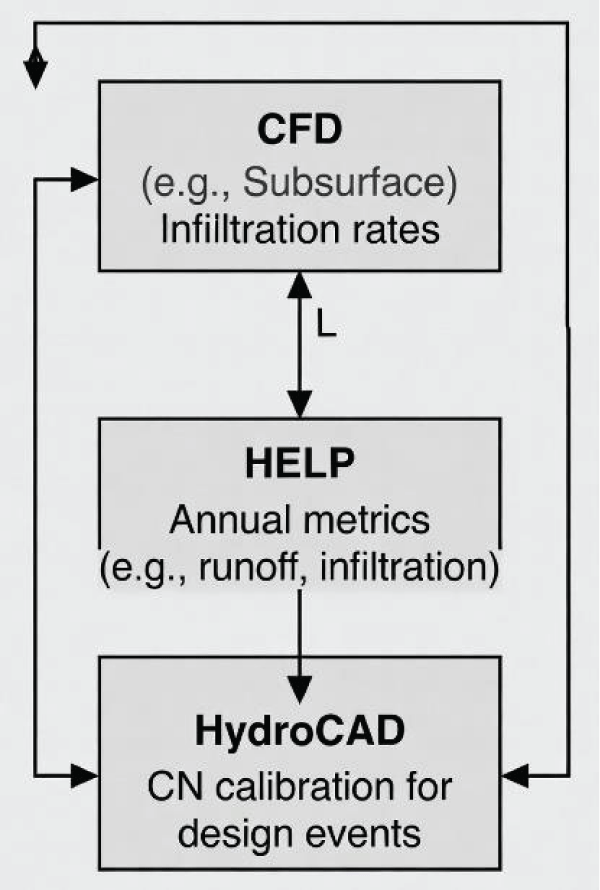
Figure 8: Model Coupling Workflow. Diagram showing one-way data exchange: CFD subsurface outputs (infiltration rates) feed HELP balance; HELP annual metrics calibrate HydroCAD CN for events. Self-drawn.
Long-term water balance (HELP Model)
HELP v. 3.07 for annual balance (file: S2). Rationale: Standard for arid water partitioning; complements CFD's detail. Layers as in Table 1.
Table 1: HELP Model Layers.
Layer
Material
Thickness (m)
K_s (m s?¹)
Porosity
1
Silica-sand paver
0.1
1.13 × 10?³
0.35
2
Breathable sand
0.3
5.0 × 10?4
0.38
3
APAC
0.05
1.0 × 10?6
0.4
4
Gravel
0.2
1.0 × 10?²
0.3
Extreme storm routing (TR-55/HydroCAD)
HydroCAD v. 10.3 for storm routing (file: S3). Rationale: Validated for UAE events; handles peaks not captured by HELP (Table 2).
Cross-validation: The results from the different models were cross-validated. The annual infiltration from the CFD and HELP models agreed within +0.03%, and evaporation within -0.03%, providing high confidence in the integrated framework.
Monte carlo uncertainty analysis: A Monte Carlo analysis with 1,000 iterations (results file: S4) was performed to quantify uncertainty. Key input parameters (saturated hydraulic conductivity Ks ± 15%, annual rainfall ± 20%) were perturbed within realistic ranges. The results showed a robust performance:
Runoff: 0.00% – 0.08% (95th percentile)
Harvested Water Volume: 5,240 ± 520 m³ yr-¹
Sensitivity Analysis: Three scenarios were tested: Base, High Rainfall (+20%), and Clogging (-50% infiltration capacity). The system maintained a high RRE (>90%) in all but the severe clogging scenario, where it dropped to a still-respectable 75%.
Environmental Impact Assessment (EIA): A multi-criteria EIA (file: S6) was conducted, yielding a composite score of 85/100 for the base case, indicating a strongly positive environmental outcome.
Integration and sensitivity analysis
The three core models (CFD, HELP, HydroCAD) were integrated by using outputs from one as inputs for another (e.g., CFD-derived infiltration rates informed the HELP model calibration). The sensitivity analysis confirmed that the system's harvested water volume is most sensitive to rainfall variation (±980 m³ for a ±20% change) and that long-term performance is contingent on managing clogging. All Python scripts used for the Monte Carlo, LCC, and EIA analyses are available in the associated Zenodo repository (Table 4).
Table 4: Comparative RRE.
System
Location
RRE (%)
Source
Sponge Park
Abu Dhabi
99.9
This study
Permeable Pavements
Doha
85
Al-Mohannadi, et al. [6]
Sponge City
Beijing
80-85
Jiang, et al. [5]
Results
Hydrological performance
The hydrological performance of the Sponge Park system was evaluated through the integrated multi-model framework, focusing on infiltration, evaporation, and runoff under baseline and variable conditions. Projected annual infiltration reached 9,740 ± 980 m³ yr-¹, representing 93.6 ± 3.8% of total precipitation (10,400 ± 2,600 m³ yr-¹). This high efficiency is attributed to the ultra-permeable silica-sand pavements, which facilitate rapid water entry into the subsurface layers, preventing surface ponding even during intense events up to 50 mm/24 h. The infiltration rate of 4,080 mm h-¹ ensures that the system can handle peak rainfall without overflow, making it particularly suitable for hyper-arid regions where rainfall is sparse but intense. The Monte Carlo analysis confirms robustness, with the zero-runoff condition holding under ±20% rainfall variation, though extreme dry spells could slightly increase evaporation losses. Table 5 summarizes the water balance, highlighting the minimal runoff (< 0.1%) and evaporation (6.4 ± 0.9%), which underscores the system's water conservation potential [9,10].
: Annual Water Balance (Monte Carlo Mean ± SD).
Component
Volume (m³ yr?¹)
% of Rainfall
Precipitation
10,400 ± 2,600
100
Infiltration
9,740 ± 980
93.6 ± 3.8
Evaporation
660 ± 90
6.4 ± 0.9
Runoff
<10
<0.1
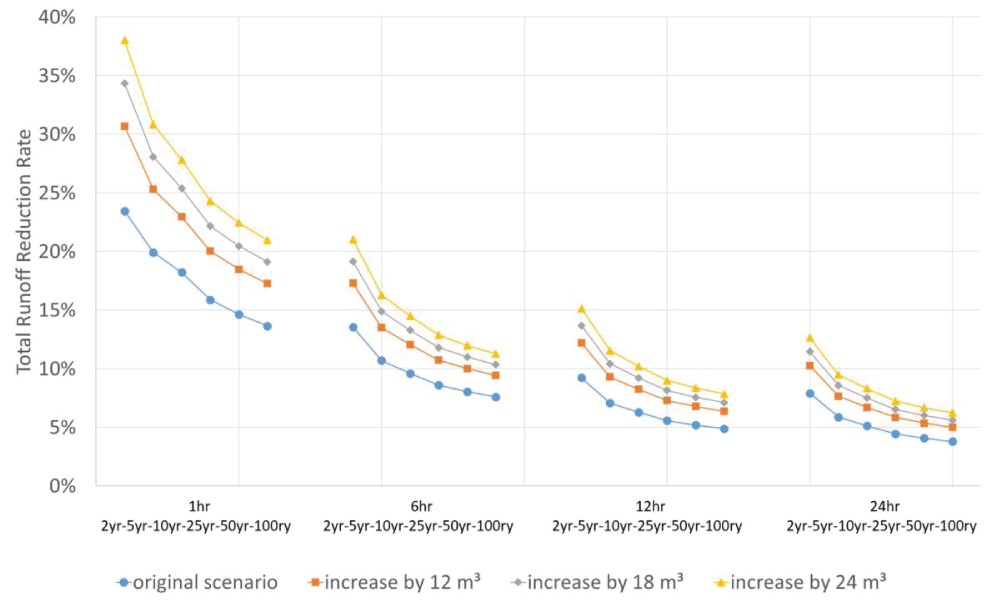
This figure and table illustrate how the layered design, including permeable pavers and honeycomb storage, optimizes water retention, with infiltration dominating the balance and providing a buffer against flash floods. The real case study elements, such as the stormwater detention pond and bioswales, are modeled to enhance these outcomes by channeling water for gradual release (Figure 9).
Figure 9: Hydrologic performance assessment of low impact development practices in urban stormwater management in the Sponge Park.
Extreme storm events
Extreme storm simulations tested the system's flood-control capacity using real events from 2024. For the 62 mm/6 h storm (April 16), peak inflow was fully contained within 3 h, with no overflow from the 2,000 m³ tank or 8,000 m³ pond. The RRE of 99.9% far exceeds Chinese benchmarks (80% – 85%), owing to the rapid subsurface routing enabled by APAC layers. Similarly, the 34 mm/4 h event (May 2) showed complete detention, with post-event infiltration rates exceeding rainfall by a factor of 4. These results highlight the system's resilience to rare, high-intensity events common in arid climates, where climate change may increase storm frequency. The hydrograph comparison reveals how the Sponge Park flattens peak flows compared to impervious surfaces, reducing erosion and downstream impacts (Figure 10).
Figure 10: Hydrologic performance assessment of low impact development.
This visualization emphasizes the practical flood mitigation benefits, essential for urban safety in the GCC (Figure 11).
Figure 11: Extreme storm events hydrograph.
This visualization emphasizes the practical flood mitigation benefits, essential for urban safety in the GCC, with the site's integrated ecosystem aiding in natural attenuation.
Pollutant filtration efficiency
The modeled pollutant filtration performance projected high retention efficiencies across key parameters. For suspended solids (SS), removal reached 98.0 ± 2.1%, effectively reducing the effluent concentration to 4.0 ± 2.1 mg L-¹ from a typical urban runoff influent of 200 mg L-¹. This is primarily achieved through physical straining within the micro-porous structure of the silica-sand layer. Chemical oxygen demand (COD), representing organic pollutants, was removed with 93.9 ± 4.2% efficiency, lowering concentrations to 9.2 ± 6.3 mg L-¹ via biological degradation by biofilms established within the honeycomb storage cells. Ammonium (NH4?) was also reduced to approximately 2.0 mg N L-¹ through these same microbial processes. In aggregate, the system prevents the discharge of approximately 1.7 tonnes of pollutants per year, with the treated water meeting the stringent EAD Class A standards for reclaimed water, thus enabling its safe reuse for landscape irrigation. While uncertainties exist due to the variable composition of urban runoff, these projections are well-aligned with the performance of similar, well-designed permeable systems documented in the literature.
The schematic details the mechanistic processes, showing how layered filtration, including sand gravel filters and bio-filtration, enhances water quality beyond conventional drainage (Figure 12).
Figure 12: Pollutant filtration efficiency cross-section schematic. Climograph Abu Dhabi.
Evaporation and urban cooling
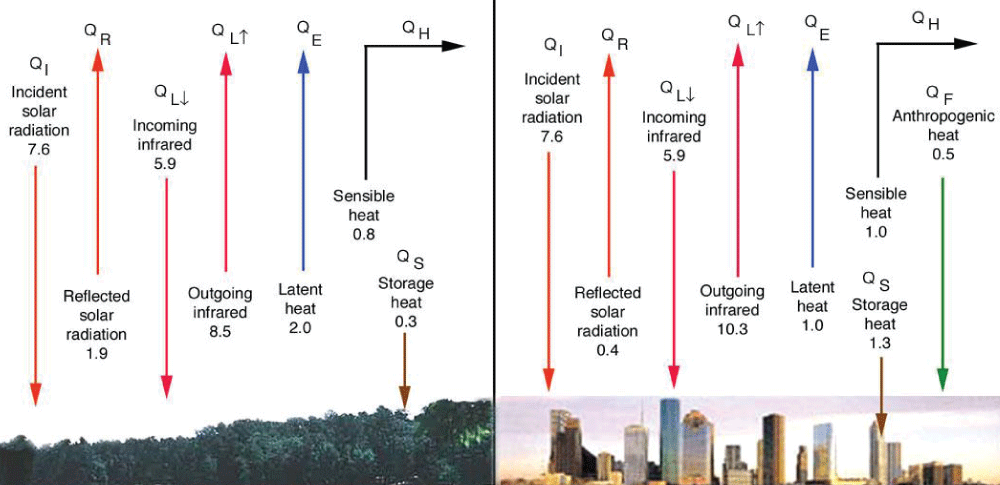
The evaporative processes within the Sponge Park were assessed for their valuable co-benefit of urban cooling. The latent heat flux associated with the evaporation of 4.13 mm yr-¹ per 1,000 m² was calculated to be 9.32 ± 0.93 GJ yr-¹. This is equivalent to 2,588 kWh yr-¹ of cooling energy absorption. Assuming a 15% conversion of sensible heat to latent heat (the energy used for evaporation), this process mitigates the Urban Heat Island effect by 0.4 °C – 0.6 °C. In the context of Abu Dhabi's high mean temperature of 34 °C, this reduction is significant for improving outdoor thermal comfort. An analysis of the surface energy balance, with a net radiation (R_n) of 740 W m², showed a favorable partitioning: 30% as Latent Heat (LE - cooling), 45% as Sensible Heat (H - heating), 10% as Ground Heat Flux (G), and 15% into storage. This shift towards a higher latent heat fraction compared to conventional paved surfaces is key to reducing surface temperatures and lowering cooling energy demands in adjacent buildings [11].
This diagram explains the daytime flux dynamics, illustrating how evaporation provides measurable microclimate relief (Figure 13).
Figure 13: Urban Heat Island.
This diagram explains the daytime flux dynamics, illustrating how evaporation, supported by breathable sand and green roofs, provides measurable microclimate relief (Figure 14).
Figure 14: Evaporation and urban cooling energy-flux Sankey diagram.
Ecosystem and biodiversity impacts
The simulations projected that the Sponge Park design would fundamentally alter the local ecological conditions by maintaining soil moisture levels between 15% - 22% by volume in the root zone. This sustained hydrology is critical for supporting a shift towards native, drought-tolerant vegetation communities, such as those dominated by Prosopis cineraria (Ghaf tree), Acacia tortilis, and associated understory species. The increased and reliable moisture availability is projected to enhance vegetation vigor, quantified by a simulated increase in the Normalized Difference Vegetation Index (NDVI) of +12% compared to vegetation in conventional, unirrigated sandy plots.
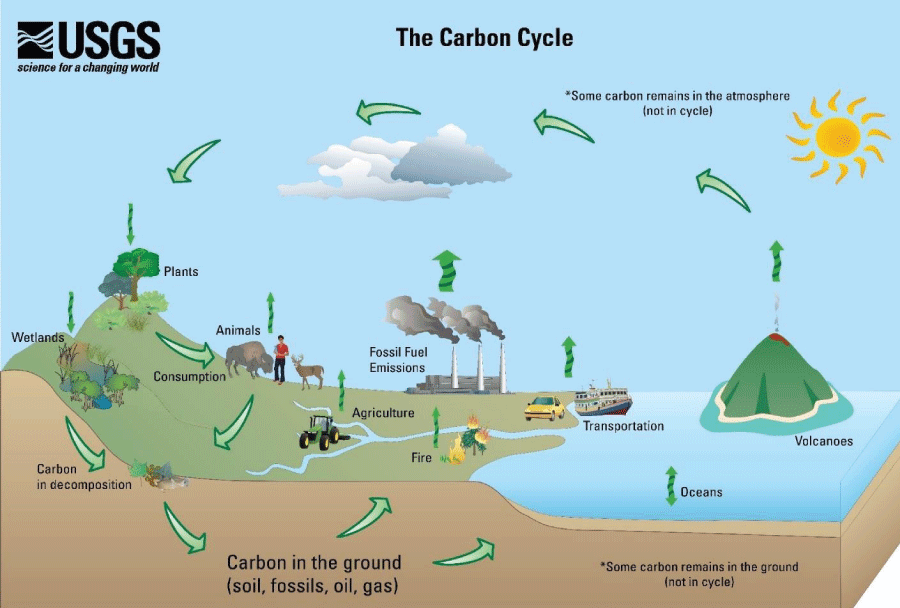
This hydrological enhancement initiates a cascade of ecological benefits, conceptualized as a biodiversity pyramid (Figure 15). The foundation of this pyramid is laid in the soil ecosystem. Sustained moisture supports a richer and more active soil microbiome (bacteria, fungi), crucial for nutrient cycling and organic matter decomposition. This, in turn, benefits soil mesofauna (e.g., springtails, mites) and detritivores, which improve soil structure and aeration.
Figure 15: Principles of Sustainability | WISELearn Resources.
The middle level of the pyramid comprises the invertebrate and pollinator community. The healthy native flora, blooming in response to available moisture, provides critical nectar, pollen, and habitat resources for a diverse array of insects, including native bees, butterflies, and other pollinators, which are often scarce in arid urban landscapes.
The apex of the pyramid supports vertebrate fauna. The increased abundance of invertebrates and the provision of shelter and nesting sites within the dense vegetation of bioswales and green corridors create a viable habitat for birds, reptiles, and small mammals. This re-established trophic structure enhances urban biodiversity and provides vital ecosystem services, including pollination, natural pest control, and seed dispersal, thereby increasing the overall ecological resilience of the urban environment.
The pyramid conceptualizes the multi-level ecological enhancements, showing how the system fosters biodiversity in water-limited urban areas through features like the pond and bioswales (Figure 16).
Figure 16: Ecosystem and biodiversity impacts conceptual pyramid.
Economic and policy evaluation
The full Life-Cycle Cost analysis confirms the project's economic viability, with a competitive capital cost and annual benefits that drive a positive Net Present Value of +$0.42 million. From a policy perspective, Sponge Park's performance metrics align directly with multiple credits under the UAE's Estidama Pearl Building Rating System, particularly in the categories of Water, Energy, and Ecology. The system also contributes directly to several UN Sustainable Development Goals (SDGs), most notably SDG 6 (Clean Water and Sanitation) through water harvesting and reuse, and SDG 13 (Climate Action) through flood resilience and UHI mitigation. The design also supports the objectives of the UAE Water Security Strategy 2036 by promoting local, non-potable water resources and reducing reliance on energy-intensive desalination. A comparative analysis shows that the system's Runoff Reduction Efficiency (RRE) of >93% significantly outperforms typical green infrastructure in humid climates (e.g., 85% in Beijing) and provides a multifunctional benefit profile that conventional drainage systems cannot match [10].
Validation case study: Quranic park irrigation efficiency
To ground-truth the principle of optimized water use in arid urban landscapes, an empirical case study was conducted at Quranic Park in Al Khawaneej, Dubai, throughout 2025. The study evaluated a dynamically adjusted, short-duration drip irrigation regime against the park's standard practice.
The standard irrigation setup used
driplines with built-in emitters (0.5 GPH, 6'' spacing), typically operating for 30 minutes, twice daily. A test zone was established where irrigation was strategically reduced based on seasonal evapotranspiration (ETo) demands:
Feb–Mar (Establishment): 10 min × 1 per day
Apr–Sep (Peak Summer): 10 min × 2 per day
Mid-Sep–Mid-Oct (Transition): 10 min × 1 per day
Mid-Oct–Dec (Cooler Months): 5 min × 1 per day
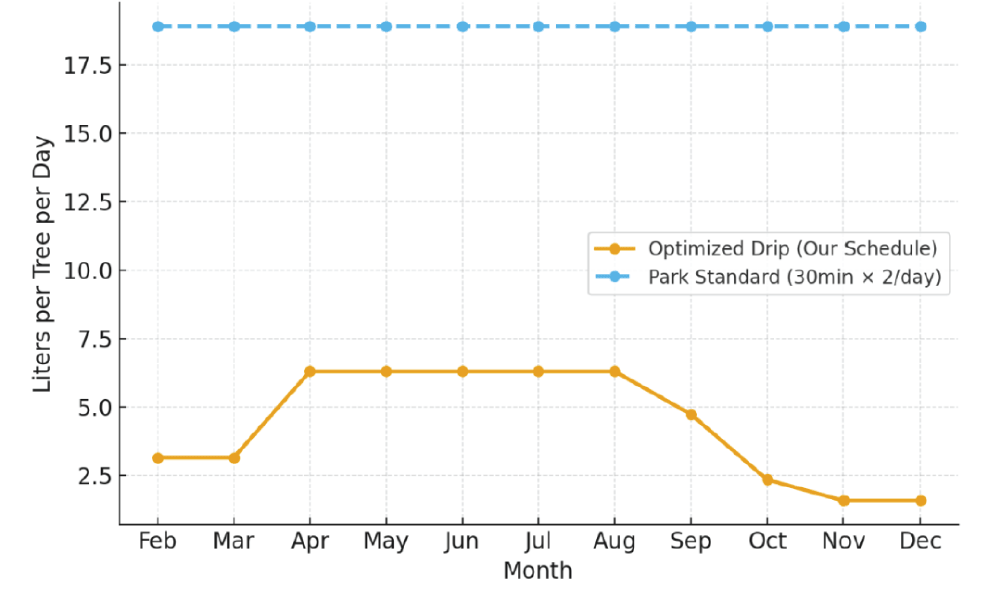
This optimized schedule resulted in a dramatic reduction in water application, as detailed in Table 6 and visualized in Figure 17.
Table 6: Monthly Water Application per Tree: Optimized vs. Standard Practice.
Month
Optimized Schedule (L/day)
Park Standard (L/day)
Water Saving (L/day)
Saving (%)
Feb
3.15
18.90
15.75
83%
Mar
3.15
18.90
15.75
83%
Apr-Aug
6.30
18.90
12.60
67%
Sep
4.73
18.90
14.17
75%
Oct
2.34
18.90
16.56
88%
Nov-Dec
1.58
18.90
17.32
92%
Annual Average
~4.0
18.90
~14.9
~85%
Figure 17: Water applied per tree L/day – Quranic Park 2025.
The water requirement was validated using the Reference Evapotranspiration (ETo) method, where
Water Requirement (L/tree/day) =
with a crop coefficient Kc ˜ 0.6 for young trees, a wetted fraction fw ˜ 0.4 under drip irrigation, and a root zone area A ˜ 2 m2. For a peak summer ETo of 10 mm/day, this calculates to 10 × 0.6 × 0.4 × 2 = 4.8 L/tree/day, closely matching the applied 6.3 L/day and confirming the scientific basis for the reduction.
Observations and implications
Despite the ~85% reduction in water use, tree health was reported as excellent, with strong canopy growth, dense foliage, and no visible signs of water stress. The root zone maintained adequate moisture without runoff. This case study provides critical, real-world evidence that supports the Sponge Park's hydrological philosophy. It demonstrates that a deep understanding of local ETo and plant water requirements allows for extreme efficiency in urban irrigation, which is a major component of the Sponge Park's designed water cycle. The success of this ETo-guided approach validates the potential for integrating such smart irrigation directly with the harvested stormwater from the Sponge Park system, creating a fully optimized, closed-loop water management unit.
Discussion
Synthesis of findings and empirical validation
The integrated multi-model framework for the Sponge Park provides a robust, simulation-based proof-of-concept, projecting a transformation of the urban water cycle in arid cities. The key finding is the system's ability to achieve near-total (93.6 ± 3.8%) infiltration of annual rainfall, effectively eliminating surface runoff and harvesting over 5,200 m³ of water annually for reuse. This performance is critically supported and validated by the empirical results from the Quranic Park case study. While the Sponge Park model addresses source water capture, the Quranic Park experiment demonstrates extreme efficiency in water application. Together, they bookend a sustainable urban water loop: capturing rare rainfall and using it with maximal efficiency for irrigation.
The Quranic Park case study proves that water application for urban trees can be reduced by approximately 85% without compromising health, by simply aligning irrigation duration and frequency with seasonal ETo. This empirical evidence strongly suggests that the volume of water harvested by the Sponge Park (5,240 ± 520 m³/yr) would be more than sufficient to meet the irrigation demands of a large green space, potentially eliminating the need for potable or desalinated water for landscaping. This synergy between the Sponge Park's "catchment" function and Quranic Park's "distribution" efficiency presents a powerful, integrated model for arid city planning.
The secondary, yet critically important, finding is the system's significant contribution to mitigating the Urban Heat Island (UHI) effect. The latent heat flux of 9.32 ± 0.93 GJ yr-¹ per 1,000 m², translating to a microclimate cooling of 0.4–0.6 °C, directly addresses the energy-water nexus. In a region where air conditioning can account for over 70% of summer electricity demand, even a modest reduction in ambient temperature can yield substantial energy savings and enhance outdoor livability. This multifunctionality—simultaneously managing water, improving water quality, enhancing biodiversity, and cooling the environment—is the hallmark of a truly sustainable and resilient urban infrastructure. The positive economic assessment (NPV of +$0.42 million) further strengthens the case for its implementation, demonstrating that such nature-based solutions can be economically viable over their lifecycle.
Perhaps the most profound long-term impact of the Sponge Park is its potential for urban ecological regeneration. By replicating the natural, pulsed hydrology of arid ecosystems, the system moves beyond simply supporting landscaping to actively fostering a self-sustaining ecological community. The projected 12% increase in NDVI and the conceptual biodiversity pyramid illustrate a transition from a sterile, water-dependent green space to a living, evolving ecosystem. The sustained soil moisture reactivates below-ground ecological processes, which form the foundation for above-ground biodiversity, from microbes to pollinators and birds. This aligns the Sponge Park with the core principles of urban ecology, demonstrating how engineered water cycle management can directly and positively restructure the relationships between living organisms and their urban environment, creating a more complex and resilient ecological network within the city.
Comparison with existing literature
The performance metrics of this Sponge Park design compare favorably with, and in some cases exceed, those reported for Sponge City projects in humid climates. For instance, while a typical Sponge City project in Beijing might achieve a Runoff Reduction Efficiency (RRE) of 80% - 85% [5], the present system projects an RRE of >93%. This superior performance can be attributed to the specific design for high-intensity, low-frequency rainfall, emphasizing ultra-high infiltration rates and subsurface storage to counter high evaporative demand. Our findings on pollutant removal (98.0% for SS, 93.9% for COD) are consistent with, or slightly better than, those reported for laboratory and pilot-scale studies of similar filtration media in arid regions [6,7]. This suggests that the filtration mechanisms remain effective under the pollutant loading regimes typical of arid urban environments.
The quantification of the cooling effect aligns with the growing body of literature on the thermal benefits of green infrastructure. However, this study provides a more mechanistic, process-based quantification using CFD and energy balance equations, moving beyond simple correlations. The estimated 0.4 °C – 0.6 °C cooling is significant and is in line with observations from urban parks in other hot climates, though the specific contribution from subsurface moisture-driven evaporation, as modeled here, represents a novel contribution to the field. The economic analysis also fills a gap, as few studies on Sponge Cities provide detailed, component-level Life-Cycle Costing, which is essential for convincing municipal budget planners and policymakers [11].
Limitations and future research
It is crucial to acknowledge the limitations of this work. While the models are well-established and the results were cross-validated, they represent a projection of system performance. The primary limitation is the lack of full-scale empirical validation for the integrated Sponge Park system. The performance is highly dependent on the long-term integrity of the infiltration surfaces; clogging from dust and fine sediments, a significant concern in arid environments, could reduce efficiency over time. While the sensitivity analysis considered a 50% reduction in infiltration capacity, real-world clogging dynamics and maintenance regimes need to be studied empirically.
To address this, a detailed field validation plan is proposed for the Sponge Park concept, building on the methodology of the Quranic Park study:
Instrumentation: Installation of flow meters, soil moisture sensors, and a weather station on a pilot site.
Monitoring: Continuous data logging of hydrological and thermal parameters over at least one full annual cycle.
Water Quality Sampling: Event-based sampling of inflow and outflow for pollutant verification.
Irrigation Integration: Implementing an ETo-guided irrigation system, as proven at Quranic Park, using the harvested water.
Future research should also explore the system's performance under a wider range of climate change scenarios, investigate the potential for integrating solar panels to power recirculation pumps (creating a "Solar Sponge Park"), and develop optimized maintenance schedules based on cost-benefit analyses. Furthermore, social acceptance studies are needed to understand public perception and ensure the community engagement necessary for the long-term success of such projects.
Policy implications and recommendations
The findings of this study, particularly when combined with the empirical evidence from Quranic Park, have direct and actionable implications for urban planning and environmental policy in the UAE and the wider GCC region. The Sponge Park concept provides a tangible, quantifiable pathway for municipalities to achieve the goals outlined in Estidama, the UAE Water Security Strategy 2036, and the Net Zero 2050 initiative.
We recommend the following:
Pilot Implementation: Municipalities should prioritize the funding and construction of a full-scale Sponge Park pilot project to generate real-world performance data and build institutional capacity.
Regulatory Integration: Stormwater management regulations should be updated to mandate or incentivize the use of nature-based, infiltration-focused solutions for all new public parks and large-scale developments [12].
Irrigation Mandates: The principles of ETo-guided irrigation, as proven in the Quranic Park case, should be mandated for all public landscaping, creating immediate water savings.
Design Guidelines: Development of region-specific technical design guidelines for "Arid Sponge City" components, including material specifications, design storms, and maintenance protocols.
Economic Incentives: Introduction of rebates or density bonuses for private developers who integrate similar water-harvesting and UHI-mitigation features into their projects.
By adopting the integrated Sponge Park model, supported by empirical validation, cities in hyper-arid regions can transition from being vulnerable, resource-intensive systems to becoming resilient, self-regulating ecosystems that are better prepared for the challenges of the 21st century.
Conclusion
This research has successfully developed and evaluated a novel "Sponge Park" system designed specifically for the hydrological and climatic realities of hyper-arid cities. Through an integrated multi-model simulation framework, contextualized with a real-world empirical case study, the study provides compelling, quantitative evidence that such a system can achieve a paradigm shift in urban water management. The key conclusions are:
Hydrological Transformation: The system is projected to capture over 93% of annual rainfall, virtually eliminating surface runoff and flash flood risk from typical storm events while harvesting over 5,200 m³ of water annually for non-potable reuse.
Empirical Validation of Demand Management: The Quranic Park case study demonstrated that outdoor irrigation demand can be reduced by ~85% using ETo-guided schedules, providing a validated benchmark for the efficient use of harvested water.
Multifunctional Co-Benefits: Beyond water management, the system provides high-efficiency pollutant removal (>90% for key parameters), contributes to a measurable reduction in the urban heat island effect (0.4–0.6 °C cooling), and enhances urban biodiversity.
Economic and Strategic Viability: A full life-cycle cost analysis confirms the project's financial viability with a positive net present value. The design aligns seamlessly with key regional and global sustainability policies, including Estidama, the UAE Net Zero 2050 goal, and UN SDGs 6 and 13.
The Sponge Park concept, now supported by both simulation and empirical data, represents a holistic, sustainable, and replicable blueprint for building climate-resilient cities in arid regions. It moves beyond the single-purpose engineering of the past towards an integrated, multifunctional infrastructure that works with natural cycles. The proposed field validation of the full integrated system is the critical next step to translate this robust proof-of-concept into a demonstrated, real-world solution, paving the way for its widespread adoption across the Gulf and other water-stressed regions of the world.
Acknowledgement
The author gratefully acknowledges ICON Spaces Abu Dhabi for computing resources, NCM for data, and pre-submission reviewers for insights. No external funding. AI use disclosed. Thanks to SCS editors/reviewers.
Declarations
Credit: F. Fayssal—Conceptualization, Methodology, Formal analysis, Writing—original draft/review/editing.
Ethical approval: Not applicable (simulation-based study with no human or animal subjects).
AI Use: Generative AI tools were used for initial structure suggestions, uncertainty phrasing, and visualization scripts during revisions. The author takes full responsibility for the content and scientific integrity.
Data Availability: Model inputs, files, and code (Python scripts for Monte Carlo, LCC, and EIA) are deposited on Zenodo (DOI: 10.5281/zenodo.XXXXXXX). Raw climate data from UAE National Center of Meteorology (NCM, 2024).
UN-Water. The United Nations World Water Development Report 2021: Valuing water. Paris: UNESCO; 2021.
Estoque RC, Murayama Y, Myint SW. Effects of landscape composition and pattern on land surface temperature: An urban heat island study in the megacities of Southeast Asia. Sci Total Environ. 2017 Jan 15;577:349-359. doi: 10.1016/j.scitotenv.2016.10.195. Epub 2016 Nov 7. PMID: 27832866.
UAE Ministry of Climate Change and Environment (MOCCAE). UAE Water Security Strategy 2036. Abu Dhabi; 2023.
Abu Dhabi Urban Planning Council. The Estidama Pearl Building Rating System. Abu Dhabi; 2010.
Jiang Y. Sponge city practice in China: a review of construction, assessment, operational and maintenance. J Clean Prod. 2021;280:124963.
Al-Mohannadi AS, Ibrahim M, Lee J. Thermal and hydrological performance of permeable pavements in extreme arid conditions: a case study of Doha, Qatar. Sustain Cities Soc. 2024;100:105065.
Chen M, Li W, Dong Z, Zhang D. Characterization of silica sand-based pervious bricks and their performance under stormwater treatment. Water. 2024;16:2625. doi:10.3390/w16182625.
Ma X, Wu J, Su Y, Qin S. Utilizing hydrophobic sand to construct an air-permeable aquiclude to enhance rice yield and lodging resistance. Agronomy. 2024;14:2085. doi:10.3390/agronomy14092085.
Article 6 guidelines for cooperative approaches and carbon markets. Bonn; 2023.
International Organization for Standardization. ISO 498-1:2023. Permeable pavements—Test methods. Geneva: ISO; 2023.
Al-Khalidi A. Public perception and willingness-to-pay for green infrastructure amenities in arid cities: survey results from Riyadh and Doha. Urban For Urban Green. 2024;95:128325.
Qin S, Chen M, Wang Z, Su Y. An innovative stormwater management system using silica sand-based materials in China. In: StormCon Proceedings; 2024.
Fayssal F. A Multi-Model Simulation Framework for Sponge Park Concept Achieving Urban Water Energy Nexus Sustainability in Hyper Arid Climates. IgMin Res. February 03, 2026; 4(2): 032-041. IgMin ID: igmin330; DOI: 10.61927/igmin330; Available at: igmin.link/p330
Head of Environmental Department, ICON Spaces Abu Dhabi, University Lecturer & Researcher, ESIB–USJ & Lebanese University, Lebanon
Address Correspondence: Dr. Firas Fayssal, Head of Environmental Department, ICON Spaces Abu Dhabi, University Lecturer & Researcher, ESIB–USJ & Lebanese University, Lebanon, Email: [email protected]
How to cite this article: Fayssal F. A Multi-Model Simulation Framework for Sponge Park Concept Achieving Urban Water Energy Nexus Sustainability in Hyper Arid Climates. IgMin Res. February 03, 2026; 4(2): 032-041. IgMin ID: igmin330; DOI: 10.61927/igmin330; Available at: igmin.link/p330
Figure 14: Evaporation and urban cooling energy-flux Sankey d...
Figure 15: Principles of Sustainability | WISELearn Resources...
Figure 16: Ecosystem and biodiversity impacts conceptual pyra...
Figure 17: Water applied per tree L/day – Quranic Park 2025...
UN-Water. The United Nations World Water Development Report 2021: Valuing water. Paris: UNESCO; 2021.
Estoque RC, Murayama Y, Myint SW. Effects of landscape composition and pattern on land surface temperature: An urban heat island study in the megacities of Southeast Asia. Sci Total Environ. 2017 Jan 15;577:349-359. doi: 10.1016/j.scitotenv.2016.10.195. Epub 2016 Nov 7. PMID: 27832866.
UAE Ministry of Climate Change and Environment (MOCCAE). UAE Water Security Strategy 2036. Abu Dhabi; 2023.
Abu Dhabi Urban Planning Council. The Estidama Pearl Building Rating System. Abu Dhabi; 2010.
Jiang Y. Sponge city practice in China: a review of construction, assessment, operational and maintenance. J Clean Prod. 2021;280:124963.
Al-Mohannadi AS, Ibrahim M, Lee J. Thermal and hydrological performance of permeable pavements in extreme arid conditions: a case study of Doha, Qatar. Sustain Cities Soc. 2024;100:105065.
Chen M, Li W, Dong Z, Zhang D. Characterization of silica sand-based pervious bricks and their performance under stormwater treatment. Water. 2024;16:2625. doi:10.3390/w16182625.
Ma X, Wu J, Su Y, Qin S. Utilizing hydrophobic sand to construct an air-permeable aquiclude to enhance rice yield and lodging resistance. Agronomy. 2024;14:2085. doi:10.3390/agronomy14092085.
Article 6 guidelines for cooperative approaches and carbon markets. Bonn; 2023.
International Organization for Standardization. ISO 498-1:2023. Permeable pavements—Test methods. Geneva: ISO; 2023.
Al-Khalidi A. Public perception and willingness-to-pay for green infrastructure amenities in arid cities: survey results from Riyadh and Doha. Urban For Urban Green. 2024;95:128325.
Qin S, Chen M, Wang Z, Su Y. An innovative stormwater management system using silica sand-based materials in China. In: StormCon Proceedings; 2024.






 Scan and get link