


Help ?

IGMIN: We're glad you're here. Please click 'create a new query' if you are a new visitor to our website and need further information from us.

If you are already a member of our network and need to keep track of any developments regarding a question you have already submitted, click 'take me to my Query.'

Search

Organised by  IgMin Fevicon

Regional sites

Browse by Subjects

Welcome to IgMin Research – an Open Access journal uniting Biology, Medicine, and Engineering. We’re dedicated to advancing global knowledge and fostering collaboration across scientific fields.

Browse by Sections

At IgMin Research, we bridge the frontiers of Biology, Medicine, and Engineering to foster interdisciplinary innovation. Our expanded scope now embraces a wide spectrum of scientific disciplines, empowering global researchers to explore, contribute, and collaborate through open access.

Special Issues

Our mission is to merge scientific expertise to boost knowledge and fuel faster developments.

Members

Our mission is to merge scientific expertise to boost knowledge and fuel faster developments.

Articles

Our mission is to merge scientific expertise to boost knowledge and fuel faster developments.

Explore Content

Our mission is to merge scientific expertise to boost knowledge and fuel faster developments.

Identify Us

Our mission is to merge scientific expertise to boost knowledge and fuel faster developments.

IgMin Corporation

Welcome to IgMin, a leading platform dedicated to enhancing knowledge dissemination and professional growth across multiple fields of science, technology, and the humanities. We believe in the power of open access, collaboration, and innovation. Our goal is to provide individuals and organizations with the tools they need to succeed in the global knowledge economy.

Publications Support
[email protected]
E-Books Support
[email protected]
Webinars & Conferences Support
[email protected]
Content Writing Support
[email protected]
IT Support
[email protected]

Search

Select Language

Explore Section

Content for the explore section slider goes here.

Abstract

Abstract at IgMin Research

Our mission is to merge scientific expertise to boost knowledge and fuel faster developments.

Engineering Group Perspective Article ID: igmin353

Reliability of Water for Life Support for a Near-Term Human Mission to Mars: Requirements, Earth Supply, Recycling, Storage and Mars Indigenous Water

Aerospace Engineering DOI10.61927/igmin353 Affiliation

Affiliation

    Independent Researcher, South Pasadena, CA, USA

44
VIEWS
13
DOWNLOADS
Connect with Us

Abstract

This paper reviews requirements for water supply rate for life support of human crews on deep space missions such as Mars, and approaches to provide a reliable water supply. 
The literature on the required water supply flow rate to support human crews in deep-space missions is sparse. Estimates were generated in an era where saving mass was critical, and the allocations were skimpy. Here, we provide updated estimates of the suggested water supply flow rate to support human crews on deep-space missions in an era when mass in deep space is far more affordable. Water a higher flow rate of water to the crew than had previously been suggested.
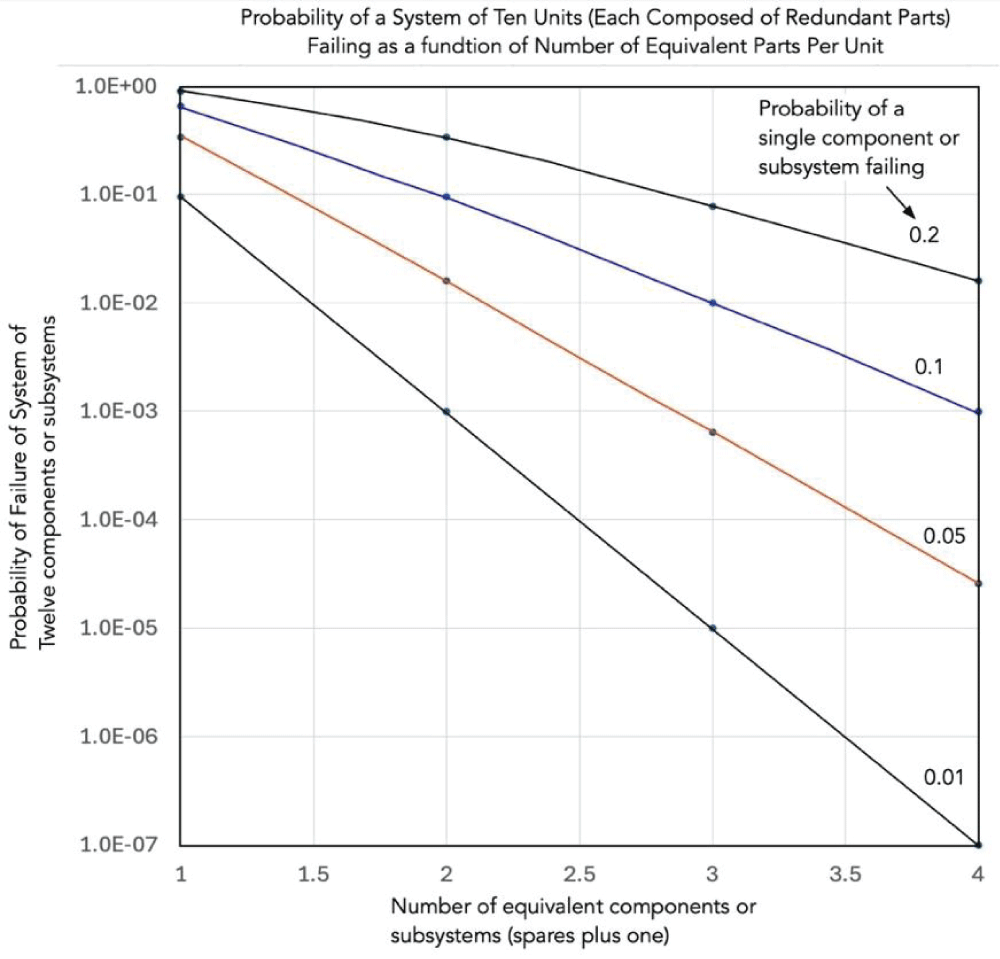
It was widely believed that water recycling systems are necessary to reduce mission mass in the era of high launch costs. However, the reliability of recycling technology is inadequate, as evidenced by experience on the International Space Station. Use of spares to replace subsystems that fail was proposed to greatly improve reliability, and that works well theoretically as shown by probabilistic analysis, but the logistics of validation and implementation are problematic. 
Mars mission water system designs should focus on maximizing reliability to provide crew safety. The earlier design goal of reducing launch mass by increasing water recycling closure is now less relevant because of the recent great reduction in launch cost. Reliable water supply for life support can be provided by some combination of stored water from Earth, recycling of wastewater, or use of indigenous Mars water. There is an implicit three-way trade between performance, cost, and risk depending on the mission design.
A simplified human Mars mission that uses the Starship can bring water from Earth, thus avoiding the two difficult challenges of recycling and processing indigenous Mars water, achieving high safety and reliability, and landing at an equatorial site. More ambitious human Mars missions might need recycling and/or indigenous Mars water, but they should always bring survival-level water from Earth. If indigenous water is required, that limits landing sites to around 40°N or higher altitudes.
Bringing water from Earth is the best way to supply crew requirements for limited missions likely to be the first human landings on Mars. For futuristic missions of great extent, either recycling or use of indigenous water from Mars would be needed. Both methods involve significant technical, timeline, and fiscal challenges. In any mission, as a minimum, bringing a survival level of water from Earth is strongly recommended.

Figures

References

    1. Rapp D. Human missions to Mars. 3rd ed. Heidelberg: Springer‑Praxis Books; 2023.
    2. Rapp D. Mars ascent propellants and life support resources—take it or make it? IgMin Res. 2024 Jul 29;2(7):673‑682. doi:10.61927/igmin232.
    3. Rapp D. Human missions to Mars using the Starship. IgMin Res. 2025 Aug 6;3(8):268‑277. doi:10.61927/igmin308.
    4. Jones HW. Take material to space or make it there? In: ASCEND Conf. Las Vegas, NV; 2023.
    5. Maiwald V, Bauerfeind M, Fälker S, Westphal B, Bach C. About feasibility of SpaceX’s human exploration Mars mission scenario with Starship. Sci Rep. 2024;14(1):11804. Erratum in: Sci Rep. 2024 Sep 5;14(1):20718.
    6. Rapp D, Inglezakis V. Accessible H2O on Mars—a critical review of current knowledge. IgMin Res. 2025 Nov 25;3(11):407‑439. doi:10.61927/igmin322.
    7. Golombek M, Williams N, Wooster P, McEwen A, Putzig N, Bramson A, et al. SpaceX Starship landing sites on Mars. Presented at: 52nd Lunar Planet Sci Conf; 2021.
    8. French MM, Lange KE. 49th Int Conf Environ Syst. Boston, MA; 2019. ICES‑2019‑236.
    9. Olawade DB, Ijiwade JO, Wada OZ. Sustainable water systems in space: a review of current technologies and future prospects. Water Resour Res. 2025;62:e2025WR041273. doi:10.1029/2025WR041273.
    10. Hanford AJ. Advanced life support research and technology. NASA Rep. NASA/CR‑2004‑208944C; 2004.
    11. Hanford AJ. Advance life support baseline values and assumptions. NASA Rep. NASA/CR‑2004‑208941; 2006.
    12. Allen CS, Burnett R, Charles J, et al. Guidelines and capabilities for designing human missions. NASA Rep. NASA/TM‑2003‑210785; 2003.
    13. Anderson MS, Ewert MK, Keener JF. Life support baseline values and assumptions document. NASA/TP‑2015‑218570/REV1; 2015. Available from: https://ntrs.nasa.gov/citations/20180001338.
    14. Jones HW, Hodgson EW, Kliss MH. Water system architectures for Moon and Mars bases. 45th Int Conf Environ Syst. Bellevue, WA; 2015. ICES‑2015‑049.
    15. Jones HW, Fisher JW, Delzeit LD, et al. Developing the water supply system for travel to Mars. 46th Int Conf Environ Syst. Vienna, Austria; 2016. ICES‑2016‑108.
    16. Jones HW. Cost‑effective high reliability for space life support requires using storage. 49th Int Conf Environ Syst. Boston, MA; 2019. ICES‑2019‑11.
    17. Perry JL, Sargusingh MJ, Toomarian N. Guiding requirements for designing life support system architectures for crewed exploration missions beyond low‑Earth orbit. NASA Tech Rep; 2016. Available from: https://ntrs.nasa.gov/api/citations/20160012091/downloads/20160012091.pdf.
    18. Hoffman SJ, Andrews A, Joosten BK, Watts K. A water rich Mars surface mission scenario. IEEE Aerosp Conf; 2017. doi:10.1109/AERO.2017.7943911.
    19. Allen C, et al. Human integration design handbook. NASA/SP‑2010‑3407/REV1; 2014. Available from: https://www.nasa.gov/wp-content/uploads/2015/03/human_integration_design_handbook_revision_1.pdf.
    20. Ewert MK, Stromgren C. Astronaut mass balance for long duration missions. 49th Int Conf Environ Syst. Boston, MA; 2019. ICES‑2019‑126.
    21. Jones HW. Minimum risk space habitat and life support. Int Conf Environ Syst; 2020. ICES‑2020‑222.
    22. Heldmann JL, Marinova MM, Lim DSS, Wilson D, Carrato P, Kennedy K, et al. Mission architecture using the SpaceX Starship vehicle to enable a sustained human presence on Mars. New Space. 2022 Sep 1;10(3):259‑273. doi:10.1089/space.2020.0058.
    23. Lutz K, Fairhart A. Space & Mars settlement water life cycle: H2O production, infrastructure, treatment, and storage. ASCEND Conf. Las Vegas, NV; 2022. doi:10.2514/6.2022‑4231.
    24. Jones HW. Reliability requires using direct supply, not recycling, for space life support. AIAA SciTech Forum / Int Conf Environ Syst; 2025. AIAA 2025‑4003. doi:10.2514/6.2025‑4003.
    25. Owens AC, et al. Integrated trajectory, habitat, and logistics analysis and trade study for human Mars missions. ASCEND Conf; 2020.
    26. Owens AC, Cirillo WM, Piontek N, et al. Analysis and optimization of test plans for advanced exploration systems reliability and supportability. 50th Int Conf Environ Syst. 2021 Jul 12‑15. ICES‑2020‑199.
    27. Bagdigian RM, et al. ISS environmental control and life support system mass and crewtime utilization in comparison to a long duration human space exploration mission. 45th Int Conf Environ Syst. Seattle, WA; 2015. ICES‑2015‑094.
    28. Williamson J, Wilson J, Luong H. Status of ISS water management and recovery. 53rd Int Conf Environ Syst. Louisville, KY; 2024. ICES‑2024‑317.
    29. Jones HW, Kliss MH. Developing an advanced life support system for the flexible path into deep space. 40th Int Conf Environ Syst. Barcelona, Spain; 2010.
    30. Jones HW, Hodgson EW, Kliss MH. Life support for deep space and Mars. 44th Int Conf Environ Syst. Tucson, AZ; 2014. ICES‑2014‑074.
    31. Jones HW. Redundancy: how many unreliable spares are needed for high reliability and confidence on a time limited mission? Pers Commun; 2021.
    32. Broyan JL, et al. NASA environmental control and life support technology development for exploration: 2020 to 2021 overview. 50th Int Conf Environ Syst. 2021 Jul 12‑15. ICES‑2021‑384.
    33. Jones HW. Common cause failures and ultra reliability. 42nd Int Conf Environ Syst; 2012. doi:10.2514/6.2012‑3602.
    34. Jones HW. Methods and costs to achieve ultra‑reliable life support. 42nd Int Conf Environ Syst; 2012. Available from: https://ntrs.nasa.gov/api/citations/20160005781/downloads/20160005781.pdf.
    35. Rapp D. Landing site selection for the first human mission to Mars. IgMin Res. 2026 Feb 9;4(2):66‑75. doi:10.61927/igmin333.
    36. Jones HW. Ultra reliable closed loop life support for long space missions. 41st AIAA Conf; 2010. doi:10.2514/6.2010‑6286.
    37. Jones HW. Life support with failures and variable supply. NASA Tech Rep; 2010. Available from: https://ntrs.nasa.gov/api/citations/20100036365/downloads/20100036365.pdf.
    38. Jones HW. Design and analysis of a flexible, reliable deep space life support system. 42nd Int Conf Environ Syst; 2012. doi:10.2514/6.2012‑3418.
    39. Jones HW. Reliability growth in space life support systems. 44th Int Conf Environ Syst. Tucson, AZ; 2014. ICES‑2014‑075.
    40. Jones HW. Life cycle cost of life support recycling and resupply for potential future long duration human space missions. 45th Int Conf Environ Syst. Bellevue, WA; 2015. ICES‑2015‑295.
    41. Jones HW. Diverse redundant systems for reliable space life support. 45th Int Conf Environ Syst. Bellevue, WA; 2015.
    42. Jones HW. Developing reliable life support for Mars. 47th Int Conf Environ Syst. Charleston, SC; 2017 Jul 16‑20. ICES‑2017‑84.
    43. Jones HW. Going beyond reliability to robustness and resilience in space life support systems. 50th Int Conf Environ Syst. 2021 Jul 12‑15. ICES‑2021‑140. Available from: https://ttu‑ir.tdl.org/items/b0c61b10‑40d6‑489b‑a814‑2ed7039cab13.

Similar Articles

Association and New Therapy Perspectives in Post-Stroke Aphasia with Hand Motor Dysfunction
Shuo Xu, Chengfang Liang, Shaofan Chen, Zhiming Huang and Haoqing Jiang
DOI10.61927/igmin141
DNA Genetics and UHPLC-Q-TOF-MS Analysis of Phytochemicals for Asparagus racemosus Roots
Nguyen Thi Huong, Do Ngoc Thuy, Phung Van Trung, Le Ngoc Hung and Mai Van Nam
DOI10.61927/igmin217

Why publish with us?

  • Global Visibility – Indexed in major databases

  • Fast Peer Review – Decision within 14–21 days

  • Open Access – Maximize readership and citation

  • Multidisciplinary Scope – Biology, Medicine and Engineering

  • Editorial Board Excellence – Global experts involved

  • University Library Indexing – Via OCLC

  • Permanent Archiving – CrossRef DOI

  • APC – Affordable APCs with discounts

  • Citation – High Citation Potential

Submit Your Article

Advertisement