



Abstract
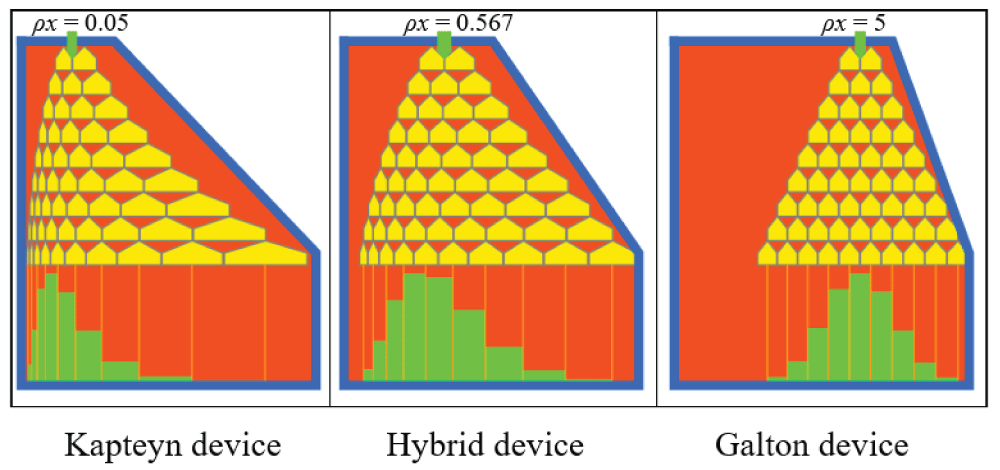
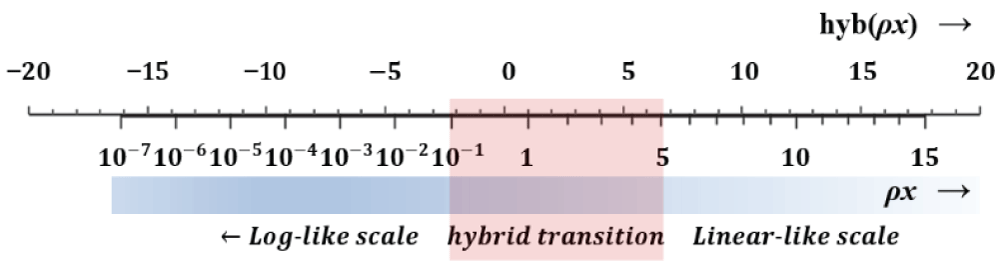
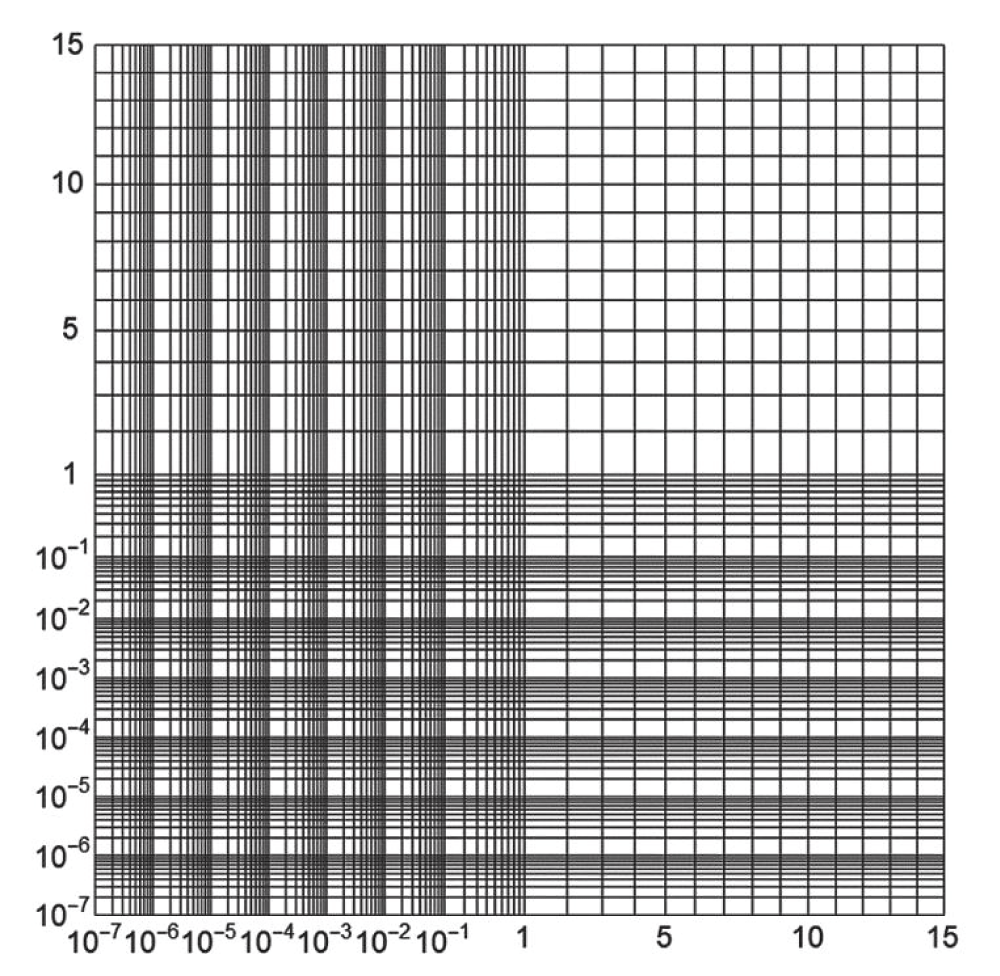
This paper reports on a case study in radiation protection, revealing that the statistical phenomena observed in the dose distribution of workers under dose reduction management exhibit an intriguing new probability distribution. This distribution unifies the lognormal and the normal distributions—previously considered distinct—by replacing the upper tail of the former with that of the latter. It is adjusted by the parameter ρ from the former (ρ → 0) to the latter ( → ∞), allowing for an accurate analysis of the statistical phenomena existing between the two. This is the “hybrid lognormal (HLN) distribution,” defined by the hybrid transformation hyb(ρX) = ln X + X, which replaces the logarithmic transformation ln X. The stimulus η = Δhyb(ρX) yields the increment ΔX = ηX/(1+ρX). Interpreting the numerator as the risk increment and the denominator as the risk reduction (achieved through feedback control), this equation represents the simplest risk management principle. The hybrid transformation is visualized as a hybrid scale (HS) consisting of a logarithmic scale and a linear scale, demonstrating its utility in evaluating the effectiveness of risk management. We discuss the background of this case study, the generation mechanism and statistical characteristics of the HLN distribution, application examples, as well as its position within the context of probability distributions and the applicability of the hybrid scale to case studies.
![HLN plot assuming a < D < b for Kola NPP 2016 [28].](https://www.igminresearch.com/articles/figures/igmin355/igmin355.g001.png)
![Probability plots of Korean-NPPs dose statistics in 2017 [29].](https://www.igminresearch.com/articles/figures/igmin355/igmin355.g002.png)