


Help ?

IGMIN: We're glad you're here. Please click 'create a new query' if you are a new visitor to our website and need further information from us.

If you are already a member of our network and need to keep track of any developments regarding a question you have already submitted, click 'take me to my Query.'

Search

Organised by  IgMin Fevicon

Regional sites

Browse by Subjects

Welcome to IgMin Research – an Open Access journal uniting Biology, Medicine, and Engineering. We’re dedicated to advancing global knowledge and fostering collaboration across scientific fields.

Browse by Sections

At IgMin Research, we bridge the frontiers of Biology, Medicine, and Engineering to foster interdisciplinary innovation. Our expanded scope now embraces a wide spectrum of scientific disciplines, empowering global researchers to explore, contribute, and collaborate through open access.

Special Issues

We strive to bridge various fields of science and drive the rapid evolution of research and understanding.

Members

We strive to bridge various fields of science and drive the rapid evolution of research and understanding.

Articles

We strive to bridge various fields of science and drive the rapid evolution of research and understanding.

Explore Content

We strive to bridge various fields of science and drive the rapid evolution of research and understanding.

Identify Us

We strive to bridge various fields of science and drive the rapid evolution of research and understanding.

IgMin Corporation

Welcome to IgMin, a leading platform dedicated to enhancing knowledge dissemination and professional growth across multiple fields of science, technology, and the humanities. We believe in the power of open access, collaboration, and innovation. Our goal is to provide individuals and organizations with the tools they need to succeed in the global knowledge economy.

Publications Support
[email protected]
E-Books Support
[email protected]
Webinars & Conferences Support
[email protected]
Content Writing Support
[email protected]
IT Support
[email protected]

Search

Select Language

Explore Section

Content for the explore section slider goes here.

Abstract

Abstract at IgMin Research

We strive to bridge various fields of science and drive the rapid evolution of research and understanding.

Engineering Group Research Article Article ID: igmin345

Audio Signal Classification Using Deep Learning

Artificial Intelligence DOI10.61927/igmin345 Affiliation

Affiliation

    Department of CSE (AI&ML), ATME College of Engineering, Mysore, Karnataka, India

45
VIEWS
18
DOWNLOADS
Connect with Us

Abstract

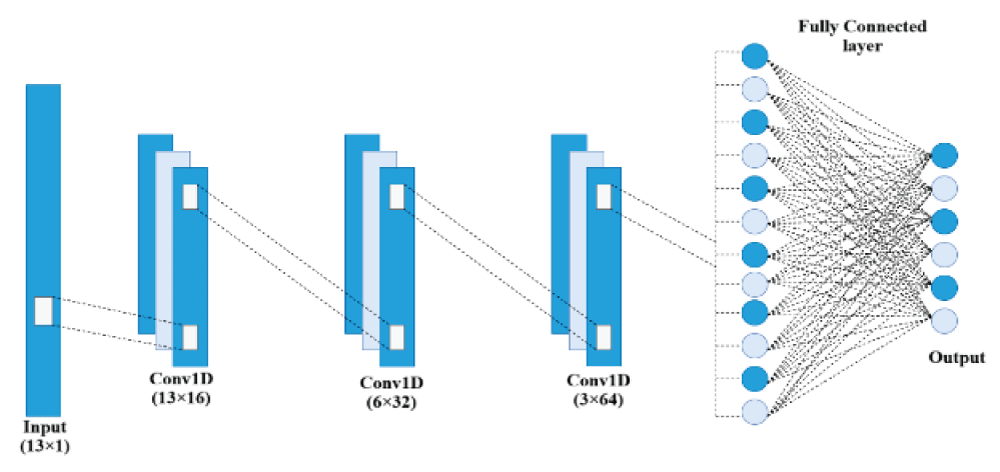
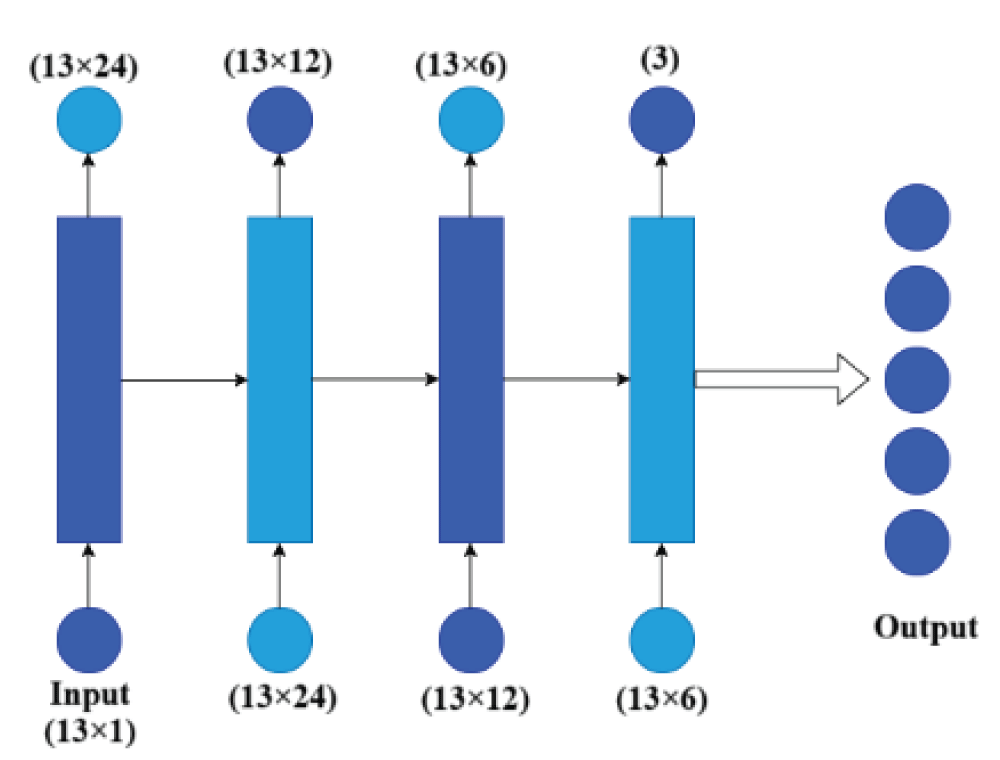
Audio signal classification plays a significant role in various real-world applications such as speech recognition, environmental sound analysis, and music genre identification. Traditional approaches often depend on manually extracted features, which may not capture the full complexity of audio data. This paper presents a deep learning-based method for automatic classification of audio signals using a One-Dimensional Convolutional Neural Network (1D-CNN) and a Recurrent Neural Network (RNN). The CNN model is utilized to extract spatial features from spectrogram representations, while the RNN model effectively captures temporal dependencies within the audio sequences. Both models were trained and evaluated on a labelled dataset, and their performance was compared using metrics such as accuracy, precision, probability of detection (POD), and F1-score. The experimental results demonstrate that CNN has achieved high classification accuracy compared to RNN, with CNN excelling at spatial feature extraction and RNN providing temporal feature learning. The proposed approach confirms that deep learning models can significantly enhance the performance and reliability of audio signal classification systems.
Figures

References

    1. Hershey S, Chaudhuri S, Ellis DP, Gemmeke JF, Jansen A, Moore RC, Plakal M, Platt D, Saurous RA, Seybold B, Slaney M. CNN architectures for large-scale audio classification. In: 2017 IEEE Int Conf Acoust Speech Signal Process (ICASSP). 2017 Mar; p. 131‑135.
    2. Choi K, Fazekas G, Sandler M, Cho K. Convolutional recurrent neural networks for music classification. In: 2017 IEEE Int Conf Acoust Speech Signal Process (ICASSP). 2017 Mar; p. 2392‑2396.
    3. Kumar R, Gupta M, Ahmed S, Alhumam A, Aggarwal T. Intelligent audio signal processing for detecting rainforest species using deep learning. Intell Autom Soft Comput. 2022;31(2):692‑706.
    4. Gupta M, Sharma R. Deep learning‑based environmental sound classification using CNN and RNN architectures. J Intell Syst. 2021;30(4):415‑427.
    5. Pons J, Lidy T, Serra X. Experimenting with musically motivated convolutional neural networks. In: Proc 14th Int Workshop Content‑Based Multimedia Indexing (CBMI). 2016 Jun; p. 1‑6.
    6. Zaman K, Sah M, Direkoglu C, Unoki M. A survey of audio classification using deep learning. IEEE Access. 2023 Oct;11:106621‑106652. doi:10.1109/ACCESS.2023.3318015.
    7. Bhangale P, Kothandaraman R. Deep learning architectures for audio classification: A comparative study of CNN and RNN models. Int J Eng Res Technol (IJERT). 2020;9(8):123‑130.
    8. Qamhan MA, Altaheri H, Meftah AH, Muhammad G, Alotaibi YA. Digital audio forensics: microphone and environment classification using deep learning. IEEE Access. 2021;9:62719‑62733.
    9. Kumar R, Gupta M, Ahmed S, Alhumam A, Aggarwal T. Intelligent audio signal processing for detecting rainforest species using deep learning. Intell Autom Soft Comput. 2022;31(2):693‑706. doi:10.32604/iasc.2022.019811.
    10. Aslam MA, Sarwar MU, Hanif MK, Talib R, Khalid U. Acoustic classification using deep learning. Int J Adv Comput Sci Appl (IJACSA). 2018;9(8):153‑159.
    11. Purwins H, Li B, Virtanen T, Schlüter J, Chang S‑Y, Sainath T. Deep learning for audio signal processing. IEEE J Sel Top Signal Process. 2019 May;13(2):206‑219. doi:10.1109/JSTSP.2019.2908700.
    12. Akinpelu, Viriri S. Deep learning framework for speech emotion classification. IEEE Access. 2024 Oct;12:152152‑152182. doi:10.1109/ACCESS.2024.3474553.
    13. Hashemi M, Aghabozorgi M, Sadeghi MT. Persian music source separation in audio‑visual data using deep learning. In: Proc 6th Iranian Conf Signal Process Intell Syst (ICSPIS). Yazd, Iran. 2020 Dec; p. 1‑6. doi:10.1109/ICSPIS51611.2020.9349614.
    14. Hasan H, Rahman MSM, Islam MS. Audio forensic authentication using background noise. Appl Intell. 2015 Mar;42(3):627‑641. doi:10.1007/s10489‑014‑0629‑7.
    15. Hassan E, Elbedwehy S, Shams MY, Abd El‑Hafeez T, El‑Rashidy N. Optimizing poultry audio signal classification with deep learning and burn layer fusion. J Big Data. 2024 Sep;11(135):1‑29. doi:10.1186/s40537‑024‑00985‑8.
    16. Alzahrani MA, Aljohani M, Alzahrani MA. Audio‑based activities recognition using machine learning algorithms and deep learning. Sensors. 2019 Oct;19(4819):1‑19. doi:10.3390/s19224819.
    17. Kim JW, Salamon J, Li P, Bello JP. Crepe: A convolutional representation for pitch estimation. In: 2018 IEEE Int Conf Acoust Speech Signal Process (ICASSP). 2018 Apr; p. 161‑165.
    18. Reddy BL, Uma Mahesh RN, Nelleri A. Deep convolutional neural network for three‑dimensional object classification using off‑axis digital Fresnel holography. J Mod Opt. 2022;69(13):705‑717. doi:10.1080/09500340.2022.2081371.
    19. Mahesh RN U, Nelleri A. Multi‑class classification and multi‑output regression of three‑dimensional objects using artificial intelligence applied to digital holographic information. Sensors. 2023;23:1095. doi:10.3390/s23031095.
    20. Uma Mahesh RN, Lokesh Reddy B, Nelleri A. Deep learning‑based multi‑class 3D objects classification using digital holographic complex images. In: Sivasubramanian A, Shastry PN, Hong PC, eds. Futuristic Communication and Network Technologies. VICFCNT 2020. Lect Notes Electr Eng. Vol 792. Springer, Singapore; 2022. p. 43. doi:10.1007/978‑981‑16‑4625‑6_43.
    21. Uma Mahesh RN, Basavaraju L. Three‑dimensional (3‑D) objects classification by means of phase‑only digital holographic information using Alex Network. In: 2024 Int Conf Signal Process Comput Electron Power Telecommun (IConSCEPT). Karaikal, India. 2024; p. 1‑5. doi:10.1109/IConSCEPT61884.2024.10627906.
    22. Uma Mahesh RN, Basavaraju L. Deep learning‑based multi‑class three‑dimensional (3‑D) object classification using phase‑only digital holographic information. IgMin Res. 2024 Jul 9;2(7):550‑557. doi:10.61927/igmin216. Available from: igmin.link/p216.
    23. Mahesh RU, Nagaraju S. Three‑dimensional (3‑D) objects classification by means of phase‑only digital holographic information using deep learning. In: Data Science & Exploration in Artificial Intelligence: Proc 1st Int Conf Data Sci Exploration Artif Intell (CODE‑AI 2024). Bangalore, India. 2024 Jul 3‑4; Vol 1. CRC Press; 2025 Feb. p. 363. doi:10.1201/9781003587392‑53.
    24. Uma Mahesh RN, Rajanahalli Nataraj, Puttaswamy C. Deep residual network for three‑dimensional (3‑D) objects classification using phase‑only digital holographic information. J Intell Syst. 2026;35(1):20240393. doi:10.1515/jisys‑2024‑0393.

Why publish with us?

  • Global Visibility – Indexed in major databases

  • Fast Peer Review – Decision within 14–21 days

  • Open Access – Maximize readership and citation

  • Multidisciplinary Scope – Biology, Medicine and Engineering

  • Editorial Board Excellence – Global experts involved

  • University Library Indexing – Via OCLC

  • Permanent Archiving – CrossRef DOI

  • APC – Affordable APCs with discounts

  • Citation – High Citation Potential

Submit Your Article

Advertisement