



Abstract
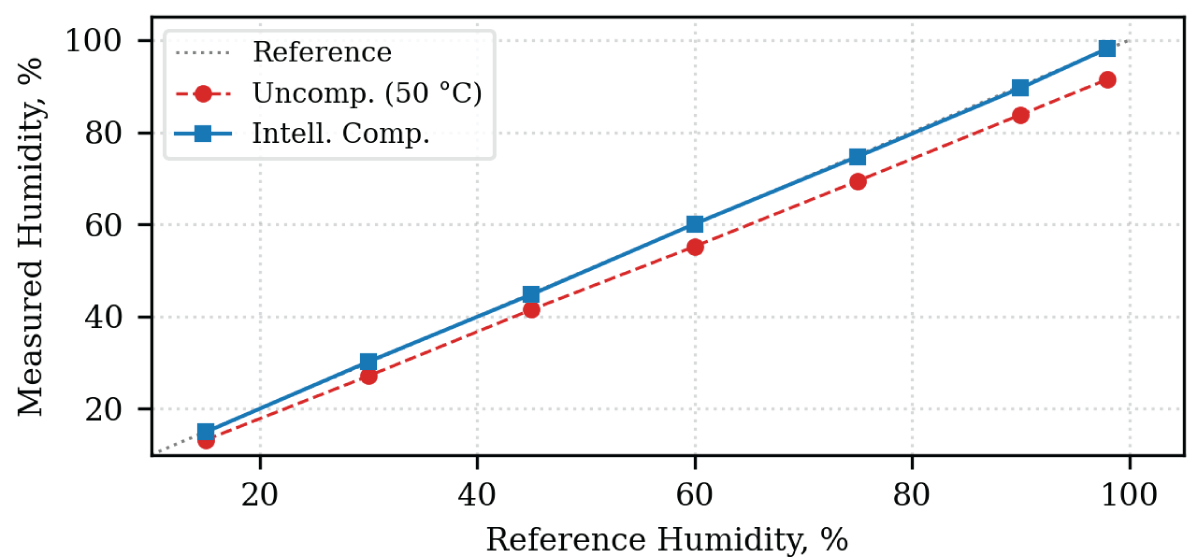
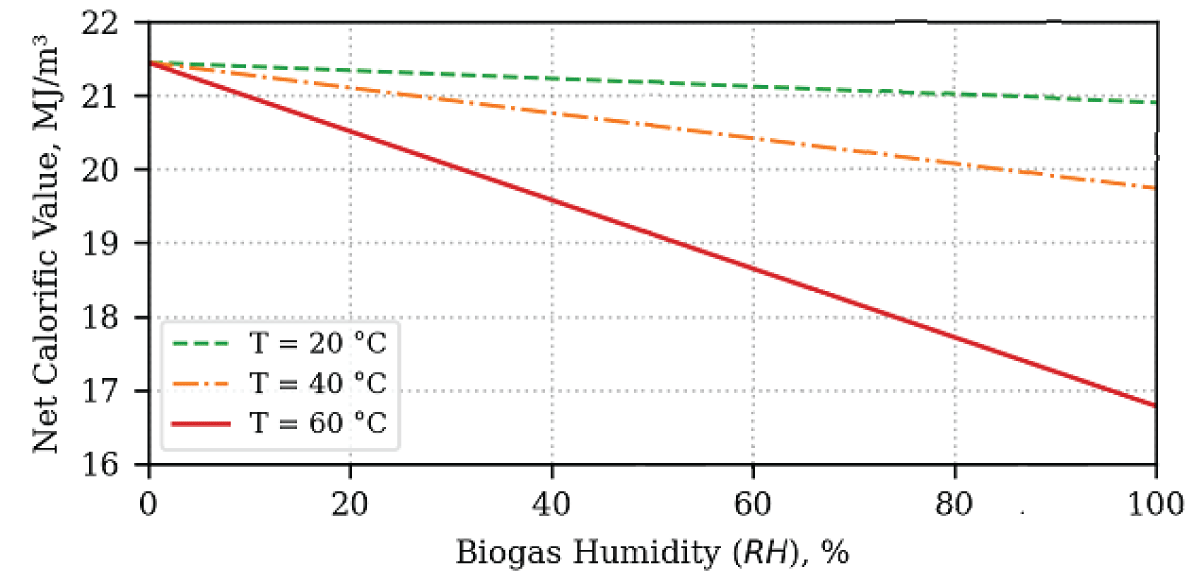
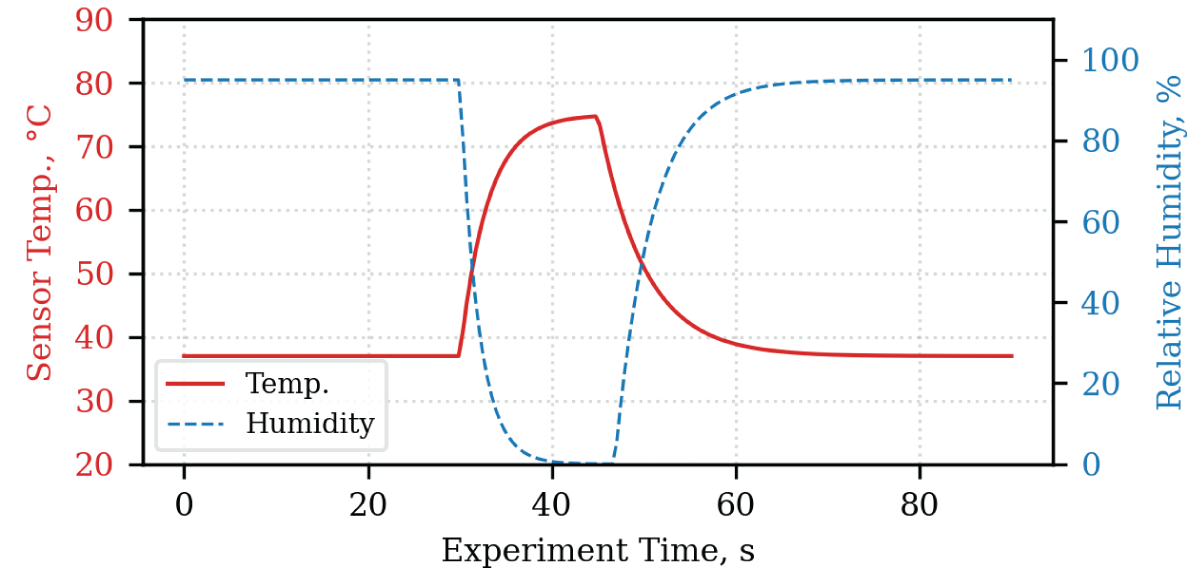
Humid biogas generated from anaerobic digestion causes significant energy degradation and equipment corrosion in renewable energy systems. Traditional moisture control methods are either economically unviable for local plants or lack long-term operational stability in aggressive, H₂S-rich gas streams. This study presents an intelligent moisture control system that combines dielectric barrier sensing with multi-parametric error correction. Experimental validation was conducted using a 50-liter laboratory digester operating under mesophilic and thermophilic conditions. A 32-bit ARM Cortex-M4 microcontroller deployed an adaptive polynomial approximation coupled with a Fuzzy Logic model to dynamically compensate for temperature drift. Furthermore, a periodic thermal regeneration algorithm (heating the sensor film up to 75 °C for 45 s) was established to prevent chemical degradation without losing system measurement readiness. The experimental results demonstrated that the intelligent module reduced the maximum absolute error of relative humidity measurements to ±1.8% across a wide temperature range (20–55 °C), achieving a high coefficient of determination (R² = 0.994). Real-time compensation of moisture dynamics within a combined heat and power (CHP) unit stabilized the cylinder effective pressure variations by 7 times. Consequently, specific biogas consumption decreased by 7.8%, leading to an absolute increase in electrical efficiency of 2.6%. The proposed hybrid sensing configuration effectively solves the compromise between high analytical cost and sensor durability. The system ensures robust fuel-to-air ratio optimization, preventing fuel underburn and eliminating downstream acid condensation risks in localized renewable energy sectors.