



Abstract
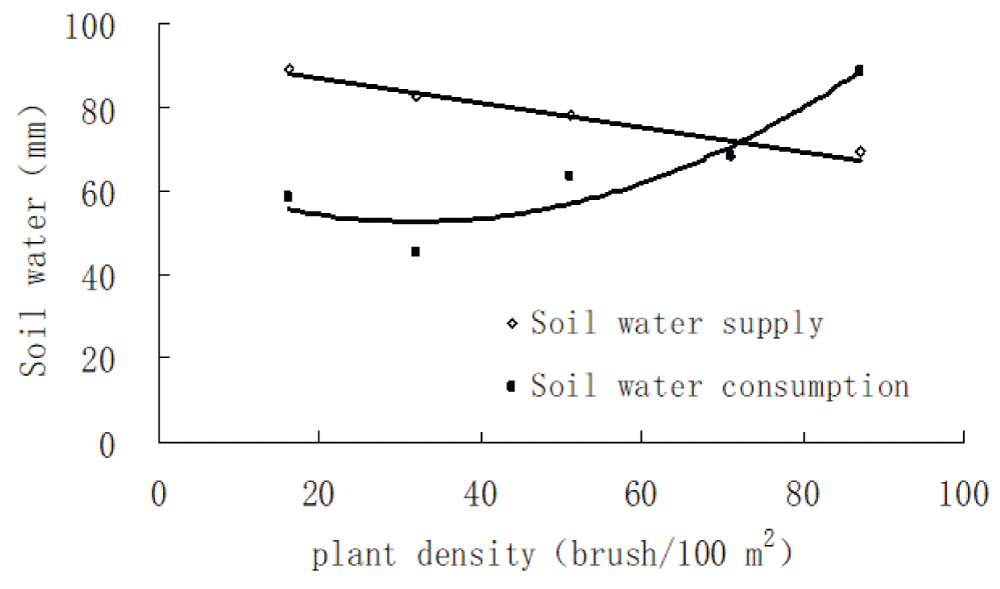
Since 1950, long-term and large-scale vegetation afforestation has been carried out on the Loess Plateau, China. As plants grow, the plant resources relationship changes, which leads to soil and vegetation degradation, and crops fail because of vegetation overload or waste of natural resources due to low vegetation load, which is not good for the sustainable utilization of soil water resources and agricultural high-quality in water scarcity areas. To solve these problems, the concept of soil water vegetation carrying capacity occurred. After a couple of years of research, the result showed that it is the ability of soil water resources to support vegetation, changing with vegetation type, time, and locations, expressed by the number of plant population or plant density of the indicator plant in a plant population or community. The indicator plant is a constructive species for natural vegetation and a goal or cultivated species for artificial vegetation. The soil water vegetation carrying capacity is the most important theory for sustainable utilization of soil water resources and high-quality development in water scarcity areas. Now, the research on soil water vegetation carrying capacity should be strengthened to estimate soil water vegetation carrying capacity in different vegetation types and location and regulate the plant water resources in the critical periods of plant water relationship regulation to achieve sustainable utilization of soil water resources and agriculture high-quality development and meet the people's yearning for a better life and the needs of agricultural high-quality production and increase new quality productivity. Keywords: Water scarcity areas; Soil Water resources; Soil water vegetation carrying capacity; sustainable utilization of soil water resources; agricultural high-quality development.