


Help ?

IGMIN: We're glad you're here. Please click 'create a new query' if you are a new visitor to our website and need further information from us.

If you are already a member of our network and need to keep track of any developments regarding a question you have already submitted, click 'take me to my Query.'

Search

Organised by  IgMin Fevicon

Regional sites

Browse by Subjects

Welcome to IgMin Research – an Open Access journal uniting Biology, Medicine, and Engineering. We’re dedicated to advancing global knowledge and fostering collaboration across scientific fields.

Browse by Sections

At IgMin Research, we bridge the frontiers of Biology, Medicine, and Engineering to foster interdisciplinary innovation. Our expanded scope now embraces a wide spectrum of scientific disciplines, empowering global researchers to explore, contribute, and collaborate through open access.

Members

Our aim is to support a culture of interdisciplinary research for the swift advancement of knowledge.

Articles

Our aim is to support a culture of interdisciplinary research for the swift advancement of knowledge.

Explore Content

Our aim is to support a culture of interdisciplinary research for the swift advancement of knowledge.

Identify Us

Our aim is to support a culture of interdisciplinary research for the swift advancement of knowledge.

IgMin Corporation

Welcome to IgMin, a leading platform dedicated to enhancing knowledge dissemination and professional growth across multiple fields of science, technology, and the humanities. We believe in the power of open access, collaboration, and innovation. Our goal is to provide individuals and organizations with the tools they need to succeed in the global knowledge economy.

Publications Support
[email protected]
E-Books Support
[email protected]
Webinars & Conferences Support
[email protected]
Content Writing Support
[email protected]
IT Support
[email protected]

Search

Select Language

Explore Section

Content for the explore section slider goes here.

Abstract

Abstract at IgMin Research

Our aim is to support a culture of interdisciplinary research for the swift advancement of knowledge.

Engineering Group Research Article Article ID: igmin333

Landing Site Selection for the First Human Mission to Mars

Aerospace Engineering DOI10.61927/igmin333 Affiliation

Affiliation

    Independent Researcher, South Pasadena, California, USA

23
VIEWS
9
DOWNLOADS
Connect with Us

Abstract

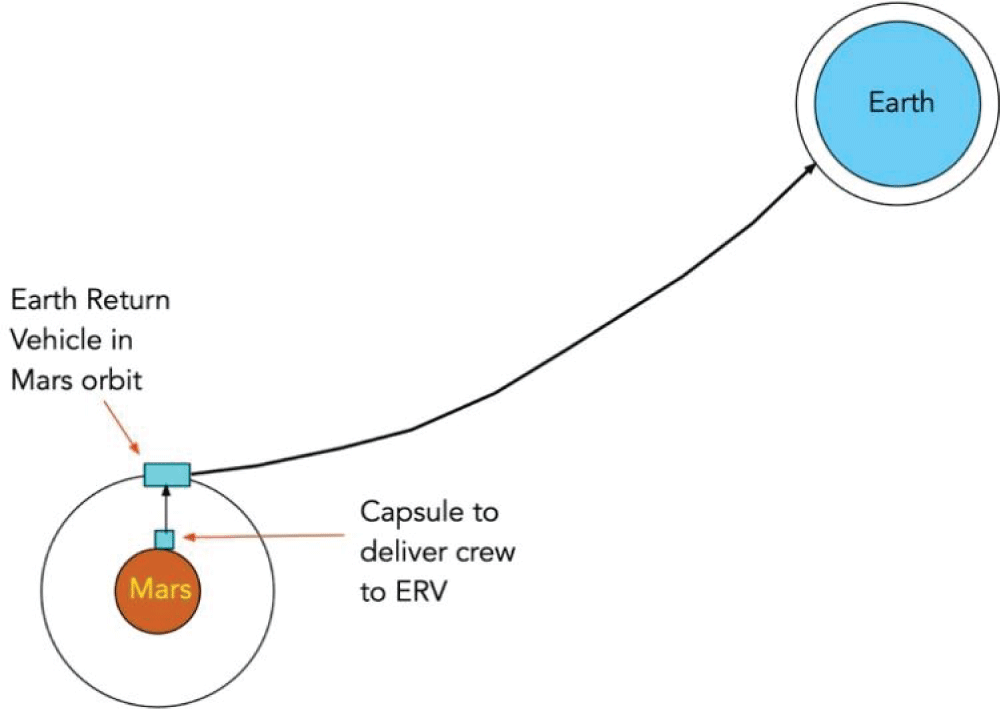
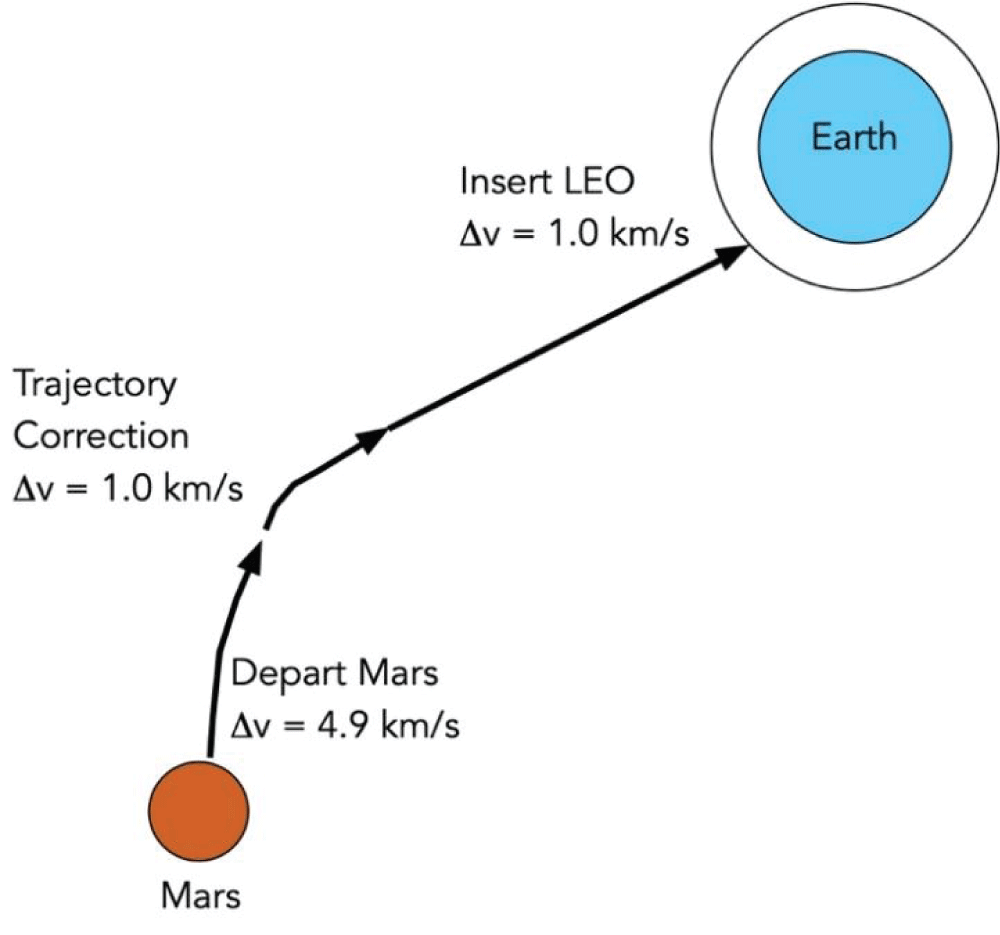
NASA teams have clarified requirements for a landing site for the first human mission to Mars regarding important factors such as elevation, slope, winds, rock abundance, radar reflectivity, etc. Current planning in the NASA for a landing site for human missions to Mars community is aimed at mission architectures that utilize accessible H2O on Mars to produce several hundred tons of propellants for the return trip using the Starship. This limits the acceptable range of latitude to about 40°N, where observations from orbit suggest that accessible H2O might occur. In this paper, it is shown that a simpler, less demanding architecture for the first human landing on Mars could be carried out without requiring accessible H2O on Mars. With this mission model, the landing site could be chosen at an equatorial site, with several benefits in energy, thermal stability, and solar psychological environment, while avoiding the challenges of locating, verifying H2O, and validating and implementing processes for utilization. Proof of the existence of such accessible H2O requires ground truth, not yet attempted. It is suggested that NASA teams should also consider equatorial landing sites for mission architectures that do not require indigenous Mars H2O, which might be preferred for the first landing. 
Layman’s explanation
With the advent of newly evolving very large, affordable launch vehicles, plans for the first human expedition to Mars have become focused on very ambitious mission concepts that require large amounts of indigenous Mars ice to produce propellants for the return flight from Mars – a significant challenge, complication, and cost and risk additive. This limits potential landing sites to non-equatorial latitudes, which introduces several disadvantages. I propose a smaller, less ambitious mission plan for the first human landing on Mars that doesn’t require Mars ice and therefore could land near the equator. I analyze the water supply for such a mission.
Figures

References

    1. Zubrin R. The case for Mars. New York (NY): Simon and Schuster. 2011.
    2. Platoff A. Eyes on the red planet: human Mars mission planning, 1952–1970. NASA Contractor Report NASA/CR-2001-208928. Washington (DC): National Aeronautics and Space Administration. 2001.
    3. Portree DSF. Humans to Mars: fifty years of mission planning, 1950–2000. Monographs in Aerospace History, no. 21. Washington (DC): National Aeronautics and Space Administration, Office of Policy and Plans, NASA Headquarters; 2001.
    4. Rapp D. Human missions to Mars. 3rd ed. Heidelberg (Germany): Springer-Praxis Books; 2023.
    5. Drake BG. Human exploration of Mars: design reference architecture 5.0 (DRA 5.0). NASA Special Publication SP-2009-566. Washington (DC): National Aeronautics and Space Administration; 2009.
    6. Jones HW. The recent large reduction in space launch costs. In: Proceedings of the 48th International Conference on Environmental Systems; 2018 Jul 8–12; Albuquerque, NM. Paper ICES-2018-81.
    7. Jones HW. Take material to space or make it there? In: Proceedings of the ASCEND Conference; 2023; Las Vegas, NV.
    8. Making humanity interplanetary [Internet]. Hawthorne (CA): SpaceX; 2024 [cited 2026 Feb 7].
    9. com. SpaceX's Mars colony plan: how Elon Musk plans to build a million-person Martian city [Internet]. New York (NY): Space.com; [cited 2026 Feb 7]. Available from: https://www.space.com/37200-read-elon-musk-spacex-mars-colony-plan.html
    10. Rapp D. Will SpaceX send humans to Mars in 2028? IgMin Res. 2024 Dec 13;2(12):969–983. doi:10.61927/igmin274.
      Rapp D. Preparing for SpaceX mission to Mars. IgMin Res. 2025 Mar 4;3(3):123–132. doi:10.61927/igmin292.
    11. Maiwald V, Bauerfeind M, Fälker S, Westphal B, Bach C. About the feasibility of SpaceX's human exploration of Mars mission scenario with Starship. Sci Rep. 2024 May 23;14(1):11804. doi:10.1038/s41598-024-54012-0. Erratum in: Sci Rep. 2024 Sep 5;14(1):20718. doi:10.1038/s41598-024-71955-6. PMID: 38782962; PMCID: PMC11116405.
    12. Rapp D, Inglezakis V. Accessible H2O on Mars: a critical review of current knowledge. IgMin Res. 2025 Nov 25;3(11):407–439. doi:10.61927/igmin322.
    13. Rapp D. Human missions to Mars using the Starship. IgMin Res. 2025 Aug 6;3(8):268–277. doi:10.61927/igmin308.
    14. Bussey B, Hoffman SJ. Human Mars landing site and impacts on Mars surface operations. In: Proceedings of the 2016 IEEE Aerospace Conference; 2016; Big Sky, MT. doi:10.1109/AERO.2016.7500775.
    15. Golombek M, Williams N, Wooster P, et al. SpaceX Starship landing sites on Mars. In: Proceedings of the 52nd Lunar and Planetary Science Conference; 2021; Virtual. LPI Contribution No. 2548.
    16. Rapp D. Mars ascent propellants and life support resources: take it or make it? IgMin Res. 2024 Jul 29;2(7):673–682. doi:10.61927/igmin232.
    17. Golombek MP, Grant JA, Parker TJ, et al. Selection of the Mars Exploration Rover landing sites. J Geophys Res. 2003;108(E12):8072. doi:10.1029/2003JE002074.
    18. Golombek M, Rapp D. Size-frequency distributions of rocks on Mars and Earth analog sites: implications for future landed missions. J Geophys Res. 1997;102(E2):4117–4129. doi:10.1029/96JE03319.
    19. Golombek MA, Huertas D, Kipp D, Calef F. Detection and characterization of rocks and rock size-frequency distributions at the final four Mars Science Laboratory landing sites. Mars J. 2012;7:1–22. doi:10.1555/mars.2012.0001.
    20. Zhu S, Zhao B, Yu Y, Shi X. Habitat site selection on Mars: suitability analysis and mapping. Acta Astronaut. 2025;226:1–22. doi:10.1016/j.actaastro.2024.11.019.
    21. Hoffman SJ, Kaplan DI. Human exploration of Mars: the reference mission of NASA Mars exploration (DRM-3). NASA Special Publication SP-6107. Washington (DC): National Aeronautics and Space Administration; 1997.
    22. Rucker M. NASA’s Strategic Analysis Cycle 2021 (SAC21) human Mars architecture. In: Proceedings of the 2022 IEEE Aerospace Conference; 2022 Mar 7; Big Sky, MT.
    23. Rucker M, Craig DA, Burke LM, Chai PR, Chappell MB, et al. NASA’s Strategic Analysis Cycle 2021 (SAC21) human Mars architecture. Washington (DC): National Aeronautics and Space Administration; 2022. NASA Report.
    24. Dudley-Rowley M, Whitney S, Bishop A. Crew size, composition, and time: implications for exploration design. In: Proceedings of the AIAA SPACE 2002 Conference & Exposition; 2002. AIAA-2002-6111.
    25. Chaikin A. Humans to Mars, but how many? A historical review of crew size determinations for Mars missions. NASA Contractor Report NASA/CR-20240015749. Washington (DC): National Aeronautics and Space Administration; 2024.
    26. Polsgrove T, Thomas D, Sutherlin S, et al. Mars ascent vehicle design for human exploration. Washington (DC): National Aeronautics and Space Administration; 2019. NASA Report.
    27. Stoker CR, McKay CP, Haberle RM, Andersen DT. Science strategy for human exploration of Mars. Adv Space Res. 1992;12:79–90.
    28. Cowing K. A science strategy for the human exploration of Mars [Internet]. Washington (DC): National Academies Press; 2025 [cited 2026 Feb 7]. Available from: https://www.nationalacademies.org/publications/28594
    29. Stuster J, Adolf J, Byrne V, Greene M. Human exploration of Mars: preliminary lists of crew tasks. NASA Contractor Report NASA/CR-2018-220043. Washington (DC): National Aeronautics and Space Administration; 2018.

Similar Articles

Investigation of Lateral Vibrations in Turbine-generator Unit 5 of the Inga 2 Hydroelectric Power Plant
André Mampuya Nzita, Edmond Phuku Phuati, Robert Muanda Ngimbi, Guyh Dituba Ngoma and Nathanaël Masiala Mavungu
DOI10.61927/igmin173

Why publish with us?

  • Global Visibility – Indexed in major databases

  • Fast Peer Review – Decision within 14–21 days

  • Open Access – Maximize readership and citation

  • Multidisciplinary Scope – Biology, Medicine and Engineering

  • Editorial Board Excellence – Global experts involved

  • University Library Indexing – Via OCLC

  • Permanent Archiving – CrossRef DOI

  • APC – Affordable APCs with discounts

  • Citation – High Citation Potential

Submit Your Article

Advertisement