



Abstract
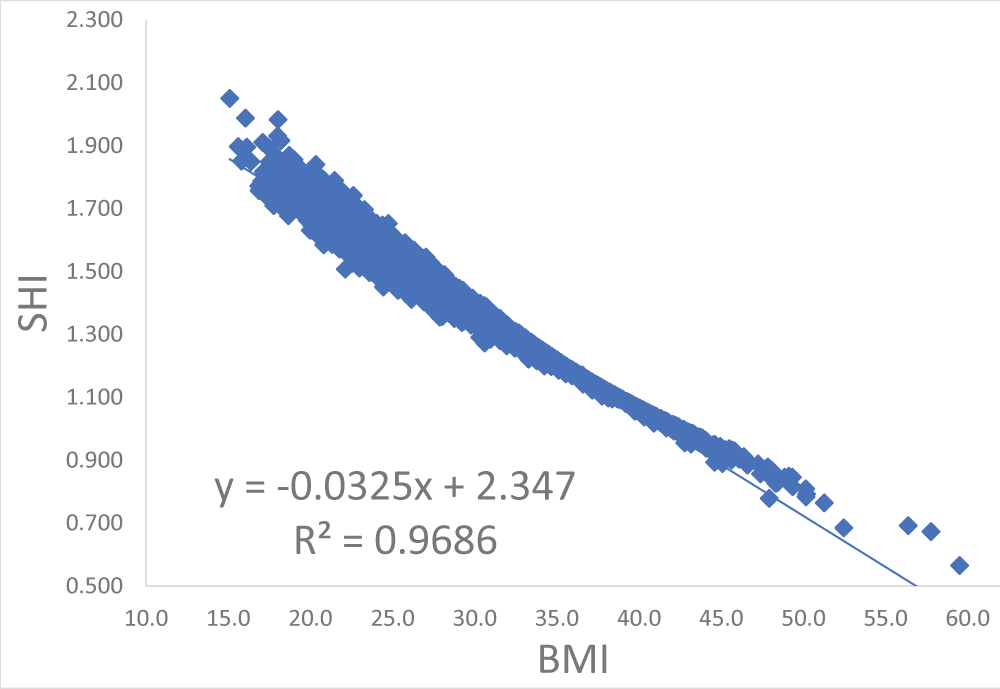
Widely used anthropometric indices, such as Body Mass Index (BMI), are mathematically irreversible, thus limiting interoperability between historical anthropometric datasets. This study introduces the Standard Human Index (SHI), defined as dimensionless h+(h−BSA), and evaluates its relationship with BMI. A cross-sectional analysis was conducted using a large clinical cohort (N>10k). Sex-specific and overall linear regression models revealed a strong linear correlation between SHI and BMI (R² ≈ 0.97). This relationship enables the reconstruction of paired height and weight values within biologically plausible ranges. The SHI provides a stable, mathematical framework for unifying disparate anthropometric datasets, offering a practical tool for large-scale meta-analyses and, importantly, person-oriented assessment of the human body.