



Gerontology at IgMin Research | Medicine Group
We focus on enhancing knowledge exchange between disciplines to achieve rapid innovation.
About
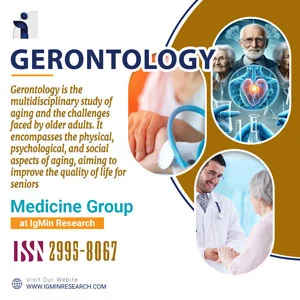
Gerontology is the scientific study of aging, focusing on the physical, psychological, and social changes that occur as individuals grow older. This field encompasses research into the biological processes of aging, age-related diseases, and the challenges associated with an aging population. Researchers in Gerontology seek to improve the quality of life for older adults by exploring strategies for healthy aging, disease prevention, and comprehensive care models that address the unique needs of the elderly.
The study of Gerontology integrates insights from biology, medicine, sociology, and psychology to address the multifaceted aspects of aging. By investigating areas such as cognitive health, mobility, and social support systems, this field aims to promote well-being and independence among older adults. Advancements in Gerontology are essential for shaping policies, healthcare practices, and interventions that enhance longevity and improve the overall health outcomes of aging populations.

Why publish with us?
Global Visibility – Indexed in major databases
Fast Peer Review – Decision within 14–21 days
Open Access – Maximize readership and citation
Multidisciplinary Scope – Biology, Medicine and Engineering
Editorial Board Excellence – Global experts involved
University Library Indexing – Via OCLC
Permanent Archiving – CrossRef DOI
APC – Affordable APCs with discounts
Citation – High Citation Potential
Which articles are now trending?
Research Articles
- Unveiling the Hidden Beat: Heart Rate Variability and the Vagus Nerve as an Emerging Biomarker in Breast Cancer Management
- Potentially Toxic Metals in Cucumber Cucumis sativus Collected from Peninsular Malaysia: A Human Health Risk Assessment
- Prevalence of Diabetic Retinopathy among Self-reported Newly Diagnosed Diabetics
- What is the Hybrid Lognormal Distribution?
- A Unified Mobility Model for Semiconductor Devices and Sensors, Including Surface Hydrodynamic Viscosity
- Mineral Hydration as a Source of Accessible Water on Mars to Enable Human Missions at Equatorial Sites