

Help ?

IGMIN: We're glad you're here. Please click 'create a new query' if you are a new visitor to our website and need further information from us.

If you are already a member of our network and need to keep track of any developments regarding a question you have already submitted, click 'take me to my Query.'

Search

Organised by  IgMin Fevicon

Regional sites

Browse by Subjects

Welcome to IgMin Research – an Open Access journal uniting Biology, Medicine, and Engineering. We’re dedicated to advancing global knowledge and fostering collaboration across scientific fields.

Browse by Sections

At IgMin Research, we bridge the frontiers of Biology, Medicine, and Engineering to foster interdisciplinary innovation. Our expanded scope now embraces a wide spectrum of scientific disciplines, empowering global researchers to explore, contribute, and collaborate through open access.

Special Issues

We work to nurture interdisciplinary conversations that catalyze breakthroughs and drive research forward.

Members

We work to nurture interdisciplinary conversations that catalyze breakthroughs and drive research forward.

Articles

We work to nurture interdisciplinary conversations that catalyze breakthroughs and drive research forward.

Explore Content

We work to nurture interdisciplinary conversations that catalyze breakthroughs and drive research forward.

Identify Us

We work to nurture interdisciplinary conversations that catalyze breakthroughs and drive research forward.

IgMin Corporation

Welcome to IgMin, a leading platform dedicated to enhancing knowledge dissemination and professional growth across multiple fields of science, technology, and the humanities. We believe in the power of open access, collaboration, and innovation. Our goal is to provide individuals and organizations with the tools they need to succeed in the global knowledge economy.

Publications Support
[email protected]
E-Books Support
[email protected]
Webinars & Conferences Support
[email protected]
Content Writing Support
[email protected]
IT Support
[email protected]

Search

Select Language

Explore Section

Content for the explore section slider goes here.

Table of Contents

Table of Contents at IgMin Research

We work to nurture interdisciplinary conversations that catalyze breakthroughs and drive research forward.

Article Explorer
Search by
Clear

All Articles
Most Recent Most Viewed Most Downloaded
6 of 253 results
Towards Sustainable Fisheries Management in Tunisian Reservoirs: A Stock Assessment Approach
Research Article June 30, 2026

Towards Sustainable Fisheries Management in Tunisian Reservoirs: A Stock Assessment Approach

Stabilization and Valorization of Plant Polyphenols: From Biosynthesis Regulation to Processing and Application
Systematic Review June 03, 2026

Stabilization and Valorization of Plant Polyphenols: From Biosynthesis Regulation to Processing and Application

Deep Learning-Based Prediction of Nepal Stock Exchange Movements from Financial News Headlines
Research Article June 18, 2026

Deep Learning-Based Prediction of Nepal Stock Exchange Movements from Financial News Headlines

Audio Signal Classification Using Deep Learning
Research Article June 19, 2026

Audio Signal Classification Using Deep Learning

Machine Learning-Driven Discovery of Novel Lithium-Based Battery Materials
Review Article June 22, 2026

Machine Learning-Driven Discovery of Novel Lithium-Based Battery Materials

Intelligent Moisture Control of Biogas in Renewable Energy Systems

Original Article June 29, 2026

Intelligent Moisture Control of Biogas in Renewable Energy Systems

Article Preview Metrics Cite
Published: June 30, 2026 (129d) publication certificate
Towards Sustainable Fisheries Management in Tunisian Reservoirs: A Stock Assessment Approach Research Article

Towards Sustainable Fisheries Management in Tunisian Reservoirs: A Stock Assessment Approach

Sami Mili*1,2Rym Ennouri3,4, Siwar Agrebi1, Tahani Chargui5 and Houcine Laouar6

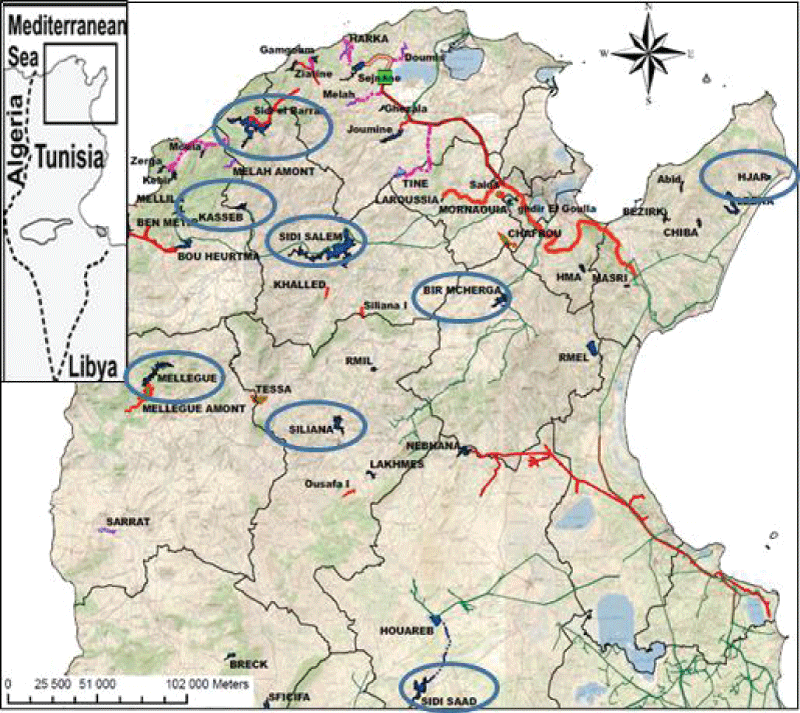
Although assessing fish stocks is essential for sustainable management, quantitative, multi-species evaluations that integrate fishing effort and biological production are scarce in Tunisian reservoirs. This study provides the first comprehensive, standardised assessment of six key species (Cyprinus carpio, Chelon ramada, Luciobarbus callensis, Sander lucioperca, Scardinius erythrophthalmus, and Rutilus rubilio) across eight major reservoirs. It combines multi-mesh gillnet sampling (2013-2016) with yield-per-recruit (Y/R) modelling using VIT software and cohort analysis using FISAT II.
The results reveal a general state of under-exploitation, yet highlight significant differences between species and between reservoirs. Exploitation rates (E) ranged from severe under-exploitation of mullets (E = 0.09) to near-optimal levels of carp in Sidi Saad (E = 0.48). Although fishing mortality exceeded 60% of total mortality for barbel and pikeperch, Y/R analysis confirmed their under-exploited status. This is supported by high biomass per recruit (up to 2,769 g for barbel in Sidi Barrak) and rapid stock renewal rates (over 79% for pikeperch). Notably, estimated surplus production indicates that current landings could be substantially increased without compromising stock sustainability.
We conclude that Tunisian reservoirs have significant untapped fishery potential. However, rather than increasing effort uniformly, we recommend making targeted, site- and species-specific adjustments, coupled with reinforced monitoring of population structure and exploitation rates, in order to prevent any shift towards overfishing. This integrated diagnostic approach provides a replicable scientific baseline for the future adaptive management of North African inland fisheries.