


Help ?

IGMIN: We're glad you're here. Please click 'create a new query' if you are a new visitor to our website and need further information from us.

If you are already a member of our network and need to keep track of any developments regarding a question you have already submitted, click 'take me to my Query.'

Search

Organised by  IgMin Fevicon

Regional sites

Browse by Subjects

Welcome to IgMin Research – an Open Access journal uniting Biology, Medicine, and Engineering. We’re dedicated to advancing global knowledge and fostering collaboration across scientific fields.

Browse by Sections

At IgMin Research, we bridge the frontiers of Biology, Medicine, and Engineering to foster interdisciplinary innovation. Our expanded scope now embraces a wide spectrum of scientific disciplines, empowering global researchers to explore, contribute, and collaborate through open access.

Special Issues

We seek to promote interdisciplinary learning and growth to accelerate the pace of innovation.

Members

We seek to promote interdisciplinary learning and growth to accelerate the pace of innovation.

Articles

We seek to promote interdisciplinary learning and growth to accelerate the pace of innovation.

Explore Content

We seek to promote interdisciplinary learning and growth to accelerate the pace of innovation.

Identify Us

We seek to promote interdisciplinary learning and growth to accelerate the pace of innovation.

IgMin Corporation

Welcome to IgMin, a leading platform dedicated to enhancing knowledge dissemination and professional growth across multiple fields of science, technology, and the humanities. We believe in the power of open access, collaboration, and innovation. Our goal is to provide individuals and organizations with the tools they need to succeed in the global knowledge economy.

Publications Support
[email protected]
E-Books Support
[email protected]
Webinars & Conferences Support
[email protected]
Content Writing Support
[email protected]
IT Support
[email protected]

Search

Select Language

Explore Section

Content for the explore section slider goes here.

Table of Contents

Table of Contents at IgMin Research

We seek to promote interdisciplinary learning and growth to accelerate the pace of innovation.

Article Explorer

Search by
Clear

All Articles
Most Recent Most Viewed Most Downloaded
2 of 231 results
Transfusion Risk in Anterolateral Total Hip Arthroplasty without closed Suction Drainage and Autologous Blood Donation
Research Article May 11, 2026

Transfusion Risk in Anterolateral Total Hip Arthroplasty without closed Suction Drainage and Autologous Blood Donation

Comparative Study of Glucose Abnormalities Among Senegalese Migrants and Rural Populations

Research Article May 28, 2026

Comparative Study of Glucose Abnormalities Among Senegalese Migrants and Rural Populations

Article Preview Metrics Cite
Published: May 11, 2026 (31d) publication certificate
Transfusion Risk in Anterolateral Total Hip Arthroplasty without closed Suction Drainage and Autologous Blood Donation Research Article

Transfusion Risk in Anterolateral Total Hip Arthroplasty without closed Suction Drainage and Autologous Blood Donation

Hirohisa Fujimaki*

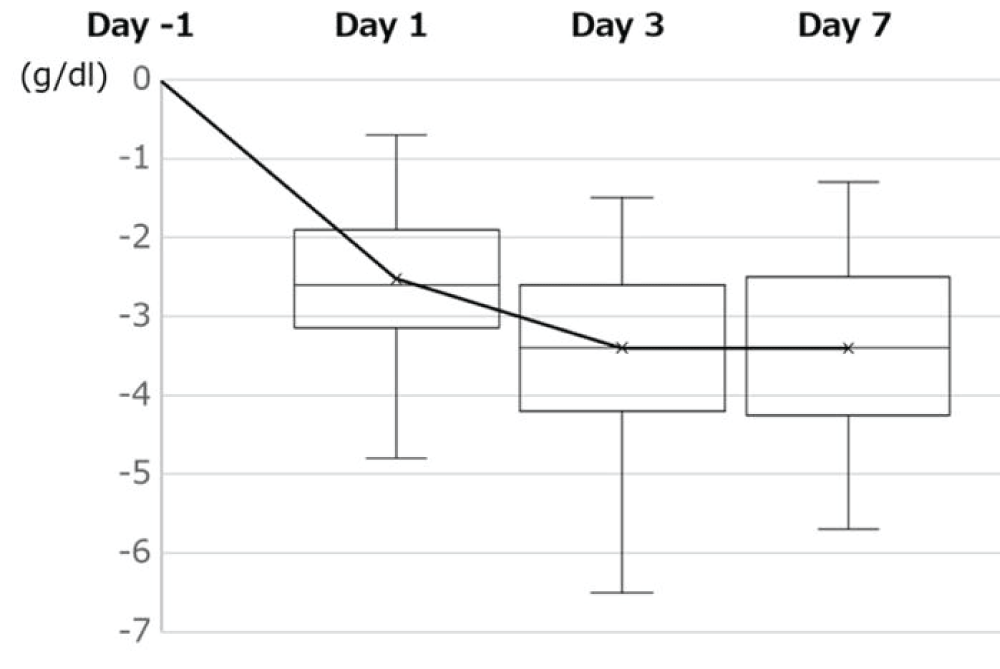
Background: Recently, the amount of bleeding during and after Total Hip Arthroplasty (THA) has decreased owing to the use of tranexamic acid, advancements in surgical devices, improvements in surgical skills, and the introduction of minimally invasive surgery. Therefore, the need for blood transfusions is decreasing. We monitored haemoglobin (Hb) and haematocrit (Ht) levels, estimated blood loss, transfusion rates, and other aspects of Anterolateral Supine THA (ALS-THA) performed at our institution without autologous blood donation and closed suction drainage.
Methods: Patients (n = 316) with preoperative Hb ≥10.0 g/dL during primary unilateral THA performed at our hospital from May 2021 to July 2023 were included. Hb and Ht levels, surgical time, intraoperative blood loss, estimated postoperative blood loss, allogeneic blood transfusion rates, and complication rates were evaluated. We performed logistic regression analysis on age, sex, blood type, height, weight, BMI, preoperative Hb, and preoperative Ht to evaluate the risk of blood transfusion. Receiver Operating Characteristic (ROC) analysis was performed on preoperative Hb levels and blood transfusions.
Results: Blood transfusions were performed in 10 of the 316 cases (3.2%), with a transfusion rate of 16.7% in patients with preoperative Hb < 12g/dL.
Univariate analysis revealed significant differences in preoperative Hb and Ht levels, whereas multivariate analysis showed a significant difference in preoperative Hb (odds ratio 0.39). In ROC analysis, the cutoff value was Hb 12.3 g/dL (sensitivity 0.7; specificity 0.84).
Conclusion: The preoperative Hb level was the most important factor contributing to the transfusion risk in THA. Preoperative anemia treatment may further reduce blood transfusions.