




Table of Contents at IgMin Research
Our vision is to promote the integration of scientific fields to hasten the discovery process.
Article Explorer
Comparison of the Lightning Performance Between the Poles of the Inga–Kolwezi ±500 Kv Hvdc Lines
Endoscopic Aspects of Lesions Secondary to Helicobacter pylori Infection in two Hospitals in Douala: A Cross-Sectional Study over a Three-year Period
Computed Tomography Kidney Disease Recognition using Deep Learning
Origin of Superconductivity in all Superconductors
On a Novel Bulk Superconductor: Oxygen-Doped Delafossite Oxide CuYO2,33
 Research Article
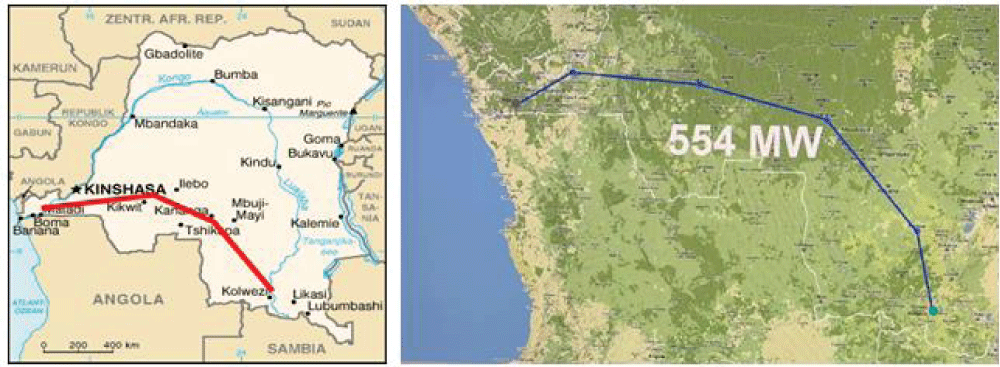
Comparison of the Lightning Performance Between the Poles of the Inga–Kolwezi ±500 Kv Hvdc Lines
High-voltage direct-current (HVDC) transmission schemes are designed for high transfer capability and long-distance delivery. Still, their reliability can be significantly affected by lightning, as even relatively infrequent lightning faults can interrupt large power transfers. This study examines the lightning performance of the positive and negative poles of the Inga–Kolwezi ±500 kV HVDC scheme in the Democratic Republic of Congo, with particular attention to the unusual configuration in which the two poles are implemented as independent monopolar lines. The supplied technical record describes a 517 km section of the approximately 1,700 km scheme and provides system, fault, lightning-exposure and lightning-detection information. The methodology combines a review of the line configuration and insulation parameters, analysis of operational fault records, and interpretation of Fault Analysis and Lightning Location System (FALLS) Small Area Exposure (SAE) data over ten years from 1 April 2010 to 1 April 2020 within a 1 km buffer around each line. The theoretical interpretation is based on electro-geometric and leader-progression concepts and on the polarity-dependent interaction between the DC operating voltage and negative downward lightning. The source record reports lightning-related faults between 2015 and 2023, including ten shielding-failure events and five back-flashovers, with shielding-failure events associated with comparatively low peak currents, including 15 and 35 kA, while back-flashovers are associated with much higher reported amplitudes of 105 and 135 kA. The supplied material further indicates that a positive 500 kV pole can have a substantially increased shielding-failure rate under a negative downward leader, whereas the negative pole is more susceptible to direct negative-stroke flashover and the positive pole to back-flashover. These results support the conclusion that lightning performance cannot be evaluated from shielding geometry alone; pole polarity, conductor position, insulation coordination, grounding and the quality of lightning-location data must be considered jointly. The principal recommendation is therefore to complete the comparative assessment with pole-specific exposure and outage denominators and to use the resulting dataset to calibrate protection and maintenance priorities along the two independent lines.