



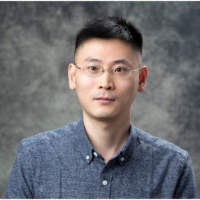
Jian Qi Editor at IgMin Research
We work to foster an ecosystem where disciplines intersect, promoting faster knowledge expansion.
Biography
He received his BS degree from Hebei Normal University in 2005. He received his PhD degree from Beijing Institute of Technology (BIT) in 2010. After this, he went to National Center for Nanoscience and Technology (NCNST) in China for his postdoctoral research (2012).
Then, he went to Beijing Shenwu Environmental Energy Technology Group Co., Ltd. Energy Conservation and Low Carbon Technology Research Institute as associate research fellow. Then, he joined Institute for Process Engineering (IPE), Chinese Academy of Sciences in 2014 and has been working since then.
Research Interest
Fabrication of micro-/nanostructured functional inorganic materials with well-defined structures as well as their application in catalysis, energy and sensing field
Editor
Work Details
Associate Professor
University of Chinese Academy of Sciences
State Key Laboratory of Biochemical Engineering, Institute of Process Engineering
China
 0000-0002-0582-1962
 Contribution by Topic Area
Why publish with us?
Global Visibility – Indexed in major databases
Fast Peer Review – Decision within 14–21 days
Open Access – Maximize readership and citation
Multidisciplinary Scope – Biology, Medicine and Engineering
Editorial Board Excellence – Global experts involved
University Library Indexing – Via OCLC
Permanent Archiving – CrossRef DOI
APC – Affordable APCs with discounts
Citation – High Citation Potential
Which articles are now trending?
Research Articles
- Soil Water Vegetation Carrying Capacity and Quality Agricultural Produce
- Development of a Mechanical Seal Closed Design Model
- Clinical MLOps: A Framework for Responsible Deployment and Observability of AI Systems in Cloud-Native Healthcare
- Slip Resistance Evaluation of 10 Indoor Floor Surfaces
- Adaptation of the Physical Literacy Scale for Adults into Turkish and Examination of its Psychometric Properties
- Risks and Effects of Medicinal Plants as an Adjuvant Treatment in Mental Disorders during Pregnancy