




Ana Estela Ledesma Editor at IgMin Research
Our focus is on creating synergies between different scientific disciplines for faster knowledge gains.
Biography
Ana Estela Ledesma studied chemistry in National University of Santiago del Estero and completed her PhD at the National University of Tucuman, in Tucuman, Argentina on spectroscopy and theoretical calculation studies. After postdoctoral training at the Freie Univesitat Berlin, in Berlin, Germany on time resolved FTIR applied to photo-oxidation of proteins, she has focused their investigation, molecular docking, DFT calculation and vibrational spectroscopy of structural studies of protein-ligand interactions for bio-nanoparticles and enzymatic systems. At the moment she is Associate professor and Director of many research projects and CONICET researcher of National University of Santiago del Estero.
Research Interest
UV-visible and vibrational spectroscopies, theoretical calculation, interaction protein-ligand, molecular docking
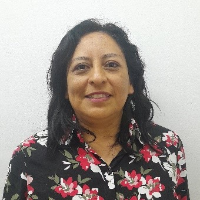
Editor
Work Details
Professor
Annex National University of Santiago del Estero
Academic Department of Chemistry
Argentina
 0000-0003-0750-196X
 Contribution by Topic Area
Why publish with us?
Global Visibility – Indexed in major databases
Fast Peer Review – Decision within 14–21 days
Open Access – Maximize readership and citation
Multidisciplinary Scope – Biology, Medicine and Engineering
Editorial Board Excellence – Global experts involved
University Library Indexing – Via OCLC
Permanent Archiving – CrossRef DOI
APC – Affordable APCs with discounts
Citation – High Citation Potential
Which articles are now trending?
Research Articles
- Lifestyle and Well-being among Portuguese Firefighters
- Towards Sustainable Fisheries Management in Tunisian Reservoirs: A Stock Assessment Approach
- Effect of Additive Manufacturing Parameters on 316L Mechanical and Corrosion Behavior
- The Examination of Game Skills of Children Aged 5-6 Years Participating in Movement Education
- A Machine Learning-based Method for COVID-19 and Pneumonia Detection
- The Latin American Chair